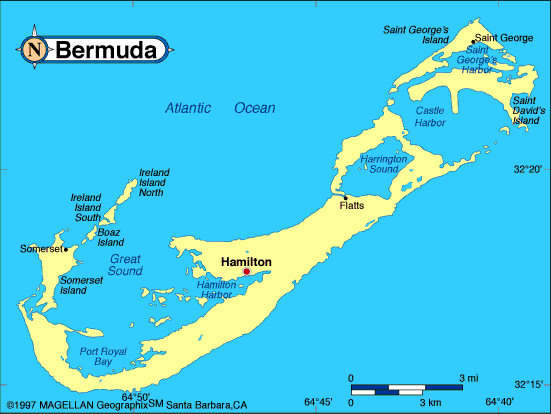
Click on graphic above to navigate the 165+ web files on this website, a regularly updated Gazetteer, an in-depth description of our island's internally self-governing British Overseas Territory 900 miles north of the Caribbean, 600 miles east of North Carolina, USA. With accommodation options, airlines, airport, actors, actresses, aviation, banks, beaches, Bermuda Dollar, Bermuda Government, Bermuda-incorporated businesses and companies including insurers and reinsurers, Bermudians, books and publications, bridges and causeway, charities, churches, citizenship by Status, City of Hamilton, commerce, communities, credit cards, cruise ships, cuisine, currency, disability accessibility, Devonshire Parish, districts, Dockyard, economy, education, employers, employment, environment, executorships, fauna, ferries, flora, former military bases, forts, gardens, geography, getting around, golf, guest houses, highways, history, historic properties, Hamilton, House of Assembly, housing, hotels, immigration, import duties, internet access, islands, laws, legal system and legislators, main roads, marriages, media, members of parliament, money, motor vehicles, municipalities, music and musicians, newcomers, newspaper, media, organizations, parks, parishes, Paget, Pembroke, performing artists, residents, pensions, political parties, postage stamps, public holidays, public transportation, railway trail, real estate, registries of aircraft and ships, religions, Royal Naval Dockyard, Sandys, senior citizens, Smith's, Somerset Village, Southampton, St. David's Island, St George's, Spanish Point, Spittal Pond, sports, taxes, telecommunications, time zone, traditions, tourism, Town of St. George, Tucker's Town, utilities, water sports, Warwick, weather, wildlife, work permits.


By Keith Archibald Forbes (see About Us).
Advance information on Bermuda - from our files exclusively.
Of more than 1600 resident terrestrial plants and animal species, only 27% are native.
Bermuda's new Protected Species Act 2003 became law on 1st March 2004. Endemic animals are shown below by name and description. Except for birds, no prior legislation existed. The new act called for a proactive approach to the protection of local species threatened with extinction, and their habitats. Protected species include 27 plants, birds, animals and marine organisms, plus 21 cave organisms, as threatened and 'listed' according to international criteria. Recovery plans for the other species include the Bermuda Cedar, Palmetto and Yellowwood, plus fern and flowering plant species. Wildlife includes the Cahow, Longtail, White-eyed Vireo, Skink, turtles, whales, a species of snail, the tiny Cave Shrimp and other crustaceans. The Bermuda Protected Species Act 2003 allows for the listing of threatened species and recovery plans for active intervention, in order to enhance population levels. The Protected Species Recovery Plan project is funded by the UK Overseas Territory Environmental Programme (OTEP).
Fauna Bermuda does not have. There are no alligators, badgers, buffalo, chipmunks, crocodiles, deer, ferrets, giraffes, hedgehogs, lions, moles, mongooses, moose, raccoons, skunks, snakes, squirrels, stoats, tigers, weasels or zebras.
Flightless crane.
Flightless duck.
Hawk.
Fresh water limpets
Several species of rails.
Native ground nesting birds.
Two species of nesting sea turtles
Originally from Africa, Argentina, also Bermuda.
 For decades, Bermuda has been the site of a
fierce — if tiny — war between rival species of ant. A recent scientific paper by James Wetterer of the Florida Atlantic University,
published in the Journal of Hymenoptera Research revealed that scientists have
recorded conflict between two invasive ant species — the African big-headed
ant and the Argentine ant — for more than 60 years as they battle for
dominance in Bermuda. While the African big-headed ant became the dominant ant species on the island in the early
20th century after being first recorded in 1889, the Argentine ant quickly began to claim territory
after arriving on the island in the 1940s. Both species are considered widespread and destructive, well-known for killing off native
invertebrates, particularly other ants. Dr Wetterer, who previously surveyed the
island’s ants in 2004 said most
of Bermuda’s ants were “tramp” species fighting each other for territory
on the island. According to Dr Wetterer’s findings, L humile was found
to be dominant across much of the island. However, a handful of battlegrounds
remain. At two long-term survey sites, found were both L humile and P
megacephala, on Ireland Island and the Newstead Belmont Hills Golf Resort
and Spa. On Ireland Island, were found P megacephala along
the North Breakwater and by the National Museum. In addition, P megacephala
were collected in front of the Clocktower Mall and to the south
end of the Glassworks Mall, two places occupied by L humile 14 years
earlier, indicating a modest expansion of the P megacephala population on
North Ireland Island. At the Newstead, was found the boundary between L humile
and P megacephala territory, near the western edge of the property,
essentially identical as 14 years earlier. At Newstead, collected in the
same vial were L humile and P megacephala workers from only a few
metres apart; the ants immediately locked in battle, confirming their mutual
intolerance. Also identified were four species of ant that
had not previously been reported on the island including Pheidole navigans,
who were spotted at multiple sights around the island. Given that the same areas
were searched in previous studies, it indicates that the species was a new
arrival. Curiously, at four of the five sites, P navigans was
coexisting with L humile. On Ordnance Island, they were found them nesting together under the same piece of concrete.
Not known is whether or not P megacephala can tolerate P
navigans.
For decades, Bermuda has been the site of a
fierce — if tiny — war between rival species of ant. A recent scientific paper by James Wetterer of the Florida Atlantic University,
published in the Journal of Hymenoptera Research revealed that scientists have
recorded conflict between two invasive ant species — the African big-headed
ant and the Argentine ant — for more than 60 years as they battle for
dominance in Bermuda. While the African big-headed ant became the dominant ant species on the island in the early
20th century after being first recorded in 1889, the Argentine ant quickly began to claim territory
after arriving on the island in the 1940s. Both species are considered widespread and destructive, well-known for killing off native
invertebrates, particularly other ants. Dr Wetterer, who previously surveyed the
island’s ants in 2004 said most
of Bermuda’s ants were “tramp” species fighting each other for territory
on the island. According to Dr Wetterer’s findings, L humile was found
to be dominant across much of the island. However, a handful of battlegrounds
remain. At two long-term survey sites, found were both L humile and P
megacephala, on Ireland Island and the Newstead Belmont Hills Golf Resort
and Spa. On Ireland Island, were found P megacephala along
the North Breakwater and by the National Museum. In addition, P megacephala
were collected in front of the Clocktower Mall and to the south
end of the Glassworks Mall, two places occupied by L humile 14 years
earlier, indicating a modest expansion of the P megacephala population on
North Ireland Island. At the Newstead, was found the boundary between L humile
and P megacephala territory, near the western edge of the property,
essentially identical as 14 years earlier. At Newstead, collected in the
same vial were L humile and P megacephala workers from only a few
metres apart; the ants immediately locked in battle, confirming their mutual
intolerance. Also identified were four species of ant that
had not previously been reported on the island including Pheidole navigans,
who were spotted at multiple sights around the island. Given that the same areas
were searched in previous studies, it indicates that the species was a new
arrival. Curiously, at four of the five sites, P navigans was
coexisting with L humile. On Ordnance Island, they were found them nesting together under the same piece of concrete.
Not known is whether or not P megacephala can tolerate P
navigans.
Argentine ant. Linepithema humile. Irodomyrmex humilus, numerous and a nuisance, can bite.
Bermuda Ant. Odontomachus insularis. An indigenous ant long thought extinct until re-discovered living in July 2002 by local college student Alex Lines, a Bermuda Aquarium Museum and Zoo intern.
Big Head Ant. Pheidole megacephala.
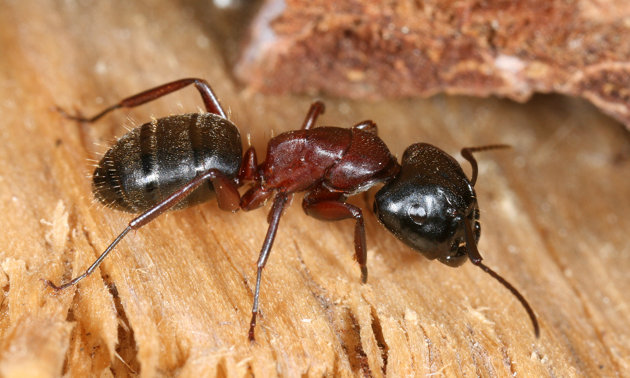
Carpenter Ant. Common in Bermuda. A nasty large ant, can eat through anything.
Bees
Bees were originally imported to Bermuda in 1616 from Britain. Local honey is very expensive compared to imported varieties but is lovely. The Bermuda Beekeepers' Association (BBA) was formed in 1949. Today, most of the island's beekeepers belong to BBA. One colony can produce up to 170 kg of honey. Local folklore says a teaspoon of Bermuda honey taken with tea is a powerful aphrodisiac. There are two honey flows a year, minor in June-July and major in September-October. In 2003, Hurricane Fabian caused substantial damage to the local honey industry, just at the start of the September honey flow. After it, no flowers were left from which bees could gather nectar. The effects of a hurricane linger for years while the vegetation recovers. In 1987 when Hurricane Emily swept over the island, the main honey flow from the Schinus sp. Brazilian pepper tree, was interrupted and approximately 30% of the island's vegetation destroyed. The annual honey crop was reduced by over 50%. Since then, bees have been further troubled by disease. In November 2009 an observant Bermuda beekeeper noticed an unexpected and new bee parasite in a sample of bees and comb removed from a feral (wild) hive. The parasite was confirmed to be Varroa mite, (Varroa destructor) – arguably the most destructive pest to the beekeeping industry and the one that has also been proposed as one of the several stressors that may be contributing to Colony Collapse Disorder (CCD). Scientists have predicted this mite will nearly eliminate our feral bee populations as well as having a devastating impact on kept (managed) bees. Recent surveys of local hives revealed that hundreds of hives are dying and the Varroa mite is the main suspect. Prior to the mite introduction there were estimated to have been several hundred wild bee colonies scattered around the island and approximately 310 kept hives. Bee specialists have advised that without any treatment or mite control, the bee population in Bermuda will dwindle down to about one hive every two kilometers (1.2 miles). That would be a total of 18 kept hives left in Bermuda. The effects on our environment especially on our agricultural crops and bee pollinated fruits could be catastrophic. In recent years, much attention has been focused on bees and their mysterious disappearance in areas of Europe and the United States. This phenomenon has been called (CCD) and as of yet no conclusive evidence has been found to prove that a single factor is the cause. Scientists believe that several factors combined, including viruses, mites, bacterial and fungal diseases, long-range hauling for pollination services and pesticide exposure may be stressing the bees’ immune systems, leading to the demise of bee colonies worldwide. In Bermuda, it often assumed wrongly that the island's distance from the USA as the nearest landmass offers some protection, but this is not so. In creating a bee friendly garden, select plants that attract bees. Not all lowers are attractive to bees and some are more attractive than others. Bees have a strong preference for purple, white and blue flowers, and some reds and oranges. Recommended for planting in the garden are bee-favorites cuphea (Mexican heather), alyssum, pentas, lantana and sunflowers. Try also herbs such as rosemary, thyme and mint or vegetables such as pumpkins and squashes. Bees are attracted to all these plants particularly when several of the same are planted together. Also, let your lawn be diverse in type. Bees like to feed on clover in the lawn.Leafcutter bee. Megachile spp. Extremely rare in Bermuda, known to inhabit Nonsuch Island. A native of the western USA. In Bermuda, most are approximately the size of the common honeybee, although they are somewhat darker with light bands on the abdomen. They also have different habits. Leafcutter bees are not aggressive and sting only when handled. Their sting is very mild, much less painful than that of honeybees or yellow jacket wasps. Leafcutter bees are solitary bees, meaning that they don't produce colonies as do social insects.
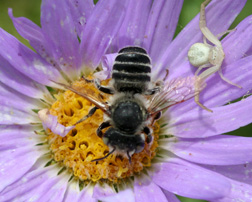
Leafcutter bee
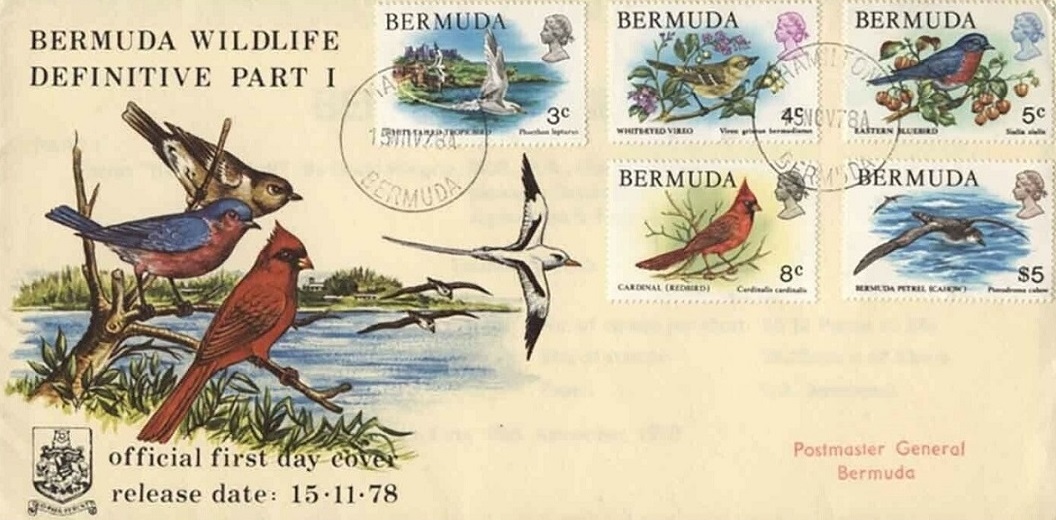
Afforded protection under Bermuda's Protection of Birds Act 1975. Overall, only 23 birds breed in Bermuda, but there are over 200 different types of migrant birds that visit every year.
American coot. Fulica americana, common.
Belted Kingfisher. Ceryl alcyon. Once common in Bermuda.
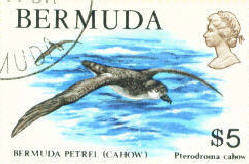 Cahow. Bermuda Petrel.
Pterodroma cahow.
(See 1978 Bermuda Postage
Stamp at right)A native, it was once prolific but consumed with gusto by early colonists. It was considered
extinct until quite recently. It is rare and
protected. It is believed to have been in Bermuda for 300,000 years.
Heard only during the winter months, the cahow earned its Christmas bird name from
mariners who became involuntary early temporary colonists after their ships
going elsewhere were damaged on the reefs. It is said that they were so
frightened by the nocturnal cries of this once abundant bird that they referred
to Bermuda as the Isles of Devils. When the first settlers arrived in 1609 and
1612, it is believed there were half a million cahows. They were so easy to
catch and eat they were hunted to what was thought to be extinction. In 1951, Dr. Cushman Murphy of
the USA finally arrived in Bermuda from a museum in New York City, after having
been pestered for years by Samuel Ristich to do so. Ristich had served in
Bermuda with the US Army Air Corps and had found a cahow. When Murphy came down,
he found five living cahows, believed to have been extinct since 1650. As a
direct result of Murphy's visit and unique find, Dr. David Wingate started his
breeding program for cahows on Nonsuch Island shortly afterwards. Dr.
David Wingate discovered 16 pairs still living on Nonsuch Island in 1951. In
2002, more than 65 breeding pairs were identified. They fly over
the sea but return to Bermuda to begin courtship activities in late
October. They mate for life and produce only one egg each year. The female lays a single white egg in January and in early March a
chick covered in dense grey down emerges. Young chicks leave Bermuda in late May
or early June and spend their first eight years of life on the open ocean before
returning as adults to breed. Like most petrels, cahows are nocturnal and land only to breed. They nest in a soil burrow the bird
excavates.
Cahow. Bermuda Petrel.
Pterodroma cahow.
(See 1978 Bermuda Postage
Stamp at right)A native, it was once prolific but consumed with gusto by early colonists. It was considered
extinct until quite recently. It is rare and
protected. It is believed to have been in Bermuda for 300,000 years.
Heard only during the winter months, the cahow earned its Christmas bird name from
mariners who became involuntary early temporary colonists after their ships
going elsewhere were damaged on the reefs. It is said that they were so
frightened by the nocturnal cries of this once abundant bird that they referred
to Bermuda as the Isles of Devils. When the first settlers arrived in 1609 and
1612, it is believed there were half a million cahows. They were so easy to
catch and eat they were hunted to what was thought to be extinction. In 1951, Dr. Cushman Murphy of
the USA finally arrived in Bermuda from a museum in New York City, after having
been pestered for years by Samuel Ristich to do so. Ristich had served in
Bermuda with the US Army Air Corps and had found a cahow. When Murphy came down,
he found five living cahows, believed to have been extinct since 1650. As a
direct result of Murphy's visit and unique find, Dr. David Wingate started his
breeding program for cahows on Nonsuch Island shortly afterwards. Dr.
David Wingate discovered 16 pairs still living on Nonsuch Island in 1951. In
2002, more than 65 breeding pairs were identified. They fly over
the sea but return to Bermuda to begin courtship activities in late
October. They mate for life and produce only one egg each year. The female lays a single white egg in January and in early March a
chick covered in dense grey down emerges. Young chicks leave Bermuda in late May
or early June and spend their first eight years of life on the open ocean before
returning as adults to breed. Like most petrels, cahows are nocturnal and land only to breed. They nest in a soil burrow the bird
excavates.
Catbird. Once common.
Common Tern. Sterna hirundo. The migratory bird thrives around the world, but the Bermuda population, which DNA analysis shows to be endemic and distinct, was almost wiped out by Hurricane Fabian in 2003 and in subsequent hurricanes. Terns typically lay eggs in clutches of three. Unlike the success story of the cahow, local terns are at the mercy of the elements before they head to their wintering grounds in South America. Partly for this reason, the tern has never been very common on Bermuda.
Egret. Visits frequently and some of the species are naturalized.
English house sparrow. Plain brown, common. Introduced in 1870.
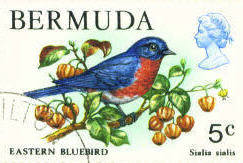
Eastern bluebird. Sialia sialis. Native. Once very common, it nested in hollows of cedar trees, on coastal cliffs and even under eaves of houses. As a cavity nester, it became especially vulnerable to nest site competition from the English house sparrow. With the Bermuda cedar spoilage in the 1950s and its repercussions, the population declined by more than 80%. An artificial wooden nest book program was introduced which has had limited success, but still a firm favorite among many Bermudians and other residents. Loves concrete bird baths with lots of water and can splash around in them for ages. This Bermuda postage stamp below of yesteryear honors them.
Great Blue Heron (Ardea herodias).
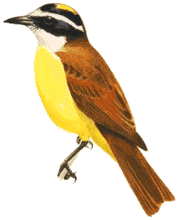 Kiskadee Flycatcher. Pitangus
sulphuratus. Noisy, aggressive,
yellow breasted and striped headed
shown in right graphic, known in American books on birds as the Great
Kiskadee. It has contributed to serious declines of the native
species chick-of-the-village, Northern cardinal and catbird. It is a very large, big-headed
flycatcher, near size of a Belted Kingfisher, somewhat like that bird in
actions, even catching small fish. It has rufous wings and tail. The bright
yellow under parts and crown patch and strikingly patterned black and white face
identify it. The local variety were imported from
Trinidad in 1957 as worker-birds in hope they would be beneficial. Their
hoped-for
function was to control - by consumption - the Anolis lizards which had incurred
a bad reputation from their diet of ladybirds. But they did nothing to
control the lizards. They are now
among the most common birds in Trinidad. They are also natives of other
Caribbean islands including Barbados, southern Texas
and Louisiana, south to Argentina and residents of the lower Rio Grande Valley. They
very rarely stray north to Arizona from western Mexico. Its bright pattern
is unique in North America. It is omnivorous. It feeds mostly
on large insects, such as beetles, wasps, grasshoppers, bees, and moths; but
also eats lizards, mice, baby birds, frogs, tadpoles, and small fish, many
berries, small fruits and some seeds. It forages in various ways, often going
from its perch flies out from its perch to catch flying insects in the air. It
will perch on branch low over water and plunge into water for fish, tadpoles, or
insects. It often eats berries in trees and shrubs. Both female and male mates
actively defend nesting territory against intruders of their own species and are
quick to mob any predators that venture too close. The nesting site is usually
among dense branches of a tree or large shrub, 6-50' above the ground, usually
10-20' up. The nest is a large bulky structure, more or less round, with the
entrance on the side. Nest is built of grass, weeds, strips of bark, Spanish
moss, and other plant fibers, and lined with grass. The female usually lays 4
eggs, sometimes 2-5. They are creamy white, dotted with dark brown and lavender.
Both adults help to feed the young in the nest. Without
knowing it beforehand, with the kiskadees Bermuda allowed in a veritable bird gang of terrorists. Those 200 original yellow-breasted kiskadees
have become the
prolific and noisy Mafioso of Bermuda's bird lands, trees, shrubs and telephone
wires - and a major threat to the lives, feeding and nesting habits of Bermuda's
beautiful bluebirds and other birds as well as to soft-skinned local fruit, crabs, fish and
other choice edibles. Also, they were the major reason for the extinction
of the endemic Cicada (known locally as Singers) by the late 1990s.
Kiskadee Flycatcher. Pitangus
sulphuratus. Noisy, aggressive,
yellow breasted and striped headed
shown in right graphic, known in American books on birds as the Great
Kiskadee. It has contributed to serious declines of the native
species chick-of-the-village, Northern cardinal and catbird. It is a very large, big-headed
flycatcher, near size of a Belted Kingfisher, somewhat like that bird in
actions, even catching small fish. It has rufous wings and tail. The bright
yellow under parts and crown patch and strikingly patterned black and white face
identify it. The local variety were imported from
Trinidad in 1957 as worker-birds in hope they would be beneficial. Their
hoped-for
function was to control - by consumption - the Anolis lizards which had incurred
a bad reputation from their diet of ladybirds. But they did nothing to
control the lizards. They are now
among the most common birds in Trinidad. They are also natives of other
Caribbean islands including Barbados, southern Texas
and Louisiana, south to Argentina and residents of the lower Rio Grande Valley. They
very rarely stray north to Arizona from western Mexico. Its bright pattern
is unique in North America. It is omnivorous. It feeds mostly
on large insects, such as beetles, wasps, grasshoppers, bees, and moths; but
also eats lizards, mice, baby birds, frogs, tadpoles, and small fish, many
berries, small fruits and some seeds. It forages in various ways, often going
from its perch flies out from its perch to catch flying insects in the air. It
will perch on branch low over water and plunge into water for fish, tadpoles, or
insects. It often eats berries in trees and shrubs. Both female and male mates
actively defend nesting territory against intruders of their own species and are
quick to mob any predators that venture too close. The nesting site is usually
among dense branches of a tree or large shrub, 6-50' above the ground, usually
10-20' up. The nest is a large bulky structure, more or less round, with the
entrance on the side. Nest is built of grass, weeds, strips of bark, Spanish
moss, and other plant fibers, and lined with grass. The female usually lays 4
eggs, sometimes 2-5. They are creamy white, dotted with dark brown and lavender.
Both adults help to feed the young in the nest. Without
knowing it beforehand, with the kiskadees Bermuda allowed in a veritable bird gang of terrorists. Those 200 original yellow-breasted kiskadees
have become the
prolific and noisy Mafioso of Bermuda's bird lands, trees, shrubs and telephone
wires - and a major threat to the lives, feeding and nesting habits of Bermuda's
beautiful bluebirds and other birds as well as to soft-skinned local fruit, crabs, fish and
other choice edibles. Also, they were the major reason for the extinction
of the endemic Cicada (known locally as Singers) by the late 1990s.
Flamingos. Not native, can be seen at the Bermuda Aquarium.
Herons. Great Blue Heron. Ardea herodias. Once common in Bermuda. Yellow crowned night herons (Nyctanassa violacea), once brought in to keep down the land crab population, were re-established from 46 birds imported from Florida in the 1970s. Now native.
Mourning dove. Zenaida macroura, Common. Similar to a wood pigeon.
Northern cardinal. Cardinalis cardinalis. Bermudians know it as the Redbird. First introduced to Bermuda from Virginia in about 1700 as a cage bird, but once released became such a farm pest that bounties were offered for its capture. It became so abundant that during the 19th century many thousands locally were trapped for resale abroad as cage birds. Not all that common today, despite being officially protected. A favorite for many, it has bright red plumage and a loud cheery song. Likes bird feeders and has a preference for sunflower seeds.
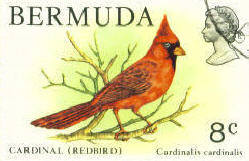
1978 Bermuda Postage Stamp of Northern Cardinal.
Northern Waterthrush. Seiurus noveborancensis. Once common in Bermuda.
Pied-billed grebe. Podilymisus podiceyps. Common.
Starling. Introduced in the 1950s. An invasive which feeds on the fruits of the hugely invasive Indian Laurel tree and spreads even more invasive seeds throughout Bermuda.
White-eyed virio. Vireo griseus bermudianus. Known to Bermudians as Chick of the Village in imitation of its cheery song which is sung throughout the year. An endemic sub-species characterized by shorter wings and duller plumage compared to its American first cousin. An insect-eating bird of the forest canopy, it was originally associated with Bermuda’s once-large, long-gone cedar and palmetto forest. The almost total destruction of the Bermuda cedar tree in the 1940s and 1950s by accidentally introduced insect pests nearly caused its extinction, but it has recovered.
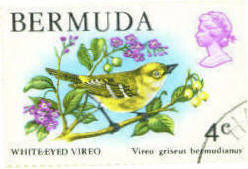
1978 Bermuda Postage Stamp of this bird
White-tailed yellow-billed tropicbird, better known as the longtail. Phaethon lepturus catesbyi. Bermuda's national endemic bird.
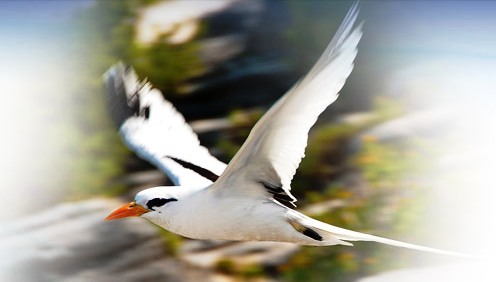
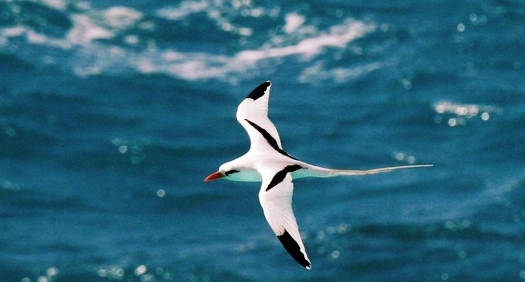
Graphic to the left from a 1978 Bermuda Postage Stamp shown at right below.
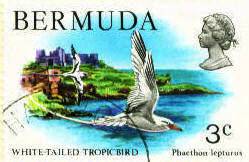 Despite its abundance along Bermuda’s coastline, the white-tailed tropic bird is prone to numerous threats that continuously inhibit their
reproductive success. Such threats include fierce hurricanes, which have been responsible for the loss of tropicbird nest locations through erosion and
cliff collapse. In 2003 Hurricane Fabian, a category 3 storm, was responsible for an estimated loss of 300 white-tailed tropicbird nest sites within
] the Castle Harbour islands of Bermuda. Hurricanes Felix and Adrian in September 2004 destroyed many nests and filled others
with rock. Threats to white-tailed tropicbirds are not just limited to natural disasters. There have been
instances of invasive species competing with Bermuda’s tropicbirds for nest sites. The invasive domestic pigeon (Columba livia), is known to utilize
crevices within cliff faces and rocky shorelines, effectively occupying potential nesting sites for Bermuda’s national
bird. Not indigenous but native. It is a
national symbol and many souvenirs and pieces of jewelry are made with its
image, some locally in gold and silver. The longtail as Bermudians know it is Bermuda’s traditional harbinger of spring
and one of the most beautiful features of our coastline during the summer
months. Nesting from April to October in holes and crevices of the coastal
cliffs and islands - mostly in the Castle Harbour islands - where it is
safer from human disturbance and introduced mammal predators, it is the only
native seabird to have survived in numbers comparable to its primeval abundance
on Bermuda. Once, up to about 1978, at least
3,000 nesting pairs used to breed along most of the coastline but the numbers
have declined steadily due to coastline development, increased disturbance from
an expanding population, and predation by illegally-stray stray dogs, cats,
crows and oil pollution at sea. Other factors include global warming and its higher sea levels that flood
lower nest sites. There is a longtail housing crisis.
To try to solve the problem of
weather, nature and global warming, longtail igloos were invented in 1997 as an
emergency measure to provide alternative nesting sites. They are made of SKB
roofing material and provide good insulation and shelter from the sun. They are
light but strong with a concrete covering that provides camouflage and holds the
nest in place. 35 longtail igloos are now in place on Nonsuch Island and seem to
be working well. Longtails have such small feet
that they are unable to walk on land and hence do all their nest searching on
the wing. It is this constant searching back and forth along the cliffs,
combined with their aerial courtship display, which involves touching the tips
of the long tail feathers together in paired flight, that makes them so
conspicuous on our coastline. The single purplish-red speckled egg is laid in
April and hatches in late May. The chick takes approximately 65 days to fledge
and departs to sea on its own in late July or early August. Longtails do all of their feeding
far out on the open ocean where they plunge from a height onto
unsuspecting fish and squid like a gannet. During the winter months, the
population disperses throughout the Sargasso Sea and remains out of sight of
land. Evidently, the birds sleep on the wing or on the water if it is calm.
Despite its abundance along Bermuda’s coastline, the white-tailed tropic bird is prone to numerous threats that continuously inhibit their
reproductive success. Such threats include fierce hurricanes, which have been responsible for the loss of tropicbird nest locations through erosion and
cliff collapse. In 2003 Hurricane Fabian, a category 3 storm, was responsible for an estimated loss of 300 white-tailed tropicbird nest sites within
] the Castle Harbour islands of Bermuda. Hurricanes Felix and Adrian in September 2004 destroyed many nests and filled others
with rock. Threats to white-tailed tropicbirds are not just limited to natural disasters. There have been
instances of invasive species competing with Bermuda’s tropicbirds for nest sites. The invasive domestic pigeon (Columba livia), is known to utilize
crevices within cliff faces and rocky shorelines, effectively occupying potential nesting sites for Bermuda’s national
bird. Not indigenous but native. It is a
national symbol and many souvenirs and pieces of jewelry are made with its
image, some locally in gold and silver. The longtail as Bermudians know it is Bermuda’s traditional harbinger of spring
and one of the most beautiful features of our coastline during the summer
months. Nesting from April to October in holes and crevices of the coastal
cliffs and islands - mostly in the Castle Harbour islands - where it is
safer from human disturbance and introduced mammal predators, it is the only
native seabird to have survived in numbers comparable to its primeval abundance
on Bermuda. Once, up to about 1978, at least
3,000 nesting pairs used to breed along most of the coastline but the numbers
have declined steadily due to coastline development, increased disturbance from
an expanding population, and predation by illegally-stray stray dogs, cats,
crows and oil pollution at sea. Other factors include global warming and its higher sea levels that flood
lower nest sites. There is a longtail housing crisis.
To try to solve the problem of
weather, nature and global warming, longtail igloos were invented in 1997 as an
emergency measure to provide alternative nesting sites. They are made of SKB
roofing material and provide good insulation and shelter from the sun. They are
light but strong with a concrete covering that provides camouflage and holds the
nest in place. 35 longtail igloos are now in place on Nonsuch Island and seem to
be working well. Longtails have such small feet
that they are unable to walk on land and hence do all their nest searching on
the wing. It is this constant searching back and forth along the cliffs,
combined with their aerial courtship display, which involves touching the tips
of the long tail feathers together in paired flight, that makes them so
conspicuous on our coastline. The single purplish-red speckled egg is laid in
April and hatches in late May. The chick takes approximately 65 days to fledge
and departs to sea on its own in late July or early August. Longtails do all of their feeding
far out on the open ocean where they plunge from a height onto
unsuspecting fish and squid like a gannet. During the winter months, the
population disperses throughout the Sargasso Sea and remains out of sight of
land. Evidently, the birds sleep on the wing or on the water if it is calm.
Yellow-crowned night heron (Nyctanassa violacea).
Common. Species include
Bermuda Buckeye (Junonia coenia bergi, endemic)
Cabbage (Pieris rapae)
Cloudless Sulphur (Phoebis sennae)
Gulf fritallary (Agraulis vanillae)
Monarch (Danus plexippus). One of several Bermuda butterfly residents, non-migratory, believed to have been established here by the mid 19th century. Bermuda also receives occasional visits from migratory North American Monarchs, known for their epic Winter treks across the continent to warm-weather locations in Mexico. Has bright orange wings with wide black borders and black veins; its hind wing has a patch of scent scales and white spots on its borders and apex. The typical wing span is 3.4 to 4.8 inches. The common name “Monarch” was first published in 1874 by Samuel H. Scudder. It is one of the largest of Bermuda's butterflies. The Monarch caterpillar has alternating yellow, white and black stripes. The caterpillar feeds solely on the leaves and flowers of Milkweeds, the butterfly on nectar from Milkweeds as well as other flowers. The Monarch Butterfly’s preferred habitats in Bermuda includes fields, gardens, meadows, weedy areas and marshes. Has appeared on a 30 cents Bermuda postage stamp.
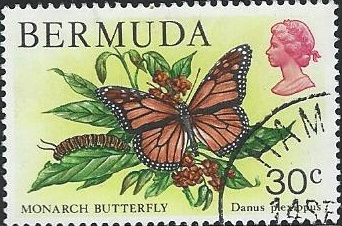
Common, from the butterflies above.
Domestic and feral. No distinctive Bermudian kind. Many different types, mostly shorthair. Perhaps the most famous Bermuda cat was a once-feral mostly grey cat rescued by a Bermudian couple with aristocratic origins. He then got a name for the first time, Mr. Grey. but was so nice to his new parents that he was promoted to His Honor Mr Grey, then Lord Grey, then Earl Grey, then King Grey then Emperor Grey. Interestingly, cats are unique in the English language for having hugely more words beginning with "cat" than with "dog." This same couple has written a book about a once-prominent cleric once known as Father Grey, then Monsignor Grey, then Bishop Grey, then Archbishop Grey then Pope Grey....
Bulls, cows, calves. No distinctive Bermudian kind. Not many, not much farmed for meat, only for milk.
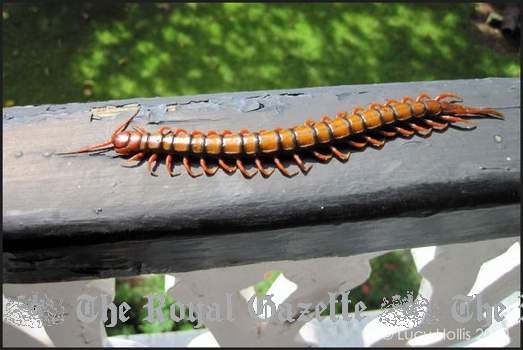 Anthropods.
Not too common. Several types. Once known to inhabit mainly eastern parishes and from this
often called the St. David's centipede, (see below). But some individual or nests of
centipedes have gotten around the Island via the trash collection system or
on horticultural debris collected from parks or woodland areas. Huge, can be
a foot long.
A bite can be painful and prolonged. They could cause serious problems
to anyone allergic to bee or insect stings. They feed on small insects, and
their venom, delivered by powerful pincers at their head, is said to be
about as painful as a bee sting. Have no qualms about entering homes
and guest units. The
best-known deterrent is having toads nearby, especially female ones. But
there are now far fewer toads than in the past. Centipedes usually
enter houses by accident while seeking prey, and end up trapped — although
they will make nests in damp, cool, protected areas. They can be dissuaded
from entering a residence by keeping tall vegetation and debris back from
walls.
Anthropods.
Not too common. Several types. Once known to inhabit mainly eastern parishes and from this
often called the St. David's centipede, (see below). But some individual or nests of
centipedes have gotten around the Island via the trash collection system or
on horticultural debris collected from parks or woodland areas. Huge, can be
a foot long.
A bite can be painful and prolonged. They could cause serious problems
to anyone allergic to bee or insect stings. They feed on small insects, and
their venom, delivered by powerful pincers at their head, is said to be
about as painful as a bee sting. Have no qualms about entering homes
and guest units. The
best-known deterrent is having toads nearby, especially female ones. But
there are now far fewer toads than in the past. Centipedes usually
enter houses by accident while seeking prey, and end up trapped — although
they will make nests in damp, cool, protected areas. They can be dissuaded
from entering a residence by keeping tall vegetation and debris back from
walls.
St David's Centipede. (Scolopendra subspinipes). This large centipede, known locally as such but also called the Tropical Centipede, has roamed the island for many years but is not found only in St David's. Individuals or nests of centipedes can easily get to all parts of Bermuda the island via the efficient trash collection system or on horticultural waste collected from parks or woodland areas. Centipedes feed on small insects and in most cases are regarded as beneficial to the gardener. The centipedes commonly found in the garden are appropriately named Garden Centipedes. These are approximately two to three inches long and should not be confused with the much larger Tropical Centipede, as the Garden Centipede is harmless. Another of the smaller local centipedes is the House Centipede, similar in size to the Garden Centipede, but with long spindly legs and, as the name suggests, is often found inside the house or similar buildings. The largest of Bermuda's centipedes attracts the most attention. The Tropical Centipede has powerful pincers under the head that contain venom used to subdue the prey and they will use them to give a painful “bite” if provoked. The bite is said to be similar to the average bee sting and does not pose any serious health risks for a healthy adult, but some individuals (the elderly, young or unwell) may be sensitive to bites of this sort and need to seek medical advice. This centipede is mostly nocturnal, but may be seen in the daytime if it has been disturbed. It feeds on small insects, spiders and occasionally earthworms. Tropical Centipedes prefer to reside and make nests in damp, cool, protected areas such as under leafy debris, log piles, in old Bermuda walls and wild woodland areas. Any old tree stumps or unkempt garden areas are good homes for centipedes. They may enter into houses in search of a dark, cool place to hide. Clearing out untended garden areas and removing stones and dead vegetation will reduce the chances of centipedes finding suitable homes in these areas. Centipedes have also been reported to make nests in abandoned piles of building sand.
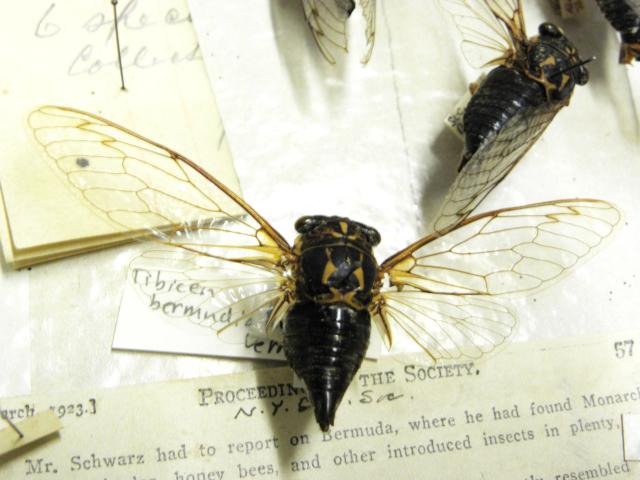
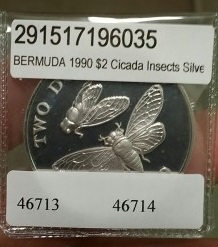 Tibicen
bermudiana Verrill (T. bermudianus for genus and species names to agree,
perhaps also now Neotibicen bermudianus) was an endemic Bermuda cicada but
is now extinct.
Tibicen
bermudiana Verrill (T. bermudianus for genus and species names to agree,
perhaps also now Neotibicen bermudianus) was an endemic Bermuda cicada but
is now extinct.
Its closest relative is the Tibicen lyricen, which is found in mostly the United States (and not extinct, seen and heard there, often with mixed views). Until the 1950s, Bermuda had Bermuda red cedar trees -different to Virginia cedar - galore, which cicadas loved.
The sound of the cicada love song, amorous adult males wooing ready females, was for many years in Bermuda the loudest and most wonderful insect song at night, louder and more tuneful to adults than the sounds of tree frogs.
Bermudians referred to cicadas fondly, often as "hummers" after the persistent humming cicada song or usually more romantically as "singers". Some species of cicadas then known in Bermuda registered over 100 decibels when singing.
Sadly, when most of the Bermuda cedar trees were killed of by a blight in the 1950s, the cicadas that made the nights so uniquely magical and romantic in sound also largely disappeared. Bermudians, those over 75 in particular, have mourned their loss ever since There are two (right and below) photos of a T.bermudiana at the Staten Island Museum in New York. One shows the Bermuda dollar $2 silver cicada coin of 1990 issued by the Bermuda Monetary Authority and the other is a rather splendid photograph of a preserved Bermuda cicada or "singer" at the Staten Island Museum, as discovered in and brought back from Bermuda by a Mr. Schwarz of that museum.
 Usually
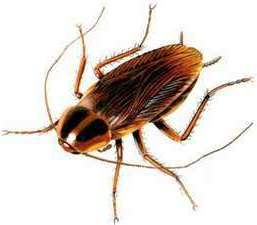
Megaloblatta blameroides or Blattella asahinai - giant
flying ones, easily as large as or larger then the Texas variety, or
Periplaneta americana or Blattella germanica - that fly and can get into even the most impeccably maintained
apartments, condominiums and cottages and are extremely difficult to
get rid of. Numerous and a nasty nuisance,
especially in the kitchen and bedrooms, particularly when the later not
air-conditioned.
Usually
Megaloblatta blameroides or Blattella asahinai - giant
flying ones, easily as large as or larger then the Texas variety, or
Periplaneta americana or Blattella germanica - that fly and can get into even the most impeccably maintained
apartments, condominiums and cottages and are extremely difficult to
get rid of. Numerous and a nasty nuisance,
especially in the kitchen and bedrooms, particularly when the later not
air-conditioned.
They like the combined heat and humidity of Bermuda for most of the year. But in fairness to Bermuda they are not Bermudian except by naturalization. They are also common throughout the Caribbean (900 miles to the south) plus in Florida, Texas, etc.
They are despised by everyone, with tourists often so shocked to see them that their whole trip is spoilt. Before tourists pack up to leave Bermuda they should check to see they do not accidentally pack cockroaches too, as they are often found in suitcases or luggage, still alive, hungry and irritable, causing bad memories of particular trips.
Some
can grow 3 inches or more long. These cockroaches resist
being squished, can live for days even when their heads are cut off, breed with hen roaches and have numerous families of
chick roaches. Some can stink when they are dead. Best way of trying to keep them at bay is to use Raid roach
spray.
Dogs
No local breeds. All must be leashed by law when out and about but this is often ignored. All must be licensed. There are several local dog organizations and annual dog shows in Bermuda attracting participants from the USA and Canada mostly.
Horses, mostly for show or recreation or limited agricultural purposes. There are also ponies for racing and showing, donkeys and mules

Fishes of Bermuda publication. 1999. Updated in 2013. There are many types of sea fish found in Bermuda, all similar to what are found off Florida and in the Caribbean, several of which are indigenous to Bermuda. There are also blackish pond fish, killifish (see below), several of which are unique to Bermuda. In sea fish, wahoo and yellowfin tuna are two of the most important species. Traditionally caught during their spring and fall "runs", these species pass by Bermuda during annual migrations that take them throughout the central Atlantic, although small individuals may remain in the area through the summer. It is thought that the Bermuda Seamount is an important feeding stop for these species during their long migratory journeys.
Atlantic Pearl Oyster. Pinctada imbricata.
Barracuda (Sphyraena barracuda).
Barred Hamlet (Hypoplectrus puella)
Beaugregory (Stegastes leucostictus)
Bermuda Bream (Diplodus bermudensis)
Bermuda Cave Fauna. Various species.
Bermuda Chub (Kyphosus sectatrix)
Bermuda Cone Conus mindanus.
Bermuda Creole Wrasse. Clepticus parrae. In 2013 this species was declared by the Smithsonian Institution to be endemic to Bermuda but closely allied to its Caribbean cousin.
Bermuda Fireworms or Glowworms. Odontosyllis enopla. On August 17, 2018 US researchers shone a light on Bermuda’s glow worms. Scientists at the American Museum of Natural History discovered the chemical that gives the Bermuda fireworms their glow is unique. The published study found that a “luciferase enzyme” created the distinctive glow — but the chemical is different from those found in other “glowing” animals like fireflies. Michael Tessler, a postdoctoral fellow in the museum’s Sackler Institute for Comparative Genomics, added the discovery could be useful in future research. He said: “It’s particularly exciting to find a new luciferase because if you can get things to light up under particular circumstances, that can be really useful for tagging molecules for biomedical research.” Bermuda fireworms, found around the island and throughout the Caribbean, gain their name from their seasonal breeding display in which swarms of the animals light up. The phenomenon was first recorded by explorer Christopher Columbus, and takes place minutes after sunset on the third night after the full moon in the summer and autumn. Spawning female fireworms release a bright bluish-green luminescence intended to attract males. Mark Siddall, a curator in the museum’s Division of Invertebrate Zoology and a coauthor of the study, said: “The female worms come up from the bottom and swim quickly in tight little circles as they glow, which looks like a field of little cerulean stars across the surface of jet black water. Then the males, homing in on the light of the females, come streaking up from the bottom like comets, they luminesce, too. There’s a little explosion of light as both dump their gametes in the water. Lovely to see but not to touch, bright orange worm fringed by white bristles, the latter to discourage predators, to avoid penetration of the skin and a rash or worse do not pick up. Often scarce except in summer, can shine several times a year, including in August, especially at Ferry Reach. They produce a fine light display in shallow sandy waters, especially in its mating ritual. It is at its best on the third night after the full moon on a warm summer night and 53 minutes after sunset. Glowworms inhabit protected bays, living in silky mucus tubes amongst the sediment of rock-strewn seabeds.
Often overlooked except on summer nights they dazzle onlookers with their magnificent natural light show. Female worms leave the safety of the rocky bottom and swim to the surface where they swarm in circular patterns, releasing a bright green luminescent substance intended to attract males. The rings of bright green light are amazing, but the light show gets even better when excited males make a frenzied dash towards their female targets. Upon making contact, males and females release an explosion of glowing gametes into the water in their sexual frenzy. The display lasts about 10 minutes. Males and females squirm and sperm in an orgasmic sudden green flash. The shallow bays of the panting sea creatures light up. Then suddenly they shudder, gasp and are still. Sites for the show, not near electric lights, have included the small bridge at the end of Ferry Reach Park, St. David's, Flatts and Ely's Harbour. Viewing is best three nights after a full moon. Fewer and fewer worms join in on succeeding nights. They only spawn at full moon, the girls literally 'light up' at the prospect of finding a mate, and dozens of tourists hang out in boats to watch them at it. This is the weird and wonderful world of Bermuda's famous fireworms. They generally "dance and mate" between early August and early September. The female fireworm emits her strikingly beautiful green light as she whirls frantically in circles to attract a mate. She releases her glowing eggs when he darts up and reaches the 'bull's eye' of her circle, producing a bright flash himself as he releases his sperm. According to scientific studies, it's a common occurrence for several males to be attracted to a single female, which results in them all rotating in a tight circle as the males discharge their sperm into the water. Spawning begins at full moon and reaches a peak three days afterwards. The females appear at the water's surface between 51 and 63 minutes after sunset in a display that only lasts a few minutes. The mesmerizing fireworms are actually marine relatives of the familiar earthworm and their Latin name – Odontosyllis enopla – translates as the toothed and necklaced worm." The creatures are only ten to 20 millimeters long and inhabit the sandy bottoms of Bermuda's bays and inlets, with Ferry Reach being one of the best spots to see them, according to seasoned worm watchers. The males are smaller than the females but have larger eyes, in keeping with their sensitivity to the light given off by the females. According to They are "equally stimulated by the beam from a flashlight. The green glow emitted by the fireworms – found throughout the tropical western Atlantic – is the product of bioluminescence, a light produced by a chemical reaction in a living organism. They only produce their dance of light during mating activities – although some scientists have observed that they also glow in response to being startled. Little is known about what exactly triggers the mating ritual which can be predicted with extraordinary accuracy and much mystery still surrounds these fascinating creatures. It's even been suggested that they were responsible for the strange patches of light seen by Christopher Columbus four hours before he first made landfall in America.
Bermuda Halfbeak (Hemiramphus bermudensis).
Bermuda killifish. Fundulus bermudae. Lives in both brackish and saltwater ponds from Hamilton Parish to Somerset. They are sometimes referred to as ‘mangrove minnows.
Black Grouper. Mycteroperca bonaci. A large bony reef fish species and an important component of the local fishery.From data collected it is now known that they can live for at least 33 years and that they change sex from female to male.
Black Sea Squirt. Phallusia nigra.
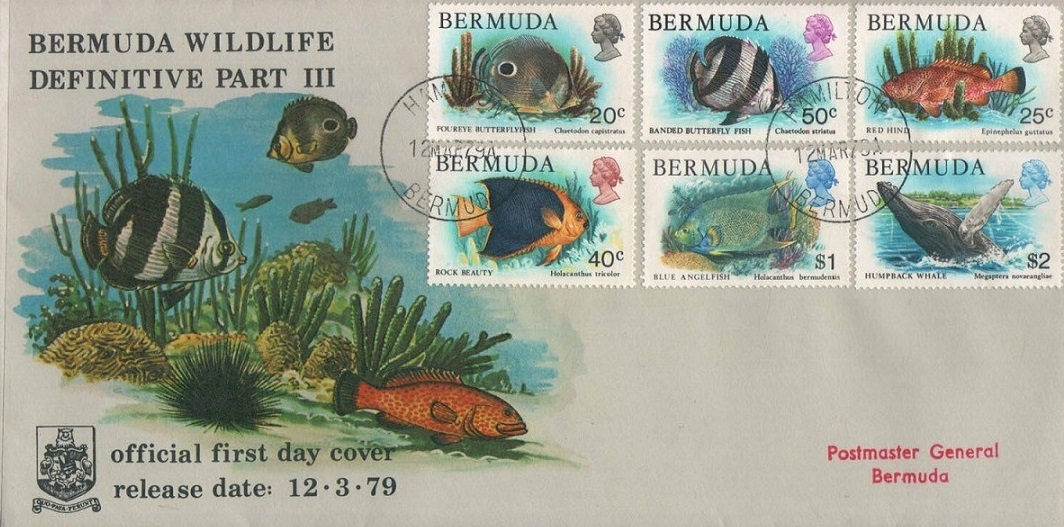
Blue Angel Fish. Holacanthus bermudensis. Shown on the March 12, 1979 Bermuda postage stamp above. A species of marine angelfish of the family Pomacanthidae. Should not be confused with Holocanthus ciliaris, or queen angelfish, despite very similar appearances. They are two separate species.
Blue Fry (Jenkinsia lamprotaenia)
Blue-Striped Grunt (Haemulon sciurus).
Blue-Striped Lizardfish (Synodus saurus)
Bonefish (Albula vulpes).
Brown Zoanthid. Palythoa variabilis.
Calico Clams. Macrocallista maculata. A marine bivalve mollusk of the genus Macrocallista, especially M. nimbosa, having a smooth, thick, rounded shell marked with violet-brown or lilac spots or streaks. Not to be confused with scallops, these were once reared in Harrington Sound, in a Bermuda Government project. A protected species since 1978. They live under the sand.
Calico Scallops. Argopecten gibbus. A species of medium-sized edible saltwater clam, specifically a scallop, a marine bivalve mollusk in the family Pectinidae. Sometimes known as Zigzag scallops, featured on a recent 45 cent Bermuda stamp, once reared in Harrington Sound, in a Bermuda Government project. They have been a protected species since 1978 in Bermuda but are eaten readily in other places such as Florida where they are common.
Chicken Liver Sponge. Chondrilla nucula.
Christmas Tree Worm (Pomatoceros triqueter).
Chitons or suck rocks. Common.
Colettes Halfbeak. In 2014 the Smithsonian Institution declared this species of fish was endemic to Bermuda.
Common Octopus. Octopus vulgaris.
Common Plateweed (Halimeda incrassata).
Conch. Strombus costatus. Residents and visitors should note that under the Fisheries (Protected Species) Order 1978, the Queen Conch (Strombus Gigas) and the Harbour Conch (Strombus Costatus) are illegal to import, an offence to purchase and possess and illegal to obtain and take from Bermuda waters. The Queen Conch - the first of several endangered native species to receive Government protection. Strombus gigas was abundant in Bermuda until the late 1960s but by the end of the Seventies, populations had reached very low levels. At present, most of the Queen Conch in the Island's waters are 'old individuals', with substantial algal and coral growth. Few juveniles have been seen, raising concern for the species' survival. Although the species has been protected from removal from the water since the Fisheries Act 1978, it has only recently been listed under the Protected Species Act 2003 as "endangered". The Queen Conch is now the first subject of a series of action plans to conserve Bermuda's marine and terrestrial threatened species. Despite a complete ban from fishing and/or taking since 1978 under local laws, there has been no conservation programme for this species to date.
Crabs. In beach areas, also once on lawns and paths by the sea.
Disc Plateweed (Halimeda tuna).
French Grunt. Haemulon flavolineatum. A species of grunt native to the western Atlantic Ocean from South Carolina and Bermuda to Brazil as well as the Gulf of Mexico and the Caribbean Sea. Travels in schools among coral and rocky reefs where it occurs at depths of from 0 to 60 metres (0 to 197 ft). Body is yellow with horizontal silver stripes running the length of, and diagonally-oriented stripes below the lateral line of their bodies. All of the fins are yellow. The sounds they make when grinding their teeth earned them their common name. They use their swim bladders to amplify this sound.
Foureye Butterflyfish. Chaetodon capistratus.
Golfball Sponge or Tangerine Sponge. Tethya actinia.
Eels. There are several species of Eel found locally, some of which get mistaken for sea snakes. In particular, the Goldspotted Eel (Myrichthys ocellatus) is often mistaken for a sea snake. Look for the long dorsal fine that runs along the entire body of the eel. Sea snakes do not have dorsal fins. Eels procreate in Bermuda waters or in the Sargasso Sea nearby then swim 3500 miles to the UK. There is also the Chain moray eel (Echidna catenata).
Fantail Mullet (Mugil trichodon).
Fire Coral (Millepora alcicornis).
Flagfin Mojarra (Eucinostomus melanopterus).
Fire Sponge. Tedania ignis.
Five-Toothed Sea Cucumber (Actinopyga agassizi).
Glass shrimp. (4.5 cm), Common in tide pools but had to see, transparent except for pale brown lines running across them like tiger stripes. When you see one, you’ll usually soon see more.
Grape Sand Moss or Green Grape Alga (Caulerpa racemosa).
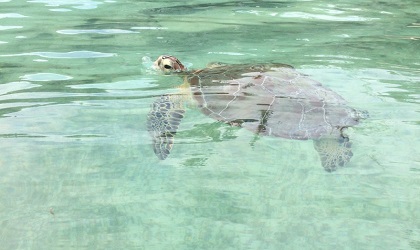 Green sea turtles. Chelonia mydas.
Once an abundant food source for Bermuda’s early settlers this reptile was
the subject of the Island’s first conservation law passed by Bermuda’s first
Parliament in 1620. This and subsequent measures were unsuccessful in preventing
the destruction of nesting colonies of turtles in Bermuda. Green turtles found
at Bermuda today are itinerant individuals from the Caribbean or were brought
from Costa Rica as eggs and incubated on beaches as part of a re-stocking
experiment. They have never been exclusive to Bermuda as some reports allege. Green turtles feed on sea grasses and any other marine life they can
catch such as jelly fish, crustaceans and fishes. Turtles mature at a weight of
about 200 lbs. and will crawl up on beaches at night to lay their eggs. All
species of marine turtles are protected by Bermuda’s Fisheries Act and all
have been the subject of research in recent years. Once on a $3 Bermuda postage
stamp. They are named for the hue of their skin, not their shells. Though
hatching sea turtles are very vulnerable and only a few survive to adulthood,
the only real threats to fully-grown turtles are sharks and humans. Turtles have
good sight underwater, but are thought to be near sighted on land. Their senses
of smell and hearing are impeccable. Adult turtles sleep at night by wedging
themselves in reefs, and can hold their breath for 4-7 hours. Female green sea
turtles return to the same nesting beach where they were hatched, probably with
the help of olfactory, magnetic, and celestial cues. The temperature of the sand
in which eggs are laid determines the sex of turtles. Cooler temperatures
produce male turtles, while warmer temperatures produce female turtles, and
because of Bermuda’s cool climate in comparison to other turtle breeding
zones, we will never have females returning to lay again. Bermudian green sea
turtles are at the second stage of their lives, where they become vegetarians
grazing on sea grass, and they can spend up to fifteen years here. After that,
they move on to adult foraging grounds and reach sexual maturity.
Green sea turtles. Chelonia mydas.
Once an abundant food source for Bermuda’s early settlers this reptile was
the subject of the Island’s first conservation law passed by Bermuda’s first
Parliament in 1620. This and subsequent measures were unsuccessful in preventing
the destruction of nesting colonies of turtles in Bermuda. Green turtles found
at Bermuda today are itinerant individuals from the Caribbean or were brought
from Costa Rica as eggs and incubated on beaches as part of a re-stocking
experiment. They have never been exclusive to Bermuda as some reports allege. Green turtles feed on sea grasses and any other marine life they can
catch such as jelly fish, crustaceans and fishes. Turtles mature at a weight of
about 200 lbs. and will crawl up on beaches at night to lay their eggs. All
species of marine turtles are protected by Bermuda’s Fisheries Act and all
have been the subject of research in recent years. Once on a $3 Bermuda postage
stamp. They are named for the hue of their skin, not their shells. Though
hatching sea turtles are very vulnerable and only a few survive to adulthood,
the only real threats to fully-grown turtles are sharks and humans. Turtles have
good sight underwater, but are thought to be near sighted on land. Their senses
of smell and hearing are impeccable. Adult turtles sleep at night by wedging
themselves in reefs, and can hold their breath for 4-7 hours. Female green sea
turtles return to the same nesting beach where they were hatched, probably with
the help of olfactory, magnetic, and celestial cues. The temperature of the sand
in which eggs are laid determines the sex of turtles. Cooler temperatures
produce male turtles, while warmer temperatures produce female turtles, and
because of Bermuda’s cool climate in comparison to other turtle breeding
zones, we will never have females returning to lay again. Bermudian green sea
turtles are at the second stage of their lives, where they become vegetarians
grazing on sea grass, and they can spend up to fifteen years here. After that,
they move on to adult foraging grounds and reach sexual maturity.
Grey Snapper (Lutjanus griseus). Once common in Bermuda. Good eater.
Hard Fan Alga (Udotea flabellum).
Hogfish (Lachnolaimus maximus).
Hogmouth Fry (Anchoa choerostoma).
Honeycomb Cowfish (Lactophrys polygonius).
Horse-eye Jack (Caranx latus).
Humpback Whale. Megaptera novaeangliae. Shown on the March 12, 1979 Bermuda postage stamp above. Bermuda is a sanctuary for whales - humpback, blue, northern - and dolphins in its 200 mile Exclusive Economic Zone under the Fisheries (Protected Species) Order of the Fisheries Act.
Ivory Bush Coral (Oculina diffusa)Ivory Tree Coral (Oculina valenciennesi).
Keyhole Sand Dollar. Often but erroneously referred to as the Bermuda Sand Dollar, the Keyhole refers to three species of sand dollar in the genus Mellita that are dispersed along the east coast of the United States from Virginia to Brazil and also found along the coasts of Bermuda, Jamaica, and Puerto Rico. Mellita isometra is found along the east coast of the United States, Mellita tenuis is found along the gulf side of Florida, Alabama, and Mississippi. Mellita quinquiesperforata is found from near the Mississippi Delta to Brazil. See it in shallow waters below tide lines in sandy bottoms, burrowing for protection from waves and predators, and to obtain food. It feeds on fine particles of organic matter they filter from the water. A flat version of a sea urchin, reaching up to three inches in diameter and disk-like in shape. It differs greatly from the closely related cousin, however: the underside is usually flat or concave with the mouth directly in the center and the anus to one side. Its mouth is made up of five teeth arranged in a circle that form what is called, "Aristotle's lantern". Its skeleton is called a test and covered with an epidermis, spines (used in burrowing), tube feet (used for locomotion), and cilia. On its upper surface, petalloids (used as gills), specialized tube feet, are arranged in a pattern favoring five flower petals. Five oval shaped holes, called lunules, pierce the tests in keyhole urchins. There are two pairs of lunules, one pair toward the top and one large longer hole in between the second pair toward the bottom. Coloration of the keyhole sand dollar varies, including tan, brown, and occasionally grayish or green hue. The Sand dollar pass through several life stages. After eggs have been fertilized they develop into swimming larvae. It drifts in the sea water as plankton for four to six weeks, filtering tiny organisms. Juvenile keyhole urchins grow into adults, and live on the ocean floor. Natural enemies of the keyhole sand dollar are bottom feeding fishes.
Lacy Sea Squirt. Botrylloides nigrum.
Lane Snapper (Lutjanus synagris).
Lesser Starlet Coral (Siderastrea radians).
Lionfish. Beautiful but potentially deadly poisonous fish. It found its way to Bermuda from the Pacific in 2001 and was reported in a local newspaper on December 28, 2001 when one was caught off a local beach. It is about 12 inches long and was introduced to the Atlantic. There have since been many sightings on Bermuda beaches. There are lots of different species. If you get one in your swim suit, you will be stung badly.
Lizardfish, Sand Diver (Synodus intermedius).
Lisa or White Mullet (Mugil curema).
Lobsters, spiny. Panulirus argus. When caught in or off Bermuda they are really crayfish. Not indigenous, same type as in Caribbean and Florida, see note below. Very expensive. Biggest ever caught in Bermuda was in 1932, with a weight of 16 lbs. Second biggest was in 1983 of 15 lbs and with an arm span of five feet eight and a half inches. It is against the law to catch any from April 1 to August 31 each year and at other times only by residents specifically licensed to do so. Commonly referred to as the Florida spiny lobster, the Caribbean spiny lobster inhabits tropical and subtropical waters of the Atlantic Ocean, Caribbean Sea, and Gulf of Mexico. Spiny lobsters get their name from the forward-pointing spines that cover their bodies to help protect them from predators. They vary in color from almost white to dark red-orange. Two large, cream-colored spots on the top of the second segment of the tail make spiny lobsters easy to identify. They have long antennae over their eyes that they wave to scare off predators and smaller antennae-like structures called antennules that sense movement and detect chemicals in the water. Adult spiny lobsters make their homes in the protected crevices and caverns of coral reefs, sponge flats, and other hard-bottomed areas. The lobsters spawn from March through August and female lobsters carry the bright orange eggs on their undersides until they turn brown and hatch. Larvae can be carried for thousands of miles by currents until they settle in shallow near-shore areas among sea-grass and algae beds. They feed on small snails and crabs. The lobsters are solitary until they reach the juvenile stage, when they begin to congregate around protective habitat in near-shore areas. As they begin to mature, spiny lobsters migrate from the nursery areas to offshore reefs. Lobsters hide during daylight hours to avoid predators, emerging a couple of hours after dark to forage for food. While lobsters will eat almost anything, their favorite diet consists mostly of snails, clams, crabs, and urchins. The lobsters return to the safety of their dens several hours before sunrise. It takes a spiny lobster about two years to grow to the three-inch carapace legal-harvesting size and they can grow as large as 15 pounds. Maine lobsters, not seen in local waters, are imported to Bermuda to eat, at restaurants. Once was on a 10 cent Bermuda postage stamp.
Longspine Squirrelfish (Holocentrus rufus).
Lover’s Lake killifish. Fundulus relictus. Found in saltwater ponds in the east end of the island. Fundulus relictus and Fundulus bermudae are considered endangered, and were added to the Bermuda-protected species list in January 2012 as level 2 protected species.
Mermaid’s Wine Glass (Acetabularia crenulata).
Merman’s Shaving Brush (Penicillus capitatus).Milky Moon Snail. Polinices lacteus. Marine snail.
Mollusks. Many, on the rocky shore. Largest is the West Indian Top Shell. Once eaten in quantity, now more common. A type of marine snail. With cream coloured shells and black spots.
Molly Miller (Scartella cristata).
Moon Jelly (Aurelia aurita).
Mussels. Arca zebra. Bermuda's turkey-wing shaped mussels. These attractive brown and white striped shells get their name because they are shaped somewhat like a turkey wing. They are the most abundant bivalve in Bermuda’s waters, and are most commonly sourced in Harrington Sound. These animals are found along the east coast of the United States from North Carolina to Florida, through the Caribbean and as far south as Venezuela. Turkey-wing mussels grow slowly to a maximum size of approximately 80 mm, and are thought to reach 10 years old! They are the principal ingredients in a traditional Bermuda mussel pie.
Netted Olive. Oliva reticularis. Marine snail.
Ocean Surgeonfish (Acanthurus bahianus).
Orange Sea Squirt (Ecteinascidia turbinata).
Palometa (Trachinotus goodei).
Peacock Flounder (Bothus lunatus).
Petticoat Alga (Padina vickersiae).
Portuguese Men of War. Physalia physalis. Not Bermudian but common in the Western Atlantic and Caribbean further south, in Bermuda especially on South Shore beaches. They are highly dangerous stinging jellyfish-like creatures and should be avoided like the plague. Type: Invertebrates. Diet: Carnivore. Size: Float: 12 inches long: 5 inches wide; tentacles: up to 165 feet long. Not jellyfish, siphonophores, animals made up of a colony of organisms working together. Each one has four separate polyps. They get their name from the uppermost polyp, a gas-filled bladder, or pneumatophore, which sits above the water and somewhat resembles an old warship at full sail. Man-of-wars are also known as bluebottles for the purple-blue color of their pneumatophores.
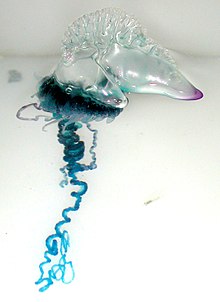
Purple Sea Squirt (Clavelina picta)
Purple Sea Urchin (Lytechinus variegatus)
Purple-tipped Sea Anemone (Condylactis gigantea)
Red-eared Sardine (Harengula humeralis) – this fish is called Pilchard in Bermuda.
Red Hind. Epinephelus guttatus. Shown on the March 12, 1979 Bermuda postage stamp.
Reefs. While coral reefs are common elsewhere, Bermuda is one of the northernmost areas in the Western Hemisphere. (But by no means the northernmost place in the world for coral reefs, as is commonly but mistakenly claimed, as there are cold-water and other coral reefs on the coastlines of Spain and Portugal throughout the northeast Atlantic, stretching north in the Irish sea, then due north, northwest and northeast all the way up to Norway). The coral Skolymia cubensis, not recorded until the 1970s, is now relatively common in Bermuda. Cold-water corals form a rich habitat for deep-water species hunted by fishing trawlers mostly from Ireland, Northern Ireland, Scotland, England, Wales, France and Norway. Coral reefs alone cover an area twice the length of Australia's Great Barrier Reef. Only in all the islands of Bermuda, the islands of the Bahamas including Harbour Island and at least five places in Scotland is the sand pink, but not because of the warm water corals. It is untrue to say that Bermuda's beaches have coarser sand. In fact, the sand in Bermuda is exceptionally fine. Bermuda's coral reefs, from where the forams come, are in better condition than many Bahamas reefs. Many Caribbean reefs have the disease known as YBD. By comparison, there has been only one recorded case of YBD in Bermuda recently. Local coral diseases are mostly BBD, less infected, the majority of them brain corals. Corals are the critical organisms in coral reefs formation because their calcium carbonate (limestone) skeletons create the framework of reefs that build up over thousands of years into a massive structure that supports the living corals and a great variety of other plant and animal life. Corals thrive in areas where strong wave action aerates the water, increasing the supply of food and oxygen. Waves also prevent silt from accumulating and suffocating the coral.
Reef Silverside, Rush Fry (Hypoatherina harringtonensis).
Reef Squid (Sepiotheuthis sepioidea)
Remora (sucker fish). On August 18, 2018 a woman swimmer was chased by a three-foot-long sucker fish for an hour in a bizarre game of tag that left her with a bite on her toe. Rachel Ann Garbett said the remora fish stalked her as she swam from a boat in the waters off Admiralty Park House in Pembroke and she was forced to take refuge on another boat.
Ringed Anemone (Bartholomea annulata)
Rock Beauty. Holacanthus tricolor. Shown on the March 12, 1979 Bermuda postage stamp above.
Rock Scallop. Spondylus ictericus.
Rose Coral (Isophyllia sinuosa).
Sand Dollar (Leodia sexiesperforata).
Sargassum Fish. Bermuda’s humble sargassum fish was thrust into the limelight in November 2015 as the star of a sequence in The Blue Planet series narrated by David Attenborough. The British Broadcasting Corporation sent three members of crew to the Island in 2013 when they spent one month filming the thumb-sized predators using filming technology so advanced it was not even available on the commercial market at the time. Producer Hugh Pearson, director of photography Doug Anderson and digital technician John Chambers, veterans of the Africa and Frozen series, accompanied a crew of Bermudians during their visit including LookBermuda’s Jean-Pierre Rouja who led the expedition as on-Island producer. Bermudians Harold Conyers, Chris Burville and Peter Flook were part of the operation acting as skippers and crew. The footage formed a sequence in The Blue Planet sub-series titled The Hunt. Pound for pound the sargassum fish is an absolutely incredible predator, it will swallow creatures larger than itself and it has a voracious appetite. It is like a combination between a pit bull and an anaconda. It is under two inches long but they will eat anything including each other.
Seahorses. Seahorses are rarely seen in Bermuda but three species have been reported locally, the Longsnout Seahorse (Hippocampus reidi), the Lined Seahorse (Hippocampus erectus) and the Dwarf Seahorse (Hippocampus zostera). They can be found in seagrass beds and algae-covered bottoms, where they wrap their tails around a plant for support and use their colouring as camouflage. Seahorses can also be seen on mooring lines and around docks. They are also found in floating mats of Sargassum seaweed. Seahorses are unlike other fish, as they don’t have scales. Instead they have bony plates covered by a thin skin. They also don’t have teeth or a fully developed digestive system. Seahorses eat small crustaceans and plankton by sucking the prey into their mouths and swallowing it whole. The Longsnout Seahorse has a long snout and a narrow body. It does not have projecting spines, filaments or fleshy tabs, giving it a smoother profile than other local species. It can range in colour from yellow to orange, brown or black and is sometimes two colours. It often has small brown or black dots on the body and white dots on the tail. These black spots are the key characteristic of this species.
Sea Pudding (Isostichopus badionotus).
Sea Sand Moss (Caulerpa taxifolia).
Sergeant major. Abudefduf saxatilis. Common in Bermuda waters, also throughout the Caribbean 900 miles south.
Sea grasses. Very important to the marine ecosystem. They link mangrove communities to coral reefs. The four species in Bermuda are Thalassia testudinum (turtle grass); Syringodium (manatee grass); Halodule wrightii (shoal grass, common) and Halophila decipiens (rare.
Seahorses. Three species have been recorded in Bermuda, Longsnout Seahorse (Hippocampus reidi); Lined Seahorse (Hippocampus erectus); and Dwarf Seahorse (Hippocampus zostera). None are endemic, now endangered or vulnerable and rarely seen nowadays in Bermuda, on the World Conservation Red List of Threatened Animals. They can be found in seagrass beds and algae-covered bottoms, where they wrap their tails around a plant for support and use their colouring as camouflage. Seahorses can also be seen on mooring lines and around docks. They are also found in floating mats of Sargassum seaweed. Seahorses are unlike other fish, as they don’t have scales. Instead they have bony plates covered by a thin skin. They also don’t have teeth or a fully developed digestive system. Seahorses eat small crustaceans and plankton by sucking the prey into their mouths and swallowing it whole. The Longsnout Seahorse has a long snout and a narrow body. It does not have projecting spines, filaments or fleshy tabs, giving it a smoother profile than other local species. It can range in colour from yellow to orange, brown or black and is sometimes two colours. It often has small brown or black dots on the body and white dots on the tail. These black spots are the key characteristic of this species. The Lined Seahorse also often has white dots on its tail. The back of this species is spiny, unlike the Longsnout Seahorse, and its snout is shorter – usually less than half the length of its head. The Lined Seahorse also has a thicker body than the Longsnout species. The Lined Seahorse often has white lines on its head and neck, and often has fleshy growths or tabs of skin on its head; these are the key characteristics of this species. The body colour can be grey, orange, brown or black and may include splotches of lighter colours. Both the Lined and Longsnout Seahorse are about 6 - 10 cm (2.5 - 4 inches) tall, with the largest specimens reaching 15 cm (6 inches). The Dwarf Seahorse is quite tiny – the maximum recorded adult height for this species is reported to be 2.5 cm (1 inch). It has a short snout and can be beige, yellow, green or black and may have dark spots or white patches. This species often also has thread-like filaments attached to it. In Bermuda, the Longsnout and Lined Seahorses are both protected under the 2003 Protected Species Act. The Dwarf Seahorse has not been seen in Bermuda since 1905 and is assumed to have been extirpated (become locally extinct).
Sea shells. The largest and most complete collection of Bermuda shells to be found anywhere in the world was donated in October 2001 to the Natural History Museum at the Bermuda Aquarium, Museum and Zoo. They were collected by retired banker the late Jack Lightbourn and his late colleague and friend Arthur Guest since 1965. There are about 7,700 species in all in the collection, with several endemic. One particularly interesting live shell is the Atlantic Trumpet Triton found in local waters. A Bermuda 40c stamp was issued to note it in philately
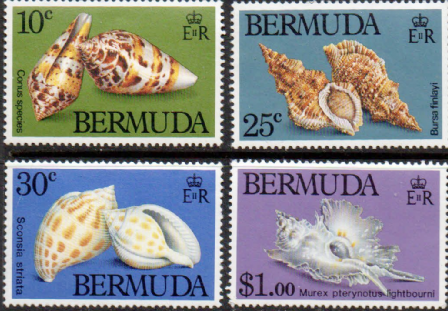
1982 Bermuda Sea Shells postage stamps
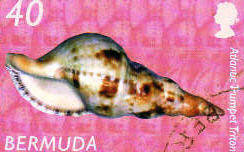
Atlantic Trumpet Triton Bermuda postage stamp
Seals. Not a Bermuda animal but several were imported for the Bermuda Aquarium and have seen bred.
Seaweed. Newly discovered (2008) Botryocladia flookii seaweed, a type of seaweed never before been studied or catalogued, was named after Chris Flook, the collector of specimens and the Bermuda Lionfish Project coordinator for the Bermuda Aquarium Museum and Zoo. Dr. Schneider and Dr. Lane, visiting scientists, published their findings about this in a 2008 copy of the scientific journal Phycologia. Dr. Lane is a professor of biology at the University of Rhode Island and has been to Bermuda many times. Dr. Schneider has been coming to Bermuda since the 1970's. Dr. Lane said Bermuda waters offer types of seaweed not found in the Caribbean. He noted that no original research had been done on the subject in more than 50 years which is why he and Dr. Schneider are working on cataloguing Bermuda's various types of seaweed. "It's a red seaweed commonly known as sea grapes. It is found in deeper water as well as at the low tide mark at coves. As far as we know this is the only place on the planet it is found.
Sharks. They usually stay beyond - not inside - the reefs but Bermuda's history records several deaths by swimmers in the 1900s. Unlike in Britain, they are not protected. When caught locally, their liver often becomes shark oil in home-made barometers. Many Bermudians, newcomers and visitors don’t think there are many sharks here. But at least 14 species can be found in the local waters. The reason that few people know we have so many sharks is that most are found offshore or in deep water, and few come into the shallows; those that do typically only do that at night. The most common sharks are Galapagos sharks (Carcharhinus galapagensis), known locally as duskies, and tiger sharks (Galeocerdo cuvier). Offshore, usually more than 50 miles from land, there are makos (Isurus oxyrin- chus), blues (Prionace glauca), and oceanic whitetips (Carcharhinus longimanus). Makos are one of the fastest sharks in the ocean, capable of reaching burst speeds of 30 miles per hour and sometimes, usually when caught by rod and reel, they may leap 15 feet out of the water. In contrast, oceanic whitetips are a much slower, more languid swimmer. These latter sharks are open ocean predators and, as there is limited food out there, they typically move leisurely through the water to conserve energy. Another shark we see well offshore is the whale shark (Rhincodon typus), the largest fish in the ocean, maxing out around 60 feet long. Surprisingly, this giant primarily eats microscopic plankton. In the deep water, we have two very interesting sharks. The sixgill shark (Hexanchus griseus) can be found as deep as 6,000 feet and grow up to 16 feet in length. While the great majority of sharks have five gill slits, this one and a few of its closest relatives have one or two extras, hence the name. Some years ago, a St. David’s fishermen caught an obscure shark in about 1,000 feet of water. It turned out to be a gulper shark (Centrophorous sp.) A third species that can sometimes be found in deep water up to 700 feet is the gummy shark (also known as the smooth dogish, Mustelus canis).
This is not purely a deep water shark though, as it is often found right off the rocks too. These sharks have lat teeth, much like our molars, designed for crushing their normal prey: crustaceans like lobsters, crabs, and mollusks. Inshore, we have nurse sharks (Ginglymostoma cirratum), one of the most docile sharks around but quite rare these days. There are also bigeye thresher sharks (Alopias superciliosus), great hammerheads (Sphyrna mokarran), and scalloped hammerheads (Sphyrna lewini). Threshers have a greatly elongated tail, sometimes over one-half the total body length, which they whip through schools of bait to paralyze fish before turning around to swallow them. Scalloped hammers are known to aggregate in massive schools and before the US base closed in 1995, helicopter pilots saw this exact phenomenon, just a few miles out of St. David’s. Last, but not least, we have great whites (Carcharodon carcharias). This is surprising, as they generally prefer cool water, but there is a lot of deep, cool water nearby. They are not often found on the surface in Bermuda for that reason, but could pop up from time to time. In general, they are only seen in the winter months and early spring, but well offshore. In the 1950s, a tourist swimming off Elbow Beach, Paget, was killed by a shark. Bermudian Choy Aming is the co-founder of the Bermuda Shark Project and an expert on baby tiger sharks. Mr Aming has talked about his research at New York’s Explorers’ Club. He has spent 2016-2019 attaching satellite tags to the smaller animals and has discovered that they tend to stay closer to shore than adults. He launched the Bermuda Shark Project in 2005 with the late veterinarian Neil Burnie. They tagged about 50 adult sharks, which led to the discovery of an annual tiger shark migration from the Caribbean to Bermuda. They also worked on tagging Galapagos sharks around the island. Mr Aming is a senior aquarist at the Bermuda Aquarium, Museum and Zoo.
Shaving Brush Plant. Penicillus dumetosus. Ornamental macro algae. Has a long stalk with leaves growing like a brush.
Shrimp. Golden Coral. Stenopus scutellatus. Antecaridina lauensis. Only three of the seven known species in Bermuda have been traced recently. In endangered caves. Rare in Bermuda waters but seen by Chris Flook in 2003.
Slender Plateweed. Halimeda monile.
Slippery Dick (Halichoeres bivittatus).
Smooth Trunkfish (Lactophrys triqueter)
Spaghetti worm. (Eupolymnia crassicornis). Common in tidal areas, with very long, very thin, pale tentacles. Striped bodies are hidden under the sand, only bright red gills protrude. The tentacles can be retracted when the worm finds food.
Spanish Sardine (Sardinella aurita) – this fish is called Anchovy in Bermuda.
Sponges. Commercially usable sponges were once common in in the waters of Harrington Sound but have died out completely.
Spotted Eagle Ray (Aetobatus narinari). Their long thin tails, beautiful triangular wings and spotted backs make this species of ray visually unique and seeing them fly out of the water is a magnificent sight. Cruising sandy bottoms looking for food, eagle rays are most commonly seen in Flatt’s Inlet. Their beautiful markings are unique. They feed by burrowing their shovel-shaped snouts into the seabed and searching for buried mollusks, often leaving clouds of sand in their wake. They do not have teeth, but rather flattened dental plates, which are useful to crush mollusk shells. In Bermuda, common prey includes clams and conchs. They can be seen jumping out of the water, and there have been more than a few incidences of rays coming in to contact with humans as they launch themselves onto a boat. The reasons for their behaviour are unclear, with scientist explanations ranging from the rays wanting to shake off remoras or parasites, to the rays simply wanting to leap for fun. They have several venomous barbs behind their pelvic fins, at the base of their whip-like tail. However, rays are shy and seldom come in to contact with humans. They are not dangerous unless they are caught and handled incorrectly. They are ovoviviparous, meaning that they are egg laying, but give birth to live young as the eggs hatch internally within the female. Young rays look like miniature copies of the parent, and are produced in litters of up to four at a time. From 2010, they have been classified as a protected species in Bermuda, and anyone who catches or kills one of the rays could face a $25,000 fine, or two years in prison. They are preyed upon by sharks, but are threatened worldwide by overfishing.
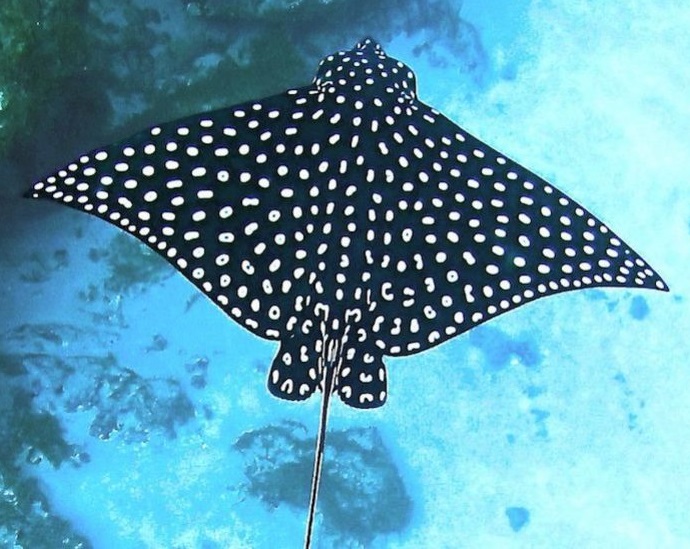
Spotted Sea Hare (Aplysia dactylomela).
Starfish. Copidaster lymani, now native.
Tortoises. Not a Bermudian species, but one has deserved citizenship as the oldest living animal resident in Bermuda by far. He is nearly 100 years old, Crooked Nose, the Galapagos tortoise, long a resident of the Bermuda Aquarium and Zoo. He arrived in Bermuda in 1932, only four years after the aquarium was founded at that location (it had existed before, but not there). He was the gift of John Jacob Astor VI who died on the Titanic and his son, Vincent Astor who used to own an estate on Ferry Reach. When John Jacob Astor died his son became something of a philanthropist and together with his good friend and Bermuda's former zoo curator, Louis Mowbray, would often take his motor yacht down to South America and take animals back to New York. Vincent Astor and his wide traveled from Ferry Reach to Flatts via his private railroad train to make the formal presentation to what became the first zoo in the world to breed Galapagos tortoises.
Turkey Wing Mussel. Arca zebra.
Turtles. Also see separate entry above for Green Sea Turtles. Today, the shallow reefs and seagrass meadows of the Bermuda Platform provide foraging grounds for other types of turtle, such as the immature hawksbill (Eretmochelys coriacea) found among the coral reefs. The Bermuda Turtle Project (BTP) continues today as a joint effort between the Bermuda Zoological Society, the Bermuda Aquarium Museum and Zoo and the Caribbean Conservation Corporation. The project’s mission is to further the understanding of the biology of highly migratory, endangered marine turtles in order to promote their conservation both in Bermuda and worldwide.
Up-Side-Down Jellyfish (Cassiopea xamachana).
Wallabies. Not a Bermuda species but three can be found at the Bermuda Aquarium. Three mature wallabies were imported from New Zealand. The animals would have been exterminated as pests had the zoo not stepped in and seen an opportunity.
White Sea Urchin (Tripneustes ventricosus).
Yellowfin Chromis. Chromis bermudae. In late 2013 the Smithsonian in Washington DC declared this species was endemic to Bermuda.
Zebra Slug (Hypselodoris zebra).
Zigzag Scallop. Euvola ziczac.
Different types, including huge bluebottles. Nuisance.
Not a Bermuda species but several, now elderly, were imported from Florida, by the Bermuda Aquarium, Museum & Zoo.
Such as aphids, mealy bugs on crotons; black spot on roses and hemispheric scale on hibiscus. Nuisance.
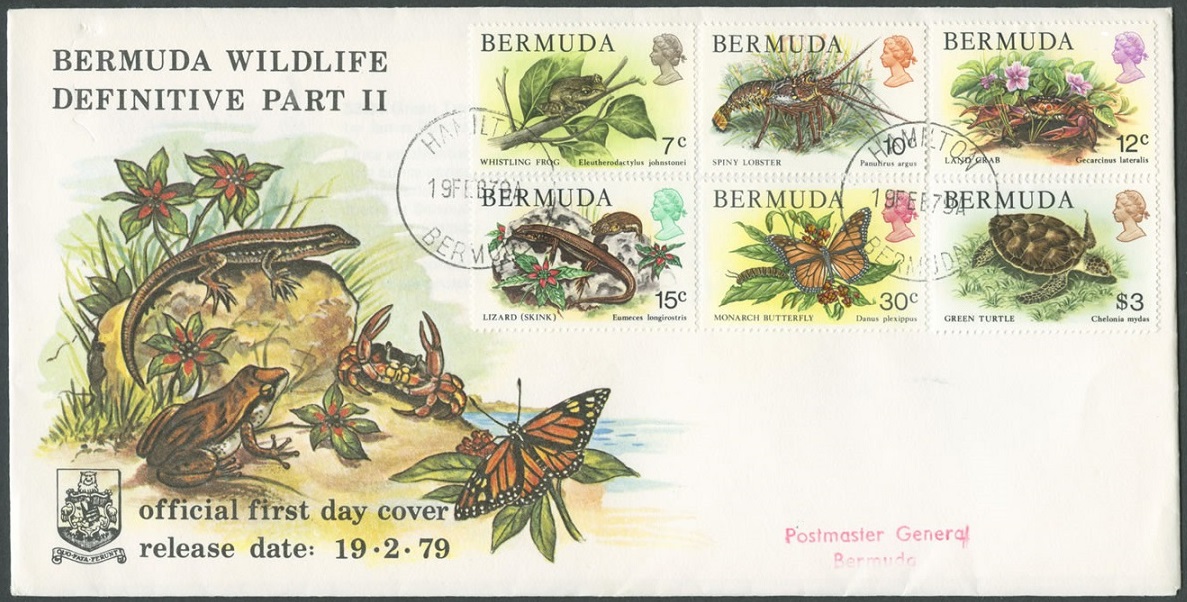
1979 Bermuda Postage Stamps First Day Cover
Antiguan anole, Aquet, introduced about 1940. Sometimes referred to as the Somerset Lizard.Asian gecko (Hemidactylus frenatus). Accidentally introduced to Bermuda in 2011 or thereabouts in cargo imports.
Barbados anole, Anolis lenolis roachii, introduced about 1940, sometimes referred to as the Warwick Lizard, up to 14 inches long and with a yellow-gold eye ring.
Bermuda Rock Lizard. Eumeces longirostris. Bermuda's only endemic, non-flying, non-swimming terrestrial vertebrate. Skink. It was described as unique to Bermuda in 1860 by P. H. Pope, the Smithsonian herpetologist. Its fossil bones, dating back 300,000 years or more, have been found in local limestone caves. Now quite rare in most parishes, largely restricted to pockets of coast and isolated islands. An adult can grow up to seven inches long. Sometimes referred to as the Somerset or Warwick lizard. It is a protected endangered species. It is quite different to those imported from the Caribbean. People from Scotland who are familiar with the national dish called Cullen Skink can rest assured that they are not eating a Rock Lizard or any other kind of skink of the type mentioned above or below. Once on the 15 cents Bermuda postage stamp shown below.
Brown Anole. Arrived from Florida, first seen in 2014. Appears to be thriving but is prompting concern over the island’s endangered natives. One of Florida's most abundant lizards, the anole arrived there from the Caribbean, where it is native to the Bahamas and Cuba. Popular as pets but aggressive breeders in the wild, the lizard, distinguished by ridges on its back, has proliferated in the southern United States. According to the Department of Environment and Natural Resources, Bermuda has two distinct populations of brown anoles. Noting the lizard’s capacity to spread rapidly, there has been concern that the anole would ultimately crowd out Bermuda’s imperiled skinks. The unwelcome development is the latest of many threats to the endemic skink, which are easily trapped and killed by discarded bottles and cans. Skinks are also at jeopardy from storms, as well as predation from other invasive species such as cats and rats.
Cuban brown anole. Discovered in 2015. This species, originating from Cuba and the Bahamas, is one of the most widespread anoles outside of its native range, with large populations present throughout Florida and as far away as Hawaii and Singapore. Unlike the previous anoles found on Bermuda, which are often found on trees and branches, this species lives much more on the ground. This means that if it spreads into an area where the critically endangered Bermudian skink is present then they may compete for food and habitat.
Jamaican Anole (Anolis grahami), introduced in 1905 to control fruit flies which were damaging local crops, which changes color rapidly from blackish brown to green and blue. They have incurred a bad reputation from their diet of ladybirds.
Mediterranean or Turkish gecko (Hemidactylus turcicus). Accidentally introduced to Bermuda in 2011 or thereabouts in cargo imports.
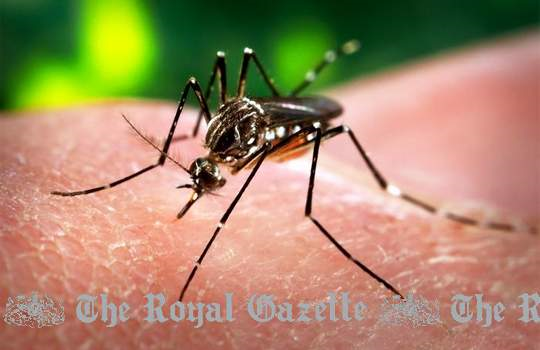 Present
in Bermuda. (Aedes
aegypti and Aedes albopictus - including those potentially liable to catch West Nile
Virus) and which caused outbreaks of dengue fever in Bermuda in the 1940s.
But roofs are not sprayed for fear of what the spray or fogging could do to harm
drinking water and roof catchments. Instead, other parts of the home and
gardens are. Bermuda has four
species of mosquito that can carry vector-borne diseases However, while the
culex mosquito, the eastern salt marsh mosquito and the black salt-marsh
mosquito are a “nuisance”, the Aedes albopictus is more aggressive and more
likely to carry Zika, dengue and chikungunya. The Aedes family normally carries
the Zika virus. The Aedes albopictus can carry it. Also known as the tiger
mosquito, it can be told apart from other species by several characteristics. It
is smaller than the salt-marsh mosquito that is often found close to marshy
areas. It also lays eggs in different patterns.
Present
in Bermuda. (Aedes
aegypti and Aedes albopictus - including those potentially liable to catch West Nile
Virus) and which caused outbreaks of dengue fever in Bermuda in the 1940s.
But roofs are not sprayed for fear of what the spray or fogging could do to harm
drinking water and roof catchments. Instead, other parts of the home and
gardens are. Bermuda has four
species of mosquito that can carry vector-borne diseases However, while the
culex mosquito, the eastern salt marsh mosquito and the black salt-marsh
mosquito are a “nuisance”, the Aedes albopictus is more aggressive and more
likely to carry Zika, dengue and chikungunya. The Aedes family normally carries
the Zika virus. The Aedes albopictus can carry it. Also known as the tiger
mosquito, it can be told apart from other species by several characteristics. It
is smaller than the salt-marsh mosquito that is often found close to marshy
areas. It also lays eggs in different patterns.
The culex lays her eggs on top of the water in a raft but the Aedes albopictus lays her eggs as single eggs. The Aedes is a very aggressive mosquito. With the culex mosquito — that's the common house mosquito — and even with the salt marsh, they will buzz around you and they are a nuisance, but with the Aedes mosquito, it doesn't buzz, it bites around your ankles. It likes dark places. That's why it's hard to detect. Mosquitoes need only a small amount of water to breed, which is why it is very important to empty out water around your yard.
Without water they're not going to multiply.. Mosquitoes take an average of seven days to hatch and can fly up to about two miles, but this can vary from species to species. Only female mosquitoes bite, because they are looking for a blood meal. That's how they get the protein for their eggs,” he said. But mosquitoes also have a positive purpose, with the male playing an important role in pollinating plants.
Citrus leafminer (Phyllocnistis citrella). In 1998 citrus tree owners first reported to agricultural authorities that their trees are being heavily damaged by this insect pest. The citrus leafminer is a small moth with an immature larval stage that damages citrus leaves by making feeding mines leading to leaf distortion and yellowing. The epidermis of the leaf often ruptures, leading to an increase in water loss through the leaf surface. A very high infestation has led in some cases to the insect mining into the outer layer of the fruit skin causing brown winding trails, although the fruit remains undamaged and safe to eat. Surveys carried out at that time revealed that the citrus leafminer could be found in orchards island-wide. As the importation of citrus plants are prohibited and all propagating material is strictly regulated, it is likely that someone smuggled either a citrus seedling or cuttings into Bermuda.
(150 species are known locally).
All pigs now found in Bermuda are imported or issue of once-imported stock. No trace is left of the original wild pig or hog (see Hog Money), brought from the Canary Islands to Bermuda and American coastal areas in the early 16th century by Portuguese and Spanish mariners and left ashore in immature pairs to mature, breed, multiply and forage into a plentiful food resource in the event of unplanned accidental later visits. These pigs were Bermuda's first settlers. Bermuda's colonists of the early 17th century who found these feral pigs or hogs ate them to extinction.
Chickens and Ducks. No indigenous species. Both used for egg-laying, also for show at annual Agricultural shows. Bermuda-laid eggs are nice but very expensive compared to those imported by supermarkets from Maine, etc in the USA.
Not many. No indigenous species. Some kept as imported pets, others once domesticated but now feral, let free by persons leaving Bermuda.
mice and rats.
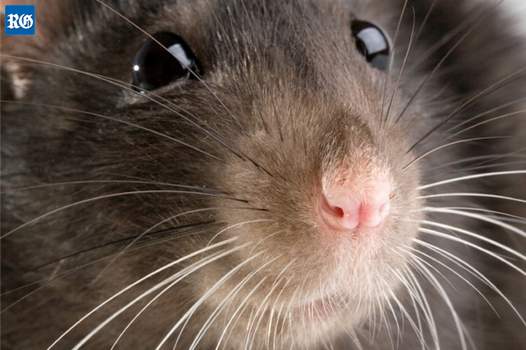 Rattus
rattus, imported, pictured right first
arrived in 1614 in a cargo of grain. Whether they are
nibbling through cables, carrying disease into homes or even jumping on
shoulders in restaurants, rodents are a fact of life in Bermuda. The Island’s
Vector Control team have a vital job to do. Tackling the Island’s rodent
problem is a never-ending battle, but the Bermuda Government’s pest experts
work around the clock to stay ahead of the game. Staff at Vector Control, part
of the Department of Health, have programmes in place for integrated pest
management and help to keep the Island’s farm gardens free from rodents. While
they warned that rodents will always pose a serious health risk, they reminded
the public and business owners that steps can be taken to prevent or eliminate
rodent problems. In December 2015, a rat ran into a Hamilton restaurant and
leaped on to the shoulder of a woman while she was dining. In 2015, 9,118 pounds
of poison were used to combat Bermuda’s rodent problem. Salmonella was the
most commonly known disease carried by rodents, rodents present all sorts of
issues. Rodents needs shelter, food and water, can cause “substantial
damage” to businesses, contaminate food supplies and ruin electrics by gnawing
through cables. Remove anything that attracts them to your property. Rodents
prefer to live close to their food sources and are strongly attracted by smell.
This means rodents are more concentrated in areas around restaurants in the
city. Access through storm drains, which are baited by Vector Control, can
determine which areas are more affected. A lot of people create their own
problems too by keeping garbage in their yard, compost. Problems can also happen
if properties are neglected or landlords do not ensure that cracks and crevices
are sealed. People keeping livestock should also ensure that animal feed is
stored in metal containers rather than in bags and kept at least 18 inches off
the ground. There are three rodent species on the Island that can cause
problems, according to the experts at Vector Control. The house mouse, the black
rat and the brown rat all present a health risk and can cause substantial damage
to businesses. The brown rat was bigger than the black rat, which has a longer
tail that it uses for balance when running along wires, and a pointier face. The
black rat is the roof rat; mostly found in palm trees because they nest up in
palm trees and banana trees. The brown rat is a ground dweller. When they burrow
in the ground, persons shouldn’t mistake that for a crab hole. Crabs burrow as
well but they don’t burrow as deep as the rat. If the sand is still around the
hole, that’s a crab hole. However, all of the rodent species present the same
health risks. Some of the diseases that could be spread by rodents or the ticks
they carried were not necessarily present on the Island. But rats and mice have
the potential for spreading them, especially through their faeces and urine.
Even inhaling rat faeces or saliva could pose a health risk, Vector Control
staff aim to attend a property within 48 hours of receiving a report of rodents.
Their service is free but they charge per bait box. The inspectors look for
certain telltale signs: burrows, dead or live rodents, droppings, gnaw marks,
nests, odor, rub marks, runways, tracks, sounds and urine stains. They also
advise members of the public and business owners about how to avoid creating
environments that rodents thrive in, and which measures to take to avoid the
problem reoccurring.
Rattus
rattus, imported, pictured right first
arrived in 1614 in a cargo of grain. Whether they are
nibbling through cables, carrying disease into homes or even jumping on
shoulders in restaurants, rodents are a fact of life in Bermuda. The Island’s
Vector Control team have a vital job to do. Tackling the Island’s rodent
problem is a never-ending battle, but the Bermuda Government’s pest experts
work around the clock to stay ahead of the game. Staff at Vector Control, part
of the Department of Health, have programmes in place for integrated pest
management and help to keep the Island’s farm gardens free from rodents. While
they warned that rodents will always pose a serious health risk, they reminded
the public and business owners that steps can be taken to prevent or eliminate
rodent problems. In December 2015, a rat ran into a Hamilton restaurant and
leaped on to the shoulder of a woman while she was dining. In 2015, 9,118 pounds
of poison were used to combat Bermuda’s rodent problem. Salmonella was the
most commonly known disease carried by rodents, rodents present all sorts of
issues. Rodents needs shelter, food and water, can cause “substantial
damage” to businesses, contaminate food supplies and ruin electrics by gnawing
through cables. Remove anything that attracts them to your property. Rodents
prefer to live close to their food sources and are strongly attracted by smell.
This means rodents are more concentrated in areas around restaurants in the
city. Access through storm drains, which are baited by Vector Control, can
determine which areas are more affected. A lot of people create their own
problems too by keeping garbage in their yard, compost. Problems can also happen
if properties are neglected or landlords do not ensure that cracks and crevices
are sealed. People keeping livestock should also ensure that animal feed is
stored in metal containers rather than in bags and kept at least 18 inches off
the ground. There are three rodent species on the Island that can cause
problems, according to the experts at Vector Control. The house mouse, the black
rat and the brown rat all present a health risk and can cause substantial damage
to businesses. The brown rat was bigger than the black rat, which has a longer
tail that it uses for balance when running along wires, and a pointier face. The
black rat is the roof rat; mostly found in palm trees because they nest up in
palm trees and banana trees. The brown rat is a ground dweller. When they burrow
in the ground, persons shouldn’t mistake that for a crab hole. Crabs burrow as
well but they don’t burrow as deep as the rat. If the sand is still around the
hole, that’s a crab hole. However, all of the rodent species present the same
health risks. Some of the diseases that could be spread by rodents or the ticks
they carried were not necessarily present on the Island. But rats and mice have
the potential for spreading them, especially through their faeces and urine.
Even inhaling rat faeces or saliva could pose a health risk, Vector Control
staff aim to attend a property within 48 hours of receiving a report of rodents.
Their service is free but they charge per bait box. The inspectors look for
certain telltale signs: burrows, dead or live rodents, droppings, gnaw marks,
nests, odor, rub marks, runways, tracks, sounds and urine stains. They also
advise members of the public and business owners about how to avoid creating
environments that rodents thrive in, and which measures to take to avoid the
problem reoccurring.
Similar to mosquitoes and just as irritating, stinging. Common in the Caribbean but not so much in Bermuda. Can be seen in swarms on some beaches at certain times of the year.
Not many, not farmed or slaughtered, mostly in one area of Bermuda, Southampton and Sandys Parishes. At one farm, the sheep are Dorpers, a South African breed with high fertility and maternal instinct, combined with high growth rates and hardiness. They produces a short light coat of wool & hair shed in the late spring and summer. With their shedding they produce less lanolin, the heavy mutton taste in lamb, so are tasty. A rack of this lamp was served to Queen Elizabeth II at a dinner at Government House Bermuda during her November 2009 visit.
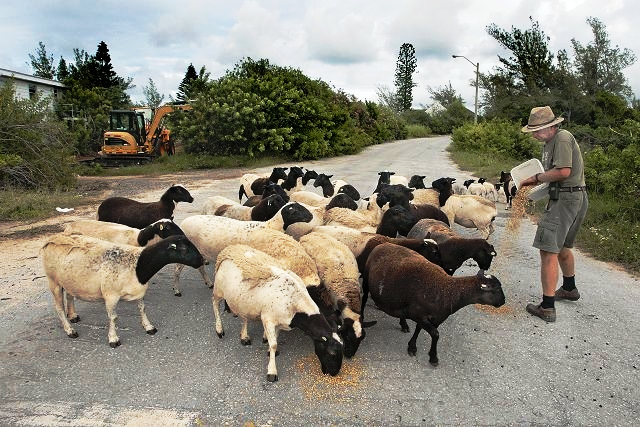
Sheep in Bermuda
Snails, edible and inedible, include Otala lactea ( from Southern Europe via New York) and (Euglandina rosea, naturalized).
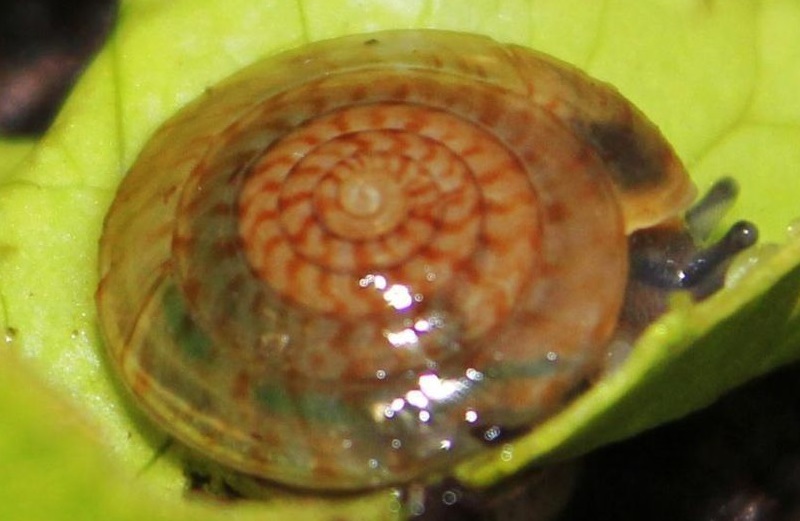 Bermuda
Land Snail 1. Poecilozonites bermudensis. For decades conservationists
believed Bermuda’s endemic land snail was
extinct. They feared it had become a victim of invasive predators. But now,
around 40 years after its last sighting in the wild, a healthy colony of
these snails turned up in October 2014 in the heart of Hamilton in a damp
and overgrown alleyway. The discovery amazed conservationists in
Bermuda. And steps are now being taken to protect the habitat and
re-establish the uniquely Bermudian small snail on the Island. This is a
unique genus of snail, found nowhere else in the world, for years thought it
has been extinct. It seems that this small group has been protected by their
urban isolation. The fact that there was so much concrete around them
probably saved them from the predators that is believed to have killed the
vast majority of the population Island-wide. The last recorded sighting of
this endemic land snail was made in the early 1970s by Stephen J Gould.
Bermuda
Land Snail 1. Poecilozonites bermudensis. For decades conservationists
believed Bermuda’s endemic land snail was
extinct. They feared it had become a victim of invasive predators. But now,
around 40 years after its last sighting in the wild, a healthy colony of
these snails turned up in October 2014 in the heart of Hamilton in a damp
and overgrown alleyway. The discovery amazed conservationists in
Bermuda. And steps are now being taken to protect the habitat and
re-establish the uniquely Bermudian small snail on the Island. This is a
unique genus of snail, found nowhere else in the world, for years thought it
has been extinct. It seems that this small group has been protected by their
urban isolation. The fact that there was so much concrete around them
probably saved them from the predators that is believed to have killed the
vast majority of the population Island-wide. The last recorded sighting of
this endemic land snail was made in the early 1970s by Stephen J Gould.
The well-known paleontologist had done his PhD as a young man on the Island and recorded them as being plentiful throughout the country. But when he returned to Bermuda in the early 1990s their numbers appeared to have taken a dramatic plunge, to the point that he could no longer find one. A lot of what we know today about these animals comes from Dr Gould’s work. He came down here as a deckhand on a ship originally and was fascinated by the evolution that had happened to these snails in Bermuda. He returned to the Island to do his PhD on them. He was still working with these species in the late 1960s and early 1970s. But suddenly it seemed that the snails, which had once been plentiful, completely died out. Dr Gould put it down to the introduction of predatorial snails that were deliberately brought to Bermuda to control the edible garden snail — another introduction that was proving a pest. Dr Gould is not alive now to hear that this animal still remains in the wild. A survey conducted in 1988 by two US scientists in Bermuda could find no living trace of Poecilozonites bermudensis. And later studies in 2000, 2002 and 2004 seemed to confirm that the animal was extinct. Furthermore, it was discovered that the population of another smaller endemic snail, Poecilozonites circumfirmatus, was rapidly declining. As a result a lifeboat project was arranged and the much smaller snail was sent to London Zoo where it has been saved from extinction. Plans are now afoot to protect the colony of Poecilozonites bermudensis in Hamilton and look at possible spots to translocate the species around the Island to reestablish it.
Bermuda Land Snail 2. Poecilozonites circumfirmatus. An indigenous snail long thought extinct until re-discovered living in July 2002 by local college student Alex Lines, a Bermuda Aquarium Museum and Zoo intern. In the 1970s, Harvard paleontology professor Stephen Jay Gould found one and wrote "An Evolutionary Microcosm: Pleistocene and Recent History of the Land Snail Poecilozonites in Bermuda. At one time years ago, they could be picked up by the bucketful to be ground up and burnt for lime and mortar. Nowadays, it is the surviving member of Bermuda’s only endemic animal genus. Two related endemic species, P. bermudensis and P. reinianus are considered to have become extinct in the 20th century. A landmark survey of the island’s snails, by Drs. Rudiger Bieler and John Slapcinsky in 1998, revealed very sparse numbers of Bermuda's endemic snail island-wide.
Illegal. Not known in Bermuda until a few king snakes were captured in the years 2012 to 2016 in Sandys. One snake capture was a Black Racer, picked up on the Tucker’s Point golf club, possibly brought in accidentally in a visitor’s golf bag. Bermuda’s wildlife has been innocent of snake predation.
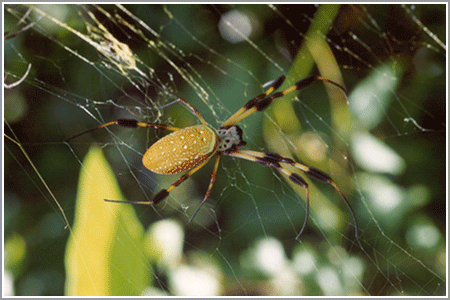 Spiders. Different types are
common. Periodically black widow spiders (Latrodectus sp.) are found.
Much-feared, they are intercepted occasionally in incoming commercial shipments of fruits
or vegetables. In each of these incidents, the Department of Environmental
Protection is alerted and the spiders have been collected and destroyed.
However, many tropical brown widow spiders can be present. Tropical brown widows are quite common in Bermuda and are often sighted
under garden furniture or in quiet outbuildings. They are not considered
dangerous in spite of their toxic venom as they are extremely reluctant to bite
and therefore their presence should not be cause for alarm. The brown widows resemble the black widow both in size and markings and the darker members
of the tropical brown widow could be easily confused with the black widow. At no time should suspect black widow specimens be
handled.
Spiders. Different types are
common. Periodically black widow spiders (Latrodectus sp.) are found.
Much-feared, they are intercepted occasionally in incoming commercial shipments of fruits
or vegetables. In each of these incidents, the Department of Environmental
Protection is alerted and the spiders have been collected and destroyed.
However, many tropical brown widow spiders can be present. Tropical brown widows are quite common in Bermuda and are often sighted
under garden furniture or in quiet outbuildings. They are not considered
dangerous in spite of their toxic venom as they are extremely reluctant to bite
and therefore their presence should not be cause for alarm. The brown widows resemble the black widow both in size and markings and the darker members
of the tropical brown widow could be easily confused with the black widow. At no time should suspect black widow specimens be
handled.
Other spiders include colorful ones with tiny shell-like backs, also harmless and other types including those with long legs, plus at least one Black Widow confirmed in November 2001.
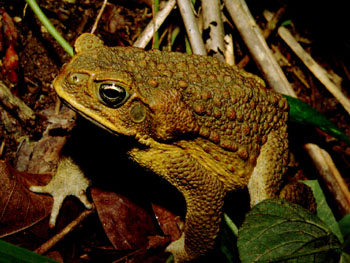 Bermuda
Toad. Bufo marinus,
or Rhinella marina, introduced,
common, island-wide and year-round but especially in the summer months after
rainfall. sometimes
wrongly called Surinam toads or road toads or giant toads, 4" to 9" in
length, were originally imported to Bermuda from British Guinea
(now Guyana) in 1875 by Captain Nathaniel Vesey to control cockroaches and centipedes, but were not successful. They were once very common locally, especially around
marshy areas and central parishes and after a good rain but are not seen so much
now. They do
not spit and will not cause warts if touched. They are shades of brown, varying
from yellow, red, to olive-green, sometimes with spots of white across the
back, sides and legs. Their undersides are yellow with black flecks. Their
skin is dry, often with rows of warts on areas. The females are markedly
larger than the males, while the males have more prominent rows of warts.
When a toad is attacked, its defense is exuding a milky fluid, (bufotoxin),
from these warts, which act as an irritant to the mucous membranes of the
attacker. There are two concentrations of the poisonous glands behind each
eye. They are known as parotid glands. These glands are very prominent and
are a key distinguishing feature of the species. The poison does not protect
the toad against all predators, for most snakes and birds seem to be
unaffected and humans tend to only get skin irritation, but it is fatal to
small animals as well as many domestic cats and dogs. Tadpoles are jet black
above and silvery white with black spots below. Dog owners should be aware
they are a dangerous threat, poisonous, to dogs. When
provoked, they excrete a venomous toxin from enlarged parotid (salivary)
glands located behind their eyes. They can excrete enough venom to kill a
dog. This venom behaves primarily as a neurological toxin and can cause
seizures (convulsions). However, it also can also affect the capability or
quality of shrinking or contracting muscles of the heart. Initial
indications that your dog has been in contact with a toad are mouth
irritation, salivation, shaking their head, pawing at their mouth and
general distress. These initial signs are usually noticed immediately after
exposure and will usually disappear within half an hour. At this stage try
taking a dry paper towel and wipe the dog 's mouth to remove any residual
venom. Clean around the eyes with cotton balls soaked in warm water. Do not
use vinegar. It is very dangerous if a dog accidentally inhales it as it can
cause a severe or even fatal pneumonia. More severe signs of exposure are
twitching, vomiting, and seizures (convulsions). If you notice any of these
signs it is very important to contact your veterinarian immediately. The
effects from the toxin are dose related. This means that it doesn't take as
much toxin to cause seizures in a smaller breed of dog, such as a Jack
Russell Terrier or a Yorkie, as it does a larger breed dog, such as a
Labrador Retriever. Dogs that develop twitching or seizures need to be
treated by a veterinarian immediately. They are generally sedated or anaesthetized
to control the seizures until their livers have had time to metabolize the
toxin. During this time, many additional steps are taken to support their
body systems, such as reducing often high body temperatures and placing them
on intravenous fluids. Be mindful if you let your dog's off leash into the
garden at night. Early detection of a toad poisoning is the key to a safe
recovery. Know the signs, and be sure to contact your veterinarian on their
emergency pager service if you are unsure, especially if you own a smaller
breed dog.
Bermuda
Toad. Bufo marinus,
or Rhinella marina, introduced,
common, island-wide and year-round but especially in the summer months after
rainfall. sometimes
wrongly called Surinam toads or road toads or giant toads, 4" to 9" in
length, were originally imported to Bermuda from British Guinea
(now Guyana) in 1875 by Captain Nathaniel Vesey to control cockroaches and centipedes, but were not successful. They were once very common locally, especially around
marshy areas and central parishes and after a good rain but are not seen so much
now. They do
not spit and will not cause warts if touched. They are shades of brown, varying
from yellow, red, to olive-green, sometimes with spots of white across the
back, sides and legs. Their undersides are yellow with black flecks. Their
skin is dry, often with rows of warts on areas. The females are markedly
larger than the males, while the males have more prominent rows of warts.
When a toad is attacked, its defense is exuding a milky fluid, (bufotoxin),
from these warts, which act as an irritant to the mucous membranes of the
attacker. There are two concentrations of the poisonous glands behind each
eye. They are known as parotid glands. These glands are very prominent and
are a key distinguishing feature of the species. The poison does not protect
the toad against all predators, for most snakes and birds seem to be
unaffected and humans tend to only get skin irritation, but it is fatal to
small animals as well as many domestic cats and dogs. Tadpoles are jet black
above and silvery white with black spots below. Dog owners should be aware
they are a dangerous threat, poisonous, to dogs. When
provoked, they excrete a venomous toxin from enlarged parotid (salivary)
glands located behind their eyes. They can excrete enough venom to kill a
dog. This venom behaves primarily as a neurological toxin and can cause
seizures (convulsions). However, it also can also affect the capability or
quality of shrinking or contracting muscles of the heart. Initial
indications that your dog has been in contact with a toad are mouth
irritation, salivation, shaking their head, pawing at their mouth and
general distress. These initial signs are usually noticed immediately after
exposure and will usually disappear within half an hour. At this stage try
taking a dry paper towel and wipe the dog 's mouth to remove any residual
venom. Clean around the eyes with cotton balls soaked in warm water. Do not
use vinegar. It is very dangerous if a dog accidentally inhales it as it can
cause a severe or even fatal pneumonia. More severe signs of exposure are
twitching, vomiting, and seizures (convulsions). If you notice any of these
signs it is very important to contact your veterinarian immediately. The
effects from the toxin are dose related. This means that it doesn't take as
much toxin to cause seizures in a smaller breed of dog, such as a Jack
Russell Terrier or a Yorkie, as it does a larger breed dog, such as a
Labrador Retriever. Dogs that develop twitching or seizures need to be
treated by a veterinarian immediately. They are generally sedated or anaesthetized
to control the seizures until their livers have had time to metabolize the
toxin. During this time, many additional steps are taken to support their
body systems, such as reducing often high body temperatures and placing them
on intravenous fluids. Be mindful if you let your dog's off leash into the
garden at night. Early detection of a toad poisoning is the key to a safe
recovery. Know the signs, and be sure to contact your veterinarian on their
emergency pager service if you are unsure, especially if you own a smaller
breed dog.
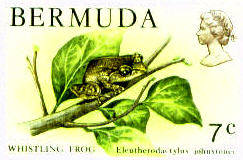

Two species, Eleutherodactylus johnstonei and Eleutherodactylus gossei (first is shown in 1979 Bermuda Postage Stamp graphic here) sing loudly at night. They are one of the most characteristic night sounds of Bermuda between April and November. They are not indigenous - both were introduced accidentally sometime prior to 1880, most likely on orchids imported from the Lesser Antilles. They can be found elsewhere, including on every island in the Caribbean 900 miles south, in temperate and sub-tropical regions. They are so small they can sit on a thumbnail. They have tiny suction discs on long, slender toes. They can be heard island-wide when the weather is warm enough but are most common in the Parishes of Devonshire, Paget, Pembroke and Warwick. Their song is the sound of males trying to attract females. The first of the two is more common and smaller. The other has almost disappeared. Both are brownish, nocturnal, living in trees near the ground and by day hiding under stones and leaf litter. Many visitors are not used to the whistling song, a loud bell-like chorus, of these tiny and harmless creatures. Some visitors say it disturbs their sleep but others love it because it adds a unique sound to the atmosphere. Some newly-weds say it keeps them awake and explains their sleepy eyes the next morning. Whistling frogs do not require standing water for breeding but pass through their tadpole stage within the egg itself. Clusters of eggs are laid in damp situations among rotting vegetation or under stones.
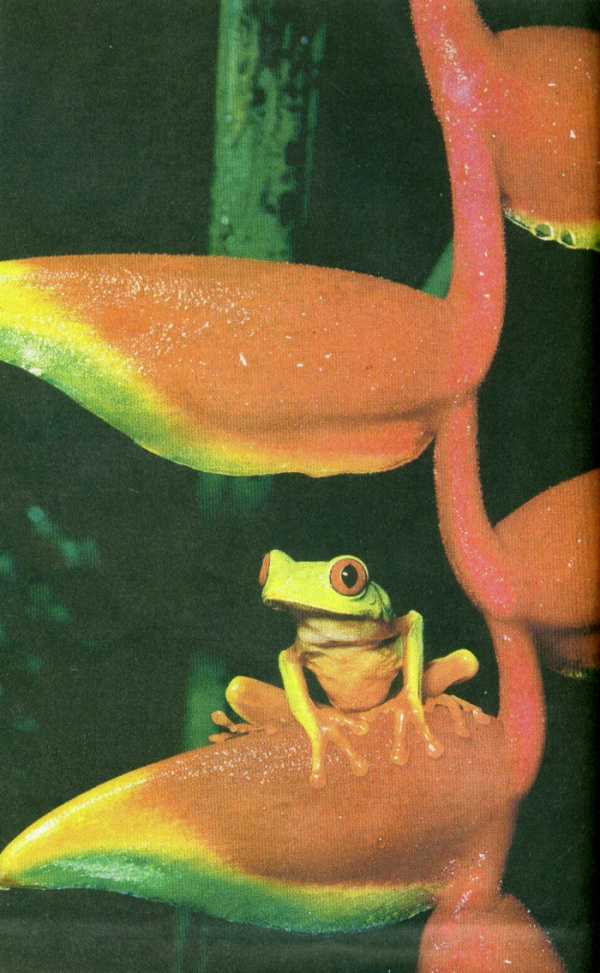
Tree frog captured by digital camera. Photo kindly lent by Bertram Forbes
Banner.jpg)
Authored,
researched, compiled and website-managed by Keith A. Forbes.
Multi-national © 2020. All Rights Reserved