Click on
graphic above to navigate the 165+ web files on this website, a regularly
updated Gazetteer, an in-depth description of our island's internally
self-governing British Overseas Territory 900 miles north of the Caribbean, 600
miles east of North Carolina, USA. With accommodation options, airlines,
airport, actors, actresses, aviation, banks, beaches, Bermuda Dollar, Bermuda
Government, Bermuda-incorporated businesses and companies including insurers and
reinsurers, Bermudians, books and publications, bridges and causeway, charities,
churches, citizenship by Status, City of Hamilton, commerce, communities, credit
cards, cruise ships, cuisine, currency, disability accessibility, Devonshire
Parish, districts, Dockyard, economy, education, employers, employment,
environment, executorships, fauna, ferries, flora, former military bases, forts,
gardens, geography, getting around, golf, guest houses, highways, history,
historic properties, Hamilton, House of Assembly, housing, hotels, immigration,
import duties, internet access, islands, laws, legal system and legislators,
main roads, marriages, media, members of parliament, money, motor vehicles,
municipalities, music and musicians, newcomers, newspaper, media, organizations,
parks, parishes, Paget, Pembroke, performing artists, residents, pensions,
political parties, postage stamps, public holidays, public transportation,
railway trail, real estate, registries of aircraft and ships, religions, Royal
Naval Dockyard, Sandys, senior citizens, Smith's, Somerset Village, Southampton,
St. David's Island, St George's, Spanish Point, Spittal Pond, sports, taxes,
telecommunications, time zone, traditions, tourism, Town of St. George, Tucker's
Town, utilities, water sports, Warwick, weather, wildlife, work permits.

Bermuda's distinguished visitors
over the centuries
From 1609 to the present day

By Keith Archibald Forbes
(see About Us)
Visitors in the 16th century were
involuntary, mostly Portuguese or Spanish mariners who were shipwrecked on the
reefs. They stayed just long enough to rebuild their vessels. Those in the early 17th century
included Bermuda's founder and Virginia's savior, Admiral Sir George Somers and Virginia's first
Governor, Sir Thomas Gates.
In the late 18th century, they included involuntary
American prisoners and Royal Navy heroes of the American Revolutionary
War and a little later, George Washington's brother Lawrence who
actually slept here and for many nights. In the early 19th century, they
included many from the second British and American war of 1812 to 14 and
then a number of American Loyalists, the most significant being New England
born administrators, clerics and jurists who became Bermuda's Governors,
ministers and Chief Justices.
British Royalty
Many
members of Britain's Royal Family have come, initially as Princes in the 19th and early 20th
centuries, when midshipmen in the Royal Navy. Royal visitors were:
-
1861. May 6. Prince
Albert, Duke of Edinburgh, second son of Queen Victoria.
He was on board HMS St. George. He was met by Governor Colonel H. St.
George Ord and stayed six days.
-
1880, (another) Prince Albert, 16,
and Prince George, 15, sons of the-then Prince of Wales, later, Edward
VII), arrived as midshipmen on HMS Bacchante.
-
1883. January. Princess
Louise Caroline Alberta (1848 to 1939), third daughter of Queen Victoria, wife of the Marquess of Lorne,
Governor of Canada, made her first trip to Bermuda. She
stayed for 10 weeks at Inglewood, Paget. She
was the fourth daughter and sixth child of the nine born to Queen Victoria
(1819 to 1901) and Francis Albert Augustus Charles Emmanuel, Duke of Saxony.
Prince of Saxe-Coburg and Gotha (1819 to 1861). It
is not generally known that before she became a prolific and talented artist
in paints, she was trained as a sculptor. She could also draw well. She was
a beauty who abandoned life at court in favor of a Bohemian existence among
artists and sculptors. It
is said she gave birth to an illegitimate child, long considered to have
been Henry Locock. He was born in December 1867 and, to cover up a scandal,
was adopted by the son of Sir Charles Locock, Queen Victoria's gynecologist.
She lived in a
cottage in Surrey, England, and attracted much gossip after marrying in 1871
the Marquis of Lorne from Scotland, heir to and who later became the 9th
Duke of Argyle, the premier Highland noble. She was the Marchioness of
Lorne, later the Duchess of Argyle. She defied precedent by marrying, for
the first time in many generations, outwith the cozy circles of European
royalty. The
unhappy side to her story is that her husband was a promiscuous homosexual. It
was because of his Royal Appointment as Governor General of Canada - and may
also have been because of his philandering - that she was able to visit
Bermuda, not just once in 1883 but several times later. She made no secret
of the fact that she much preferred the much warmer winter climate of
Bermuda to that of Canada. She was Bermuda's first official tourist in 1883.
The two big local Princess Hotels are named after her. The first was the
Hamilton (or Pembroke) Princess built originally in the late 1880's but
modernized since. The real Princess consented to the name because it was
built from the publicity she brought Bermuda. In fact, she was present for
the grand opening and formally named the hotel. Bermuda also owed her a
great debt because more than anyone else she put Bermuda on the map of
tourism with her fame and stature. She referred to Bermuda as the
"Shangri La" of holiday destinations. With
her appreciation of the military, Guard of Honor it provided for her wedding
and the artwork she did for it, one of Scotland's most famous British
Army units, The Argyllshire Regiment, was renamed to honor her. It
carried her insignia for many years in its own - and served in Bermuda for
two years under the old name in the late 1920s before it became The
Argyllshire Highlanders and later, the Argyle and Sutherland
Highlanders. She designed all the badges for her regiment, incorporating the
boar of her husband's Clan Campbell and the cat of Sutherland, both regarded
in the Scottish Highlands as symbols of superhuman power since pagan times.
She linked the two badges with a label of three points from her own armorial
bearings, the mark of her cadency as a junior member of the royal family.
(Sadly, the battalion that went
to Bermuda was credited in the official regimental records in Stirling
Castle as having served in Jamaica instead. Despite our efforts since
September 1998 and evidence from other resources as well that the unit was
in Bermuda but never in Jamaica, we have not been successful in getting the
unit to correct its records). The
leading Canadian organization which owns a number of the watercolors she
painted while she was in Bermuda (and lent them to Bermuda for a recent
exhibition) is the National Gallery of Canada.
- 1891. A little over a decade after his first visit, Prince George
returned to Bermuda in command of the gunboat HMS Thrush.
- 1912. Another
Prince George, Marquess of Milford Haven, grandson of Queen Victoria, visited Bermuda briefly, as a
lieutenant on HMS New Zealand.
- 1913. Prince Albert Frederick Arthur George,
then a naval cadet, visited Bermuda on HMS Cumberland. (He became King George VI
in December 1936).
- 1920. The first official Royal Visit to Bermuda was
when Albert Edward, Prince of Wales (later, briefly, King Edward VIII) concluded
his tour of the British Empire. It was the first of three visits by him.
- 1924, 1925 and 1926, Lady Ramsay, the granddaughter of Queen Victoria, resided
in Bermuda, at Soncy in Pembroke Parish. Her husband, Captain Alexander Ramsay,
was stationed in Bermuda then.
- 1931. Albert Edward, Prince of Wales, returned
to Bermuda en route to Buenos Aires to open a British Industries
exhibition. During his stay he played golf on the Mid Ocean course.
- 1935. April 3, the Duke of
Kent, fourth son of King George V, and his wife, landed at Penno's Wharf, St.
George's. They were met by Governor Sir Astley Cubitt. They were on the last
stop of a honeymoon tour.
- 1940. Former
King Edward VIII (who abdicated in December 1936 and was replaced by his
brother, George VI), arrived in Bermuda with his divorced wife, the Duchess of
Windsor. He was en route - via a Canadian Ladyboat - to the Bahamas, as
Governor. He and his wife spent a week in Bermuda at Government House.
- 1953. November 23. The first
British monarch to visit was Her Majesty Queen
Elizabeth II, only five months after her glittering
Coronation in London, with the world-wide publicity it generated,
Bermuda received its first visit - a 24-hour stay - from her. She is the
surviving daughter
of Britain's and Bermuda's last ever King-Emperor, George VI. Bermuda
was her first stop on her Coronation tour of the Commonwealth. With her on her British
Overseas Airways Corporation Constellation Canopus was her
Greek-born Consort, His Royal Highness Prince Philip, Duke of Edinburgh. “Our proudest moment” was how the Island described Queen Elizabeth II’s first visit to Bermuda.
The Queen and the Duke of Edinburgh spent little more than 24 hours in Bermuda as part of a 30,000-mile, six-month tour of the Commonwealth countries. Bermuda was the first stop. The Royals arrived on
Canopus, a Boeing 377 or Stratocruiser; the same one that would bring Winston Churchill here a week later for the Bermuda Conference. The Queen had sat on the Throne for only six months, and the tour was a way of introducing her to her people. People on the Island rehearsed what they would do on the visit for weeks ahead of time. The couple had a whirlwind tour of Bermuda accompanied by Governor Alexander Hood and his wife. They visited St Peter’s Church, toured Kindley Air Force base and paraded through Hamilton before paying a visit to Parliament. The Queen later attended a state dinner that was noticeably absent of any black Bermudians. They left to fly on to Jamaica. When
she left, it was to the sound of a bagpipe played by Tommy Aitchison, official
piper to the Caledonian Society.
-
1955. Princess Margaret visited
Bermuda.
-
1959. March. Prince Philip, Duke of
Edinburgh, arrived by himself for a 2-day visit relating to the 350th
anniversary.
- 1962. In January and again in
August, Princess Margaret visited Bermuda.
- 1962. April. Prince Philip, Duke
of Edinburgh, arrived by himself for a brief visit.
- 1964. In April, Her Royal
Highness the Queen Mother visited Bermuda.
- 1964. August. Prince Philip, Duke
of Edinburgh, arrived by himself for a brief visit.
- 1964. November. Prince Philip,
Duke of Edinburgh, arrived by himself for a brief visit.
- 1965. November. Princess Margaret
visited, to present the Colours to the newly-formed Bermuda Regiment.
- 1968. March. Princess Margaret
visited Bermuda.
- 1970. March. Princess Margaret
visited Bermuda.
- 1970. Prince Charles visited
Bermuda, to open the 350th session of Parliament.
- 1973. Prince Charles arrived
without pomp and ceremony as a Sub Lieutenant aboard HMS Minerva. He stayed for
4 days and attended a number of social functions but is main duties were on the
warship.
- 1975. February 16. Second
official visit to Bermuda, 22 years after her first, of Her Majesty Queen Elizabeth II and Duke of
Edinburgh. She
was greeted by Governor Sir Edwin Leather. One of the events she attended was
the Speaker's Dinner (which this author also attended), hosted by the Hon. Sir
Dudley Spurling. Bermuda was experiencing a massive General Strike at the time
with workers from the docks, hotels, transportation and sanitation
protesting over poor pay. While here, the Queen visited Gibbs Hill
Lighthouse. On this visit, the wife of an air force base commander
apparently disgraced herself by getting protocol mixed up, despite having
practised it endlessly. Instead of shaking hands then taking three steps
back and walking away, she shook hands but became flustered, walked away,
then turned around, confused. Prince Phillip laughed at this.
- 1975. March 1. The Queen stopped
briefly on the Island that same year, when her plane arrived for refuelling. While here, she drove around in a $150,000 Rolls-Royce borrowed from a Philadelphia businessman. The car was reputed to have once been owned by Czech communist party leader Alexander
Dubcek.
- 1975. October. Princess Margaret
visited Bermuda twice, once on a private visit a week earlier. (Her marriage to fashion photographer Tony Armstrong Jones, who became
Lord Snowdon after he married her, was dissolved in 1978).
- 1976, July 3. Third visit to
Bermuda of Her Majesty Queen Elizabeth II and Duke of Edinburgh. This time, it
was purely a 4.5 hour stopover.
- 1978-1994. The Queen and Duke of
Edinburgh had a few brief stopovers in Bermuda en route to other destinations.
-
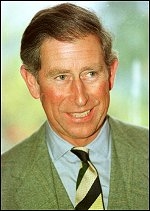
1982. February 16, His Royal Highness
the Prince of Wales, Prince Charles, eldest son of Her Majesty
Queen Elizabeth II, and his bride, Diana, Princess of Wales, stopped off in
Bermuda in their royal aircraft as part of their honeymoon trip to the Eleutheran
Islands of the Bahamas. They were escorted around the original capital of St.
George's by the Premier, the Hon. John W. Swan and the Acting Governor. The tour
was arranged by the Special Branch of the Bermuda Police Force, after a special
request from Prince Charles. Due to their high profile, the Royal visitors had
several unobtrusive Special Branch members guarding them. To mark the Royal
Wedding, the Bermuda Monetary Authority issued its seventh commemorative coin
set, the "Royal Wedding, Prince of Wale and Lady Diana Spencer" issue,
comprising a $250 piece in 690 pie fort, 790 proof and 217 uncirculated pieces;
and a $1 coin in 16,296 proof and 65,004 copper-nickel pieces.
- 1984. Princess Margaret visited
Bermuda again.
- 1989. March. Prince Philip, Duke
of Edinburgh, arrived by himself for a brief visit.
- 1990. The late Princess Margaret
opened the new Cruise Ship Terminal on the North Arm of Dockyard, Ireland
Island.
- 1991. March. Prince Philip, Duke
of Edinburgh, arrived by himself for a brief visit.
- 1992. April 23. Prince Edward
(Anthony Richard Louis), 24 year old youngest son of Queen Elizabeth and
Duke of Edinburgh, finished his first visit to Bermuda with an appearance at
the Botanical Gardens where he opened the 55th Agricultural Exhibition. his
busy day also included local participants in the Duke of Edinburgh's Scheme
and met related projects at Verdmont, St. Brendan's, Girl Guides Association
and King Edward VII Memorial Hospital. He lunched with Premier Sir John Swan
and Mayor of St. George's. Henry Hayward.
- 1994. March 8-10. The Queen and Duke
of Edinburgh again visited Bermuda, on a major 2 day tour. During this
visit she took time out to chat with children and accepted freesias from
some of them. This was consistent with her other visits. Her press officer
explained that she wasn’t just in Bermuda to see the dignitaries but to
meet as many people as possible. Her itinerary included a visit to Tucker
House in St George to see their new archaeological exhibit. At a special
dinner at what was then the Southampton Princess, she surprised everyone by
touching on the subject of race during a speech about how Bermuda had
changed since she first visited. She said, “Black people have taken the
lead in many areas of national life politics the judiciary and the police to
name a few.” She also remarked on the surge of international business
since her visit in 1977. She was in Bermuda for 44 hours . Her wrist was
bandaged after a fall from a horse.
- 1999.
October. Her Royal Highness the Princess Royal
(formerly Princess Anne) made her
first visit to Bermuda, lasting several days.

- 2001. April. Her Royal Highness the Princess Royal
(formerly Princess Anne) came again to formally award World Heritage status
to the Town of St. George.
- 2006. June 23. Her
third visit of Her Royal Highness the Princess Royal
(formerly Princess Anne).
- 2009. November. The Queen
and the Duke of Edinburgh visited to commemorate Bermuda’s 400th
anniversary. While here, the Royals did a little gardening. At
Government House they helped plant two new palms alongside various other
trees they had planted over the years including a Yew tree. On this
occasion, they used the same shovel they had used to plant a tree back in
1953. They recalled how on their first visit to Bermuda, the Island was in
the grips of the cedar blight and all the cedars were dying. The Royal
Couple took a tour on one of Bermuda’s fast ferries. As the ferry passed
through Hamilton Harbour they passed the Fairmont Hamilton where hundreds of
Union Jacks waved. They disembarked in Dockyard where 102-year-old Hilda
Smith played the piano for them.
Other visiting Royals have
included The Right Hon. The Earl of Snowdon (then married to the late Princess
Margaret); Her Royal Highness Princess Alice,
Countess of Athlone; Duke and Duchess of Kent and Prince Michael of Kent; Her Royal Highness Princess
Alexandra and her husband the Hon. Angus Ogilvy; and His Royal Highness The Duke of
Gloucester. The present Her Royal Highness the Duchess of Gloucester, born in
Odense, Denmark on June 20 1946, visited Bermuda in March 2003. Her husband is
HRH Prince William of Gloucester, a first cousin of Her Majesty the Queen.
Americans - comprising 85% of all
Bermuda's visitors, have a fascination for members of the British royalty.
American Presidents
In order of arrival.
Woodrow Wilson
 Three
times.
He began Bermuda's
list of visits by American Presidents. The first
was before he became Governor of New Jersey, his first important political
office. It was in 1907 and he was President of Princeton University and
married at the time. His visit to Bermuda was just before he launched his
political career.
Three
times.
He began Bermuda's
list of visits by American Presidents. The first
was before he became Governor of New Jersey, his first important political
office. It was in 1907 and he was President of Princeton University and
married at the time. His visit to Bermuda was just before he launched his
political career.
It was at the urging of his doctor,
partly to escape the pressures of academic politics but in reality from
a 1906 injury which had left him temporarily without sight in his left
eye. He had planned to travel with his wife Ellen but when their daughter
became ill he traveled alone.
It was during this first visit that he looked
upon the use of motor cars in Bermuda with such particular disgust that
he even drafted a petition to the Bermuda Legislature, saying: "It would
be a fatal error to attract to Bermuda the extravagant and sporting set
who have made so many other places entirely intolerable to persons of taste
and cultivation." Certainly, his comments received a receptive audience.
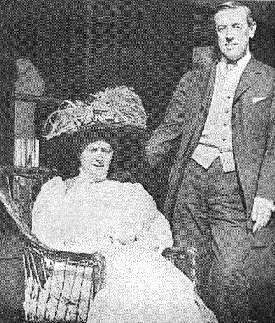
Then he met Mary Peck, a still married American
woman - and had something entirely different to think about. He had an
affair with her. When his vacation was over, he returned home to his wife
and family but remained in contact with Mrs. Peck. In January 1908 he returned
to Bermuda alone - and again met up with Mrs. Peck. Apparently, his conscience
bothered him so much he confessed it to his wife. We do not know if she
forgave him.
When he returned for the third time in the winter of 1910,
Mrs. Peck was not here. Perhaps he felt miserable. It may have been why
he referred to Bermuda as the "friendless island."
Maybe it was because
of the death earlier in the year of his friend Mark Twain. Callers at the
Bermuda home, Bay House, of the latter then included Wilson, who - when
he could and Twain was also in the mood - liked a game of miniature golf.
Wilson did not return to Bermuda.
In 1911, he became Governor of New Jersey.
In 1912 Mrs. Peck and her husband were divorced. In November of that same
year, he was elected President of the United States. In 1914 Mrs. Wilson
died from Bright's disease. Mr. Wilson later married Edith Bolling Galt.
Woodrow Wilson & Mary Peck in Bermuda in
1907
Harry S. Truman, in 1946 and
1951
Twice:
- First, briefly, in August,
1946. On August 22, he sailed in on his Presidential
yacht Williamsburg. He stayed for a week, as part of an informal visit
which did not involve any diplomatic talks. The most pressing items on his
agenda were swimming, fishing, and touring the island in a special motor car.
He also made a special point of visiting the US NOB in Bermuda.
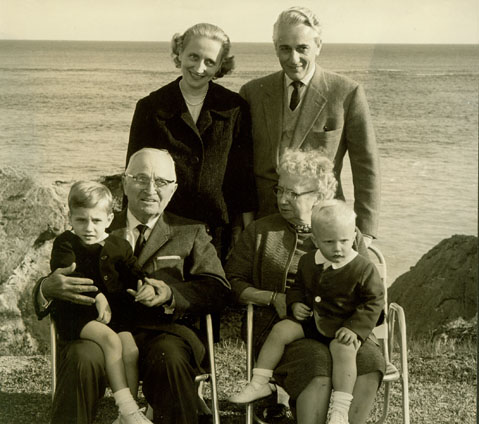
- Second, in 1961 - as a private citizen. The Honorable Harry
S. Truman and Mrs. Truman came on a private visit, to spend time with their
daughter Margaret. As Mrs. Clifton Daniel, she was with her husband and two
sons, in residence "for the season" at the Mid Ocean Club, as the
photo below shows. At
that time, at the City Hall in the City
of Hamilton, he signed the Visitors Book as a "Retired Farmer."
Dwight D. Eisenhower
Three times:
- First, before he was
President, when he was Commander-in-Chief of Allied Forces during
World War 2. It was in 1945 and the war with Germany and Japan was
ending.
- He flew in directly from Europe, was re-tailored at the US Army Air
Force base of Fort Bell in Bermuda.
- He
stayed at Longbird House - the home - demolished in 1995 - of the
Base Commander.
- He went from there to accept the thanks of
and further military instructions from the US Congress in Washington, DC.
- Second, as President,
on December 4, 1953. See "First Summit Conference"
below.
- Third, as President,
March 21, 1957. See "Second Summit Conference" below.
President Eisenhower in Bermuda in
1945 |
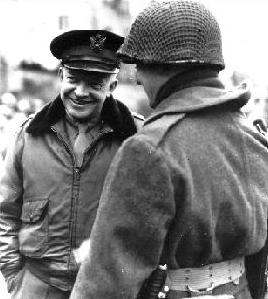 |
John F. Kennedy
Three times. First of his two secret
visits in 1953, when he came, at the age of 36 and about to become a Senator and
stayed by himself at Eventide (now Kennedy House, after the late President) on
Burnt House Hill. It was then owned by his friend, wealthy American Oliver
Newbury. He fell off his moped on that hill. He was invited by Mr. Brooks, a school
friend of Mr. Kennedy who was also friendly with Mr. Newbury. Third visit was
for the "Third Summit
Conference" below.
Richard M. Nixon
Once. See "Fourth Summit
Conference" below.
James Carter
Several times, but well after his
Presidency. He came to visit his son who lives and works in Bermuda, and to give
motivational speeches.
George Bush
He came, as President, for a
visit with Prime Minister Margaret Thatcher.
Bill Clinton
Not while he was a 2-term
President of the USA. Once, before he became President and again in 2009, 30
years later, on vacation to celebrate his 63rd birthday with his wife Hilary Clinton.
They are believed to have conceived their daughter Chelsea at Horizons and Cottages
in Paget Parish.
British Prime Ministers
In order of arrival.
James Ramsay MacDonald
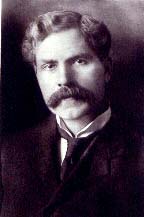 Scottish,
Britain's first Labour Prime Minister. In November,
1937, he was a distinguished passenger on board the ship Reina del Pacifico. He
had served as Britain's first Labour Party Prime Minister briefly in 1924, then
from 1929-1931, and as Prime Minister of the Coalition Government of 1931-1935
until he was succeeded by Stanley Baldwin, also a three-time Prime Minister.
MacDonald was enjoying a cruise to South America.
Scottish,
Britain's first Labour Prime Minister. In November,
1937, he was a distinguished passenger on board the ship Reina del Pacifico. He
had served as Britain's first Labour Party Prime Minister briefly in 1924, then
from 1929-1931, and as Prime Minister of the Coalition Government of 1931-1935
until he was succeeded by Stanley Baldwin, also a three-time Prime Minister.
MacDonald was enjoying a cruise to South America.
But he never got there. He
died while aboard the vessel. As Bermuda was a route stop on the way back to
England, the ship brought MacDonald's body to Bermuda.
Given his stature in
life, Bermuda gave him a singular salute in death - an official funeral
procession befitting a former Prime Minister.
The body was brought to the
Cathedral in Hamilton to lie in state overnight. The next day, during a solemn
procession on Front Street, which attracted some 20,000 local spectators, one of
the largest crowds ever to converge in the city, Royal Navy and Royal Marine
bearers carried MacDonald's flag-draped coffin to the Royal Naval Dockyard tug
Sandboy, for transport to HMS Apollo, waiting to receive it in the Great Sound.
The naval vessel then steamed off to England.
Sir Winston Churchill
Widely regarded internationally
as a superlative statesman, author, upholder of freedom and democracy. He died
in 1965. In 2002
in Britain, a poll ranked him as the leading Briton of all time.
Twice as Prime Minister.
- First, from January 14-16, 1941, when he came as
Prime Minister, after visiting President Roosevelt in Washington DC, to
thank Bermudians, St. David's Islanders in particular, for helping the war effort and allow the creation from scratch of American
military bases in Bermuda. (Later in 1941, August 9-12, Churchill and
President Roosevelt met on a warship off the coast of Newfoundland and
created the Atlantic Charter, the basis of the Allied war plan during World
War 2).
- He was supposed to have met Roosevelt again
in Bermuda in April 1944 to finalize preparations for Operation Overlord but
it was cancelled owing to ill health of the President.
- Second, for the "First
Summit Conference" in December 1953. See below. One of the many stories
about him during this visit was when he was reviewing, in Hamilton, the
"Big 3" Armed Forces security guard. As he did so, two Luscome 8a
aircraft, registration numbers VR-BAE and VR-BAS collided in Hamilton
Harbour and crashed into the sea. VR-BAE was flown by 23 year-old Herbert
Buswell, one of the aircrew (not a military pilot) of the local US Navy Base
in Southampton Parish. He was seriously injured. VR-BAS was piloted by 18
year-old Bermudian Philip Masters. It was badly damaged, but Masters managed
a safe landing before the aircraft sank and managed to get ashore.
- Bermuda Summit 50th
anniversary. Bermuda was visited by members of the international
Churchill Societies and The Churchill Centre. Attending was their patron
Dame Mary Soames, daughter of Sir Winston Churchill. She married Christopher
Soames who, at the time of the Bermuda Summit which Churchill attended was
Conservative Member of Parliament for Bedford and Churchill's Parliamentary
Private Secretary. They
were in conference at the Fairmont Hamilton Princess 6-9 November 2003.
Members of Churchill Societies in the United Kingdom, Australia, Canada
and USA were present.
Harold Macmillan
Twice as Prime Minister.
- First, for the "Second
Summit Conference" shown below.
- Second, for the "Third Summit
Conference" below.
Edward Heath
Once as Prime Minister, for the
"Fourth Summit Conference" below. Also subsequently, in a
private capacity.
Margaret Thatcher
Twice.
- First, as Prime Minister for a
Conference with President George Bush.
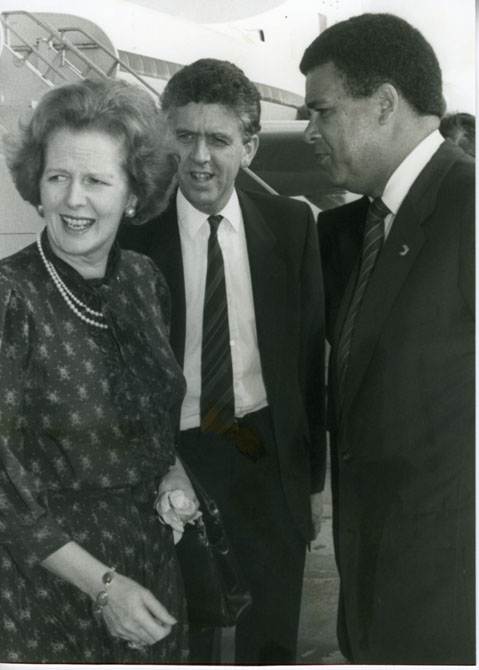
Margaret Thatcher
in Bermuda with Premier Sir John Swan
- Second as Baroness Thatcher,
another elevation after she was declared a Dame, she visited Bermuda on August 7, 2001. She gave a major policy
speech and was full of praise for Bermuda. Her speech was reported in detail.
Tony Blair
Not officially, but unofficially,
at least twice, most recently over Easter 2004, with his wife Cherie and family.
First summit conference December 4,
1953
| It
was originally proposed for June, 1953 but delayed by six months
because of the stroke incurred by British Prime Minister Sir
Winston Churchill. It was the first Summit ever held in Bermuda between
the leaders of the world's most powerful Western countries. It began on December 4, 1953, when United States President Dwight D.
Eisenhower met with Churchill and French Premier Joseph Laniel (who had held the
job since June that year and was destined to continue in it only until June
1954). It became known as the "Big Three" talks. Bermuda
had been selected six months earlier - in June - as the ideal place
for such a summit conference, primarily because it was a British colony
close to American soil. The delay had not altered the site, only the
agenda, somewhat. It had been the British Prime Minister's idea to have
the meeting, following a proposal made by the Soviets for re-unification
of East and West Germany - under Soviet control of both nations. It had hampered the cause of the post-war Western Alliance with the
French interest in the idea. Churchill wanted the meeting to ensure British,
American and French minds would be 'in accord' against it. His
first visit to Bermuda was in 1941. Then, as Prime Minister, he had
persuaded Bermuda to accept American military bases. Sir Winston bought
Chartwell Manor, near the towns of Westerham and Edenbridge,
in Kent, in 1922 but did not actually move in until 1924. It was in poor
condition, possibly why it cost only 5,000
pounds sterling at the time. (It was once part of a huge estate
which also included Obriss Farm, to the south and east.
Sir Winston Churchill
|
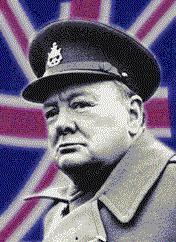
|
| But Chartwell Manor itself was
closed until April 2003). Churchill loved the house from the
minute he saw it but, from a book on Chartwell and Obriss Farm, it was obvious his wife, Lady Clementine, did not and it took her a long
time to get used to it, even after extensive renovations to make it habitable
for the Churchill's. In his six-volume work on the Second World War, Sir
Winston recalled how, during his years in the political wilderness from
1931-1935, he built a large part of two cottages, extensive kitchen garden,
large rockeries, waterworks and a large swimming pool at Chartwell. For the 1953
Summit Conference Churchill's entourage included Foreign Secretary Anthony Eden (later Sir
Anthony and then Lord Avon), his doctor Lord Moran and his Parliamentary Private
Secretary, Christopher Soames, Conservative MP for Bedford - and later,
Sir Winston's son-in-law who married one of his daughters (now Dame Mary
Soames). Prime Minister Churchill.
|
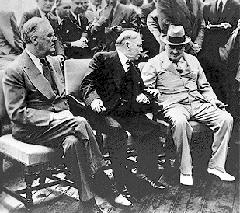
|
They flew into Bermuda on December 2,
1953, less than 12
years before Sir Winston died (in 1965). It was the
same day that the Bermuda House of Assembly created a little history for itself. It adjourned its meeting because it did not have a quorum. Most
Members of the Colonial Parliament had gone to the airport to view
the arrival of Churchill and his party. There were some light
moments there. Churchill, very much an animal lover, liked the presence in the Guard of Honor of
a detachment of the Royal
Welch Fusiliers - imported from Britain especially to provide a British Army
presence in view of the fact that the entire British Army garrison had been
withdrawn officially earlier in 1953. He made a great fuss of the unit's mascot, Billy the
Goat - feelings clearly reciprocated by the goat, clearly used to pomp and
circumstance and delighted by the attention from such a distinguished statesman
instead of his usual orderly.
In
fact. at a Government House reception and dinner the following
evening Churchill hosted for the American President and French Premier, he ensured that
Billy the Goat was ceremoniously paraded around the dinner table by the
mascot handler.
It was reported that the goat's appearance at
the dinner table "delighted everyone." But several days later at least
one prominent French language newspaper, published in Paris, reported Monsieur
Laniel as being frigidly not amused - as well as sick to his stomach from
what he described as the "stench of the British Bulldog's cigars polluting
the atmosphere in the after dinner conference."
On the day of his arrival, Laniel insisted on
visiting a number of Bermuda's leading tourist attractions including the
Aquarium and Natural Zoo, Crystal Caves and St. Peter's Church in the Town
of St. George, where he was also greeted by the Mayor. One local newspaper
reported that he incurred a slight mishap when he slipped on the coconut
matting leading deep into the caves, but was caught and righted before
he fell. But during the same excursion he contracted a chill which turned
into a bad cold, as the result of which his Foreign Minister M. George's
Bidault substituted for him for the rest of the conference.
The
arrival of President Eisenhower from the USA also created a major
stir. In
early December 1953, he landed at what by then with pomp and circumstance at
what had become the United
States Air Force Base in Bermuda at Kindley. He, Churchill and Premier
Laniel spent a total of four days together in Bermuda. Their geopolitical
discussions centered mostly on relations with the USSR as the post war
Cold War began to intensify. Within hours of the commencement of the conference
came an official note from Moscow which requested, in somewhat brusque
terms, a 4 Power meeting involving the Russian leader.
Also on the agenda, which had to be agreed by
Churchill and Laniel, was a speech that President Eisenhower delivered
to the Assembly of the United Nations in New York a few days later. And despite an
illness of Laniel, the British and French delegations also had their
own areas of strife to hammer out.
One was the refusal of Churchill
to have Britain participate in the European Community Defense Treaty, especially
as it meant that Britain would have to agree to the French terms
to treat with the Soviets. It was such a sore point with the French that
for years afterwards, French President General de Gaulle personally vetoed
the entry of Britain into the European Common Market. De Gaulle assumed
from that meeting that Britain wanted no part of a "united " Europe.
Nor did Mr. Churchill want a "united Europe" that
would betray the very freedoms that Britain had gone to war to protect
in 1939. To him, the Russians in the Cold War years were every bit as bad
as the Nazis - and the French had no business taking the Soviet side. However,
even M. Laniel agreed quickly enough with President Eisenhower and Prime
Minister Churchill for a Four Power Conference - including the Soviet Union
- in Berlin the following month.
But for Eisenhower and Churchill, the Bermuda
Conference was a re-union of a warmer kind, which revived their warm war-time
friendship. President Eisenhower amused himself, in his comparatively few
moments of leisure with Mr. Churchill, by firing away at the war-time Bulldog
with his movie camera. And Mr. Churchill chortled with glee as he cavorted
around in mischievous obedience to the President's instructions: "Move,
Winnie, MOVE!. This is meant to be a MOVIE!"
Although a British newspaper later reported that
secrecy at the Bermuda Big Three Conference was upheld so strictly that
it got to the point of being ridiculous, it was no secret that in addition
to the meetings of the political leaders and the separate talks of their
Foreign Ministers - which in the vase of the USA involved Secretary of
State Mr. John Foster Dulles - there was also a long meeting held between
Mr. Lewis Strauss, Chairman of the United States Atomic Energy Commission
and Lord Cherwell, Chairman of Britain's Atomic Energy Authority. While
it was denied stoutly that any decisions on mutual sharing of atomic energy
knowledge were being taken, it was discovered afterwards that Mr. Churchill
had gotten what he wanted.
The only people who didn't get what they wanted
were the representatives of the American, British and French press, who
found that they were long on trivia but woefully short of sensational news
from any significant disclosures. In fact, Billy the Goat got decidedly
more attention than they did from Mr. Churchill. When he took off from
Bermuda, he again fondled the animal's shaggy hide. Maybe President Eisenhower
didn't get as much golf as he wanted. The man who did so much to popularize
the game in the United States did get one round in, however. he also got
"star" treatment to make sure he enjoyed the sport. A path around Mangrove
Lake for the classic par 4, 433 yard fifth hole, a tempting drive over
the lake, was built for his golf cart - and remains there today as a feature.
Lord Moran, in his book Winston Churchill:
The struggle for survival 1940 to 1965, devoted 10 pages of it to a
description of Mr. Churchill's feelings in Bermuda about world affairs
- and on Bermuda itself. In fact, his chapter 46 is entitled Bermuda
- hope deferred. It makes extremely interesting reading. He even extended
his observations to a comment about the well known British golfing professional
at the Mid Ocean Club, Archie Compton (who has since died). He referred
to Compton, the ex Ryder Cup star who had instructed such famous personalities
as King George VI, the Duke of Windsor and (also in Bermuda on this occasion
and later in 1957, President Eisenhower), as someone whose flattery was as
grooved as his swing. He noted that the Americans took over the first floor
of the Mid Ocean Club, while the French had the second and the British
the third. He added that while Mr. Churchill was in Bermuda, his wife was
in Stockholm, collecting - on his behalf - his richly earned Nobel Prize
for Literature. And he even said that partly because Mr. Churchill was
enjoying himself so much in Bermuda, he decided - on a whim - to extend
his stay, because it was such a delightful place to be.
Second summit conference 1957
 On January 10, 1957, Harold Macmillan
(1894-1986) - shown in photo -became Prime
Minister of Britain, following the resignation of Sir Anthony Eden who had
succeeded Churchill. Less
than a month later, in February, it was officially announced in Washington,
DC, London and Bermuda that a Second Summit Conference, between President
Dwight Eisenhower and Prime Minister Harold Macmillan was scheduled for
six to 10 weeks later, in Bermuda.
But consolidating his position at home in England
was then Macmillan's top priority. No less important was the necessity
of mending the fence between Great Britain and the United States that the
Suez affair of 1956 had demolished. Re threading
the pieces of Middle East policy would head Macmillan's foreign agenda
through most of 1957. The earlier Suez quarrel between Britain and the
USA had not simmered down. Indeed, it had continued to boil in Britain,
bringing the state of relations in the so called Special Relationship between
the two countries to an all time low.
On January 10, 1957, Harold Macmillan
(1894-1986) - shown in photo -became Prime
Minister of Britain, following the resignation of Sir Anthony Eden who had
succeeded Churchill. Less
than a month later, in February, it was officially announced in Washington,
DC, London and Bermuda that a Second Summit Conference, between President
Dwight Eisenhower and Prime Minister Harold Macmillan was scheduled for
six to 10 weeks later, in Bermuda.
But consolidating his position at home in England
was then Macmillan's top priority. No less important was the necessity
of mending the fence between Great Britain and the United States that the
Suez affair of 1956 had demolished. Re threading
the pieces of Middle East policy would head Macmillan's foreign agenda
through most of 1957. The earlier Suez quarrel between Britain and the
USA had not simmered down. Indeed, it had continued to boil in Britain,
bringing the state of relations in the so called Special Relationship between
the two countries to an all time low.
In Britain, anti American sentiments
were at a post-war high. In January, Macmillan's Minister of Defense, Lord Duncan Sandys, communicated this forcefully to American Secretary of State
John Foster Dulles. Sandys told Dulles, in very blunt language, that what
was most offensive in the USA's behavior over Suez was the way in which
Britain had been misled - if not deceived outright - by Dulles's scheme
for a Suez Canal User's Association as a method of bringing joint pressure
to bear on Egypt. Sandys and Macmillan felt that Britain had been "led
up the garden path" and Sandys told Dulles that from that moment on, the
British Government lost all confidence in the friendly intentions of the
American Government. The tone of the language used, a far cry from usual
urbane British diplomacy, showed the extent of Britain's anger and resentment.
From the first hours of Macmillan's rise to the
top of the British Government's heap, he decided he had to consult in person
with President Eisenhower, at the earliest possible opportunity. His own
feelings on the Suez matter matched the vehemence of Sandys - and he had
expressed them just as succinctly, directly to Eisenhower. Come hell or
high water, he was not going to appear in the role of suitor, not even
to his old friend. Under no circumstances would he grovel in Washington,
or, as he put it himself, go on a "pilgrimage to Canossa."
Then, on January 22, came the overture, in the
form of a private, very secret and surprisingly friendly message from Eisenhower
in the White House. It said: "How about Bermuda, in March?" Macmillan was
very pleased, yet went through the motions of showing some suitable form
of hesitation. Nevertheless, by February 8, the meeting was scheduled firmly
and duly announced.
The Bermuda Government and Trade Development Board,
unaware of the political overtones in London and Washington, welcomed the
announcement with great pleasure; cited it as yet another example of Bermuda's
popularity with world leaders and world travelers; and banked on the attendant
publicity surrounding the Summit to broadcast Bermuda's claims to resort
fame to a hugely increased international tourism audience. In short, Bermuda
was poised to milk the occasion for all it was worth, for worldwide consumption.
Macmillan had his own reason for agreeing to Bermuda. To him, it was
British soil, which, in his own words "made all the difference to us."
He was also a little apprehensive that the French might be hurt over not
being invited, or that their current Premier, Mollet - with whom Macmillan
had always enjoyed a cordial relationship - would want to turn the Bermuda
meeting into a Tripartite one. He was relieved when the French Government
behaved very well over it and decided to send its members on their own
to Washington.
Political events were significant as well, all
of which had some effect on this particular conference in Bermuda. In his
private notes, following a flurry of telegrams from Britain's delegation
at United Nations headquarters in New York to London and the British Ambassador
in Washington to London, Macmillan observed: "The (American) Administration
have ratted again - and re ratted." But, at the beginning of March,
one of the biggest hurdles in the Middle East was resolved in part when
the Israelis - under heavy pressure from Washington, of course - decided,
as 'an act of faith' (and trust in Washington, which they later regretted
bitterly) to withdraw their forces from Gaza and the Gulf of Aquaba and
let a United Nations peacekeeping force move in. Macmillan had his own
tart public comment on the scenario, noting that "it followed a most complicated
negotiation, in which it looks as if the American passion for being liked
by everybody has got them into the position of being trusted by nobody."
However, Macmillan was relieved over one thing - the Israeli withdrawal
meant that the work of clearing the Suez Canal of war related debris, to
reopen it for British shipping, could proceed.
Macmillan arrived at the Mid Ocean Club in Bermuda
on March 20, a day ahead of President Eisenhower and his entourage, specifically
to welcome the President to British territory. It was not a good time for
the British Prime Minister at home in England. Trades union discontent
and major strike actions in London and provincial cities were so grave
that Macmillan had actually contemplated having to cancel the Bermuda Summit
altogether. But he stuck to his guns and had a highly secret meeting with
British industrial leaders on March 19, the eve of his departure to Bermuda,
in an attempt to break the strike impasse.
Then he boarded his aircraft, left the industrial
smog behind - and had this to say in his diaries about his first impressions
of Bermuda and the American head of state: "The whole population, white
and black, of the island seemed to join in the welcome. The President seemed
very well, bronzed and alert. He had rather a tiresome cough, but as I
have caught a shattering cold myself, we are evenly matched in this respect."
Macmillan also remarked on the condition of American Secretary of State
John Foster Dulles, observing that the latter, despite his major cancer
operation, appeared "very little changed."
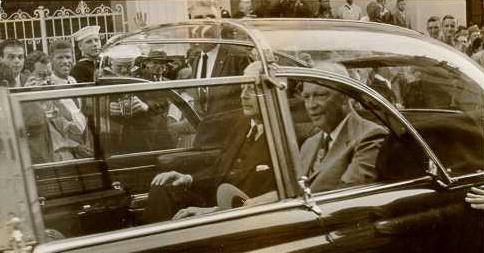
President
Eisenhower and Prime Minister Macmillan in Bermuda, 1957
Macmillan later
wrote about President Eisenhower during the 20 minute ride to the Mid Ocean
Club, after meeting and collecting him from the Civil Air Terminal in Bermuda - as this photograph taken in Bermuda by
American serviceman Larry Muller (and kindly sent in to this website by his
daughter Traci Muller) shows - at what was then
the adjacent Kindley Air Force
Base in Bermuda.
"He
talked very freely to me - just exactly as in the old days. There were
no reproaches - on either side; but (what was more important) no note of
any change in our friendship or the confidence he had in me. Indeed, he
seemed delighted to have somebody to talk to. In America, he is half King,
half Prime Minister. This means that he is rather a lonely figure, with
few confidants. He told me very frankly that he knew how unpopular Foster
Dulles was with our people and with a lot of his people. But he must keep
him. He couldn't do without him."
After dinner that evening at the Mid Ocean Club
between Prime Minister, President and their attendees, the talk moved on
to the general situation in the world. Macmillan commented to his aides
that "nothing startling was said and nothing settled; but the atmosphere
was very good, I thought; in view of all the circumstances, surprisingly
so." And he made it clear at once to the Americans "that we are not going
to be the supplicants, or "in the dock" at this conference. It is rather
the other way round."
On March 21, the Conference proper began. As the
host, Macmillan made a speech of welcome. It concluded with pointed observations
on what, he explained, the British still regarded as an urgent issue -
Nasser and the Suez Canal. He informed the Americans "with that frankness
which true partnership and comradeship required," that "your Government
and many of your people think we acted foolishly and precipitately and
illegally. Our Government and many of our people think you were too hard
on us - and rather let us down. Well, that's over - spilt milk. Don't let's
cry over it - still less wallow in it. But the Canal remains."
"I hope
you will do everything you possibly can to get a Canal settlement, short
and long - especially regarding dues - which we can claim as reasonable,
if not quite what we would like! But if we can't get it - if Nasser
is absolutely obdurate. If we all have, in the short run, to eat dirt and
accept a bad and unjust settlement, I hope you won't say in public or in
private that it's a good settlement. I hope you will denounce Nasser and
all his works in the strongest terms. Bring every pressure - political
and economic - upon him." And he closed his speech with a forceful warning
that a bad solution for Britain "would, I fear, cause such a rift between
our countries and people as would take much longer to repair than the urgent
needs of the world allow."
Obviously, the Americans were somewhat stung by
the remarks. Macmillan noted how Eisenhower, in his reply, referred "rather
sharply" to the points about the British feeling let down, yet on the whole,
was "gracious and fair." The President later admitted to the Prime Minister
that he was taken aback by the strength of British feelings about Nasser.
And in his own memoirs, he duly recorded his impressions of that night
in Bermuda. "Foster and I first found it difficult to talk constructively
with our British colleagues about Suez because of the blinding bitterness
they felt towards Nasser. Prime Minister Harold Macmillan and Foreign Minister
Selwyn Lloyd were so obsessed with the possibilities of getting rid of
Nasser that they were handicapped in searching, objectively, for any realistic
method of operating the Canal."
But Bermuda was a healer of mutual recriminations
in some respects, even if it didn't do anything for Macmillan's cold which,
by the next day, had gone to his chest. In fact, he felt frightful, until
the President's personal physician, General Howard Snyder, prescribed and
administered a relatively potent drug. From then on, things went well.
Over the next two days, between formal meetings, the two statesmen made
a point of popping into each other's rooms at the Mid Ocean pretty much
as they felt like it, sometimes in pajamas, chatting like old school friends.
Yet even then, some underlying currents prevailed.
Macmillan remarked to his entourage that he felt that Eisenhower was weighed
down with the loneliness and formality of his office and enjoyed the "bull
sessions." Eisenhower, on his part, later wrote of those impromptu Bermuda
meetings: "Any conference with the British requires the most detailed discussion.
They do not like to sign any generalizations in a hurry, no matter how
plausible or attractive they may be, but once their signature is affixed
to a document, complete confidence can be placed in their performance.
French negotiators sometimes seem to prefer to sign first and then to begin
discussions."
And on March 22, Macmillan was reporting in a
dispatch to his deputy at home, R. A. (Rab) Butler: "As far as the President
is concerned, there is a genuine desire to forget our differences and to
restore our old relationship and cooperation in full measure. He could
not be more friendly or more frank. We went over most of our problems and
he wants to be helpful. But, of course, he leaves so much to Dulles and
neither the Foreign Secretary nor I feel so happy about his attitude. Even
if he is willing to forgive and forget, I doubt whether he can do so as
fully and as generously as the President. So he acts as a brake on the
process of rebuilding confidence and help."
Also on the agenda for the Bermuda meet was the
entry of the United States into an organization then referred to as the
Baghdad Pact Military Committee, which had militarily linked Britain with
Iraq, Turkey and Pakistan. And the continuing threat of the Soviet Union,
with its Cold War activities against the Western nations, occupied some
time in the discussions. (Little did the world know at the time how the
repercussions from that Baghdad Pact would impact so severely four decades
later, in the Mid-East war that broke out in 1991, after Iraq's outrageous
rape and pillage of Kuwait in August of 1990).
When the Second Summit Conference in Bermuda ended
on March 24, the facilities and equipment had sent over 560,000 words and
120 facsimile pictures to the American, British, Canadian and world press,
involving actual broadcasting transmission time of well over 24 hours.
Of course, most - if not all - of this did not even mention any of the
private thoughts or reactions of the two delegations. Instead, it was the
"more polite" stuff, the "usual" stuff invariably pumped out by politicians
and their people for public consumption. But it made good reading for non
insiders.
The undoubted success and efficiency of the communications
arrangements provided for President Eisenhower, Prime Minister Macmillan,
their teams of aides and advisors and negotiators - and the visiting press
corps - were duly acknowledged appreciatively by the British press in particular,
especially in the form of a warm tribute from Rene MacColl, Chief Roving
Reporter of London's Daily Express.
Largely as the result of the highly successful
Second Summit ever held in Bermuda, which became known as the Bermuda Conference,
harmony was restored to the state of relations between the American and
British Governments.
One of the comments considered especially noteworthy,
quote worthy and newsworthy was how Prime Minister Harold Macmillan referred
both to Bermuda and the Mid Ocean Club during his visit. "This is a fine
place and splendid conditions in which to hold a conference. We are all
together in a fine building on the same passage. It is like living in a
country house together with fellow guests."
Third Summit Conference,
December 21, 1961
 This
was at a time of
heightened world tension further soured by the erection of the infamous Berlin
Wall. It was a two-day event between British Prime Minister Mr. Harold
Macmillan and new President of the United States John F. Kennedy (who had been
inaugurated only 11 months earlier). The meeting had nearly been
cancelled, owing to a massive stroke suffered by President Kennedy's father,
Joseph Kennedy, the pre-war pro-German US Ambassador to Britain. From Bermuda,
President Kennedy telephoned his father at the family estate in West Palm Beach,
Florida, several times to inquire about his condition - and was ready to fly off
at a moment's notice had his father's health deteriorated. When President
Kennedy arrived at the USA's Kindley Air Force Base in Bermuda on his silver and orange painted military Boeing 707,
he issued this comment, directed at Prime Minister Macmillan, the British
delegation - and Bermuda: "I want to express my great pleasure at having an
opportunity to talk to you again and to visit you on your territory which has
been the scene of most important meetings beneficial to both our
countries." What Kennedy didn't mention in his remarks was that he knew
Bermuda better than Mr. Macmillan! In the 1950's, he had visited Bermuda for a
number of carefree short vacations while serving as a Massachusetts Senator.
This
was at a time of
heightened world tension further soured by the erection of the infamous Berlin
Wall. It was a two-day event between British Prime Minister Mr. Harold
Macmillan and new President of the United States John F. Kennedy (who had been
inaugurated only 11 months earlier). The meeting had nearly been
cancelled, owing to a massive stroke suffered by President Kennedy's father,
Joseph Kennedy, the pre-war pro-German US Ambassador to Britain. From Bermuda,
President Kennedy telephoned his father at the family estate in West Palm Beach,
Florida, several times to inquire about his condition - and was ready to fly off
at a moment's notice had his father's health deteriorated. When President
Kennedy arrived at the USA's Kindley Air Force Base in Bermuda on his silver and orange painted military Boeing 707,
he issued this comment, directed at Prime Minister Macmillan, the British
delegation - and Bermuda: "I want to express my great pleasure at having an
opportunity to talk to you again and to visit you on your territory which has
been the scene of most important meetings beneficial to both our
countries." What Kennedy didn't mention in his remarks was that he knew
Bermuda better than Mr. Macmillan! In the 1950's, he had visited Bermuda for a
number of carefree short vacations while serving as a Massachusetts Senator.
The measured but
warm reply, as also reported worldwide, to that message from the elderly but
distinguished Prime Minister Macmillan to the young, vibrant and enormously
popular President Kennedy, was just as friendly: "Mr. President, it is a
very great pleasure to welcome you here on British soil where, as you say, other
meetings have taken place between Presidents and Prime Ministers engaged in the
task which occupies us now - the strengthening of our friendship to preserve the
peace of the world."
Still remembered
today is the motorcade the two men, the Governor and their delegations took from
the Civil Air Terminal to Government House, along the North Shore Road. At every
junction, parked cars were spilling out their occupants to wave and take
photographs. Near Flatts, children held up signs and offered broad smiles of
welcome, including one group whose sign welcomed the President on behalf of
Bermuda's American residents. At Government Gate leading up to the Governor's
residence, a number of children were also assembled.
Over a crackling
cedar log fire, the two world leaders discussed at Government House, among other
things, the war which was then raging in the newly-liberated territory of the
Belgian Congo, which brought forth the ill-fated African patriot Patrice Lumumba
who had sought Western help in the civil war tearing his country apart; the
crisis of the world escalated further by the erection of the Berlin Wall,
completed just days before the conference; and testing of nuclear weaponry, with
its acceptable and unacceptable sites and timings.
The two leaders
made the decision to renew atmospheric nuclear tests, with a joint statement
issued from Bermuda that read: " It is now necessary as a matter of prudent
planning for the future, that pending the final decision preparations should be
made for atmospheric testing to maintain the effectiveness of the
deterrent."
In a lighter
moment during the Summit Conference, President Kennedy initiated some variety
into what had by them become an established custom for all world leaders and
other very important people who had visited Government House. Because of his
well-known and much-publicized bad back, the lingering after-effect of an injury
incurred while on his much written about PT-109 boat war-time duty in the
Pacific, and the less well-known fact that he was suffering from Addison's
Disease, a thyroid condition, he elected to plant his tree - a canary date palm
- less painfully than the customary use of a spade dug into earth. He used
merely a pair of scissors to snip a ribbon on the tree that Government House
gardeners planted for him. With his unfailing good manners employed so as not to
put his distinguished American guest in a bad light, Mr. Macmillan elected to do
the same thing with his tree.
Included in
President Kennedy's entourage were his Press Secretary, Pierre Salinger, later a
well-known private-sector broadcaster and author; The
President's personal private secretary, Evelyn Lincoln; and Mr. Salinger's
assistant Sue Vogelsinger, who wrote for United Press International an amusing
story about Kennedy's Bermuda visit. As she recounted it, at Government House,
Miss Lincoln put into Mr. Kennedy's hands the package she had helped to prepare
as his gift to Governor Sir Julian Gascoigne. Mr. Kennedy was persistent in
asking what it was and was told it was an autographed picture of the President
in a silver frame. Mr. Kennedy laughed and asked if there wasn't anything
better, as he personally would not want to be on the receiving end of such a
mundane gift. At which point the Governor entered the room and Mr. Kennedy
offered the gift, saying that if Sir Julian didn't care for the picture, he
could always take it out and use the frame.
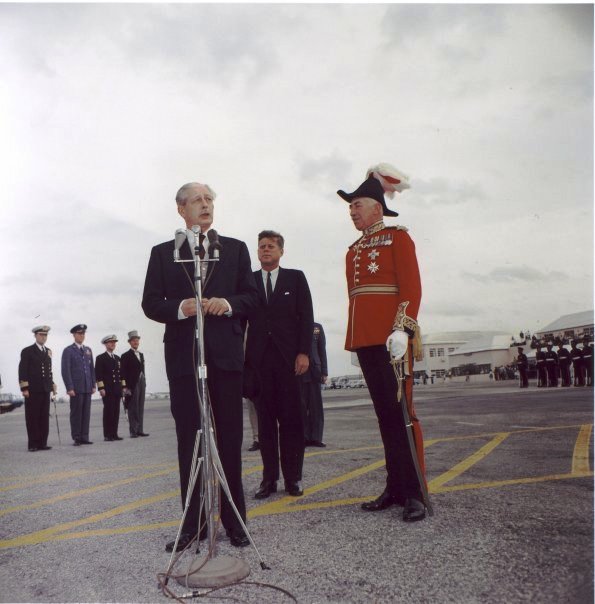
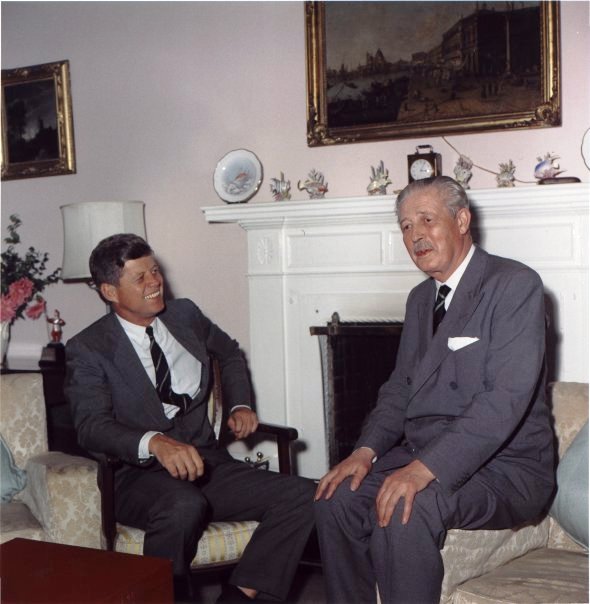
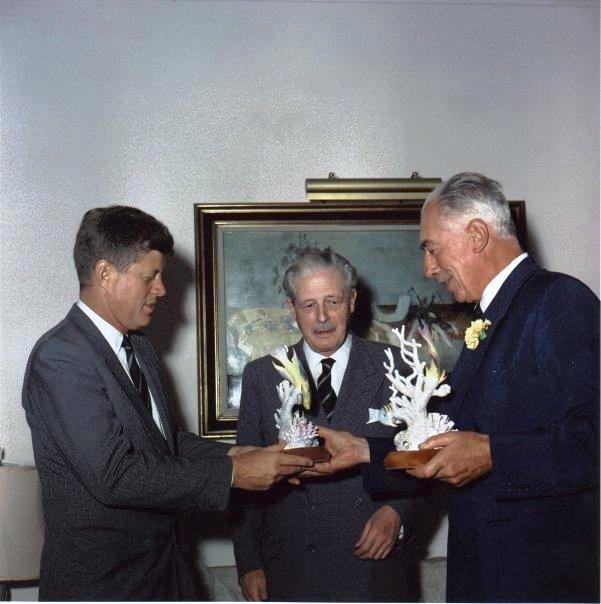
President John F.
Kennedy meeting with Prime Minister Harold Macmillan in Bermuda, December
21-22, 1961. Top and bottom photos also show Governor Sir Julian Gascoigne.
Photos kindly permitted for Bermuda Online (BOL) publication by J F. Kennedy
Library 1995.
Fourth Summit
Conference, December 17, 1971
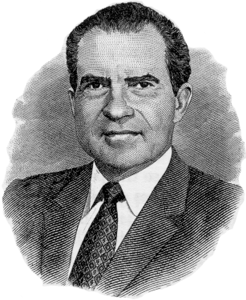
British Prime
Minister Edward Heath (in office 1970-1974, died July 2005) and members of his personal staff and official British
delegation arrived in Bermuda by air at the Civil Air Terminal at Kindley Field for a pomp-and-circumstance welcome from the Governor,
Government Leader, members of Cabinet and other officials. As with previous
other Summits held in Bermuda, the Bermuda Regiment and Bermuda Reserve
Constabulary had been embodied to provide additional security. The only hitch in
all the careful work that had gone into the local planning for the conference
occurred when, on Mr. Heath's arrival, a mistake by ground crew in moving the
embarkation staircase to the wrong doorway of the aircraft left him stranded for
a few minutes until the mistake was rectified. Mr. Heath was well-known at the
time as an expert offshore yachtsman with his own sleek racing yacht. But due to
the inclement weather that greeted him and remained for that weekend, he had to
restrict his activities afloat to a trip on Lord Martonmere's luxurious motor
yacht Romay, rather than at the helm of any Bermuda-rigged vessel in
which he had expressed an interest in trying.
On Monday,
December 20, 1971, the arrival of Republican President of the USA Richard Nixon
at Kindley Air Force Base in Bermuda was preceded by some 160 American press
correspondents in a specially chartered jet. The President arrived aboard his
Presidential plane, the Spirit of 76 for a pomp and circumstance
reception by a delegation of senior Bermuda Government officials. They were led by Governor
Lord Martonmere and Bermuda's Government Leader Sir Henry Tucker, with huge
crowds of onlookers kept in check by the military. By lunch time
that day, President Nixon and Prime Minister Heath had begun their talks. The
conference began on a high note. It was announced by Mr. Nixon at Government
House that the United States would lift its ten percent Customs Duty surcharge
on foreign imports, including specifically those from Britain. The conference
also took an unusual turn that day when Prime Minister Heath invited and Mr.
Nixon accepted a dinner date for that same evening on board HMS Glamorgan,
a Royal Navy guided missile destroyer then in Hamilton Harbour.
On board the
British warship in Hamilton Harbour, President Nixon gave this salute to
Bermuda. "I think we will all agree that we could not have selected a
better place in which to meet." Earlier, he had remarked to Tourism
Minister David Wilkinson (later Speaker of the House of Assembly) that he
hoped his visit would give Bermuda some good publicity as a vacation resort.
By the afternoon of the next day,
Tuesday, December 21, the final communiqué was issued and the Fourth Summit
Conference was cordially concluded.
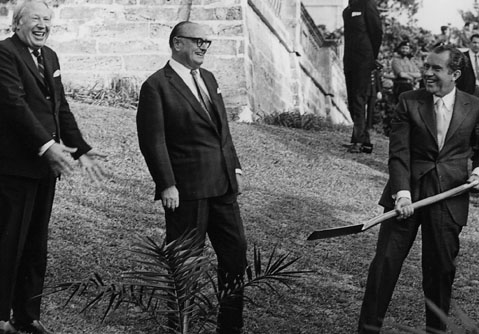 .
.
Prime Minister
Edward Heath, Lord Martonmere and President Nixon planting a tree at Government
House, Bermuda
Other visits by a
President
and Prime Minister
1990. Prime
Minister Dame Marjorie
Thatcher of Britain also selected Bermuda for her discussions with American
President George Bush Senior in the last few years of the twentieth century. It was not
a Summit Conference but both leaders were greeted with pomp and
circumstance. Once again, it was because of Bermuda's commercial, cultural, economic, historical and military
ties with both Britain and the USA. It
was the occasion on which the Bermuda Government allowed the American Secret
Service to scan-search all locals who watched the event on Front Street, much to
the annoyance of some Bermudians, residents and tourists.
1991. US President George Bush
Sr. and British Prime Minister John Major conferred in Bermuda. Since then,
President Bush Senior, while still in office, returned several times to play golf
2004. Prime Minister Tony Mr.
Blair came in April 2004 for Easter week in Bermuda. It was his first visit.
He was accompanied by his lawyer wife Cherie (Booth) - who has been to
Bermuda twice before, on legal business - her mother Gale, sons Nicky, 18, Leo,
four, and daughter Kathryn, 16. Friends of Nicky and Kathryn were also in
Bermuda but oldest son Euan, a 20-year-old student, did not join the family.
2005, former President George
Bush Sr. visited Bermuda again, to play golf.
Other distinguished American, British
and other visitors
American Presidents, British Prime
Ministers and Royalty all have their special listings above. Others not in their
category In art, business, humor, journalism, literature,
music, running, sailing, singing and
other fields have included the following, with their titles or roles applicable
at the time of their visit.
-
The Right. Hon. J. M. G. M (Tom)
Adams, Prime Minister of Barbados at that time.
-
Yolanda Adams, 2006,
gospel singer
-
Sir Ben Ainslie. Played
a pivotal role in Oracle Team USA's dramatic comeback to defend the coveted
"Auld Mug" at the 34th America's Cup in San Francisco in 2013. He
joined the crew as the team's tactician and helped turn an 8-1 deficit into a
9-8 triumph for the defender. The year before, the 37-year-old Briton captured a
fourth-consecutive gold at the 2012 London Olympics. Sir Ben has won medals at
five consecutive Olympics from 1996-2012, including gold at the past four. He is
also a past Laser, Laser Radial and Finn world champion and multiple King Edward
VII Gold Cup winner, having won back-to-back titles in the International One
Design racing sloop in Bermuda in 2009 and 2010.
-
Leila Ali
-
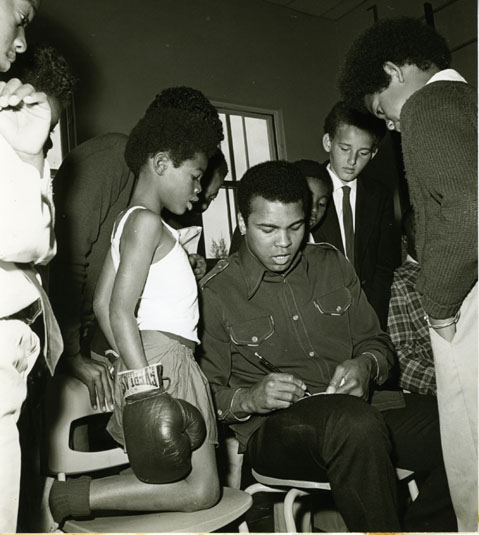
Muhammed Ali, boxing legend,
who died in June 2016, caused a sensation when he visited Bermuda.
-
Dr. Joao Mota Amaral, President
Regional Governor of the Azores
-
Loni Anderson.
-
Kofi Annan, Secretary-General of
the United Nations, a Ghanaian diplomat and Nobel Prize laureate, with his
wife, Nane, visited the island briefly in 2005 and were hosted by Bermuda's
Governor and Lady Vereker.
-
Bill Archer, US Con.
-
Nick
Ashford
and Valerie Simpson, in 2006, musical duo.
-
Ramy Ashour, a three-times
world squash champion, visited Bermuda in June 2016 as a main attraction in the
Axis Squash Challenge and Professional Exhibition.
-
Astronauts Shepherd, Grisssom, Glenn, Carpenter, Cooper, Slayton and
Schirra,
Mercury astronauts in 1960 and
1961, were frequent visitors to NASA Bermuda.
-
Mrs. Barbara Austin, Mayor of Lyme
Regis.
-
James Baker, US Secretary of State,
November 13, 1990.
-
Jim Bailey
-
Lucille Ball
-
Sally Barkow. Yachtswoman who
came to Bermuda in January 2016 to compete in the M32 races.
-
Buju Banton, reggae superstar.
Visited Bermuda in August 2019.
-
The Rt. Hon Errol Barrow, PC, Prime
Minister, Barbados
-
Matthew Barzun, 2015 American
ambassador to Britain. His latest trip to Bermuda, his sixth, was his first on
official business. His area of responsibility has been reconfigured to cover US
consulates in London, Edinburgh, Belfast and Bermuda. His visit coincided
with the Swedish win in October 2015 of the America's Cup Bermuda World
Series. He is a former US ambassador to Sweden.
-
Kathleen Battle, former opera diva,
in late September 2006.
-
Guy Bartholemew, Mini-garden guru
(twice, once earlier, most recently in April 2006).
-
Mr. & Mrs Gordon Baxter of W. A.
Baxter & Sons, the Baxter family of Scotland, makers of
soups, jams, etc visited Bermuda in September 1967. They were greeted at the
Civil Air Terminal by the Manager of Pan Am and Cindy Farnsworth Toddings, Pan
Am's Senior Special Services Representative. Gordon, his wife Ena and Ian met
with Francis Vallis and Graham Lynn, both of Vallis & Co. Ltd, Bermuda
importers of Baxter goods. Earlier, in 1959, laden down with samples of jam and marmalade, they had
first set off for the United States of America. Ena's cooking demonstrations
were seen by millions of American TV viewers. They hosted mammoth Scottish
charity banquets, complete with pipers and singers and an all-Baxter menu.
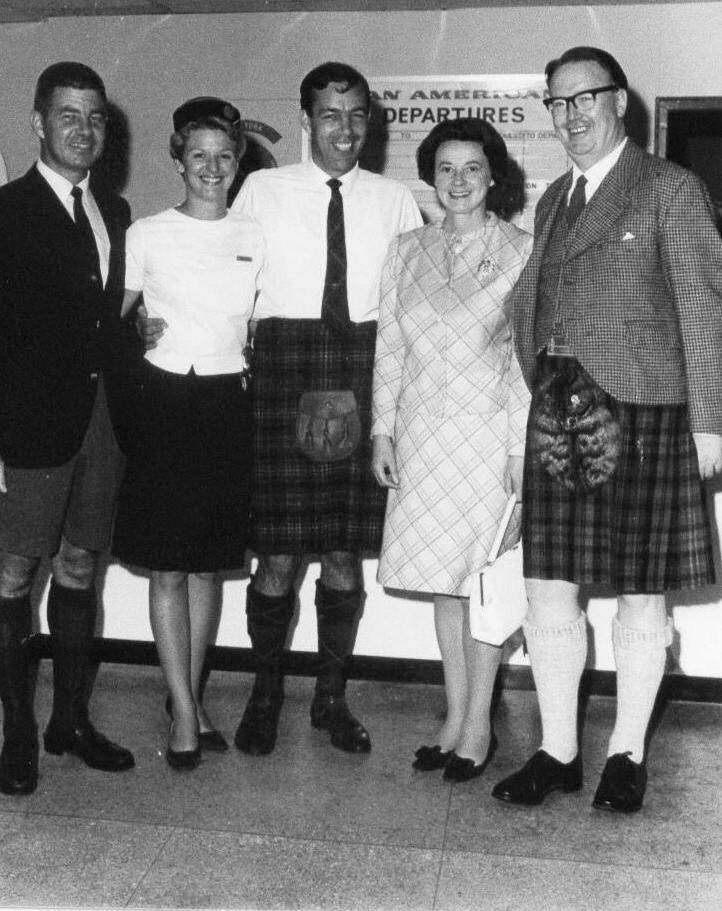
Baxter family
in Bermuda. Photo kindly loaned this author by Cindy Farnsworth Toddings (shown
second-left)
-
Charles William Beebe, Sc.D,
LL.D. To plumb the undersea world, Dr. Beebe chose Bermuda and its Nonsuch
Island when no similar experiment had ever been attempted. He received
international publicity after his successful experiments. His boat was Ready,
a 60 years old former gunboat. Its bones rot still in St. George's Harbour.
- Bee Gees. Robert Stigwood
had long managed the career of the Bee Gees, British-born, Australian-raised
brothers Barry, Maurice and Robin Gibb. Known for their
seraphic harmonies and solid songwriting, in the mid-Seventies the group were
increasingly flavoring their music with R&B/disco inflections and danceable
beats. So Stigwood commissioned the trio to provide songs for the soundtrack of
his disco opus while they were visiting him in Bermuda that summer of 1976.
- Harry Belafonte
- Bee Gees. Wrote a song
based on their Bermuda experience.
- Ted Bell. American
author of spy novels. In all his books Bermuda's Dark and Stormy is the
favourite cocktail of his undercover spy, Lord Alexander Hawke,
as well as his secret home. Bell, frequently visits Bermuda and drinks only
Gosling’s Black Seal 151.
- Peter Benchley, American
author. His grandfather, Robert Benchley who died in the 1940s once spent
vacations in Bermuda, possibly at Wistowe or perhaps elsehere in Flatts. Mrs.
Gertrude Benchley, Robert's wife, who spend additional time in Bermuda after
her husband died, was the
story-teller who inspired local kids with fantastic tales which, no doubt,
fed the creative mind of Peter who went on to write his novels.
- Irving Berlin. This
legendary American composer, accompanied by playwright collaborator Moss
Hart, visited Bermuda during the 1933 Easter season to work on the songs and
book of an upcoming Broadway revue eventually titled As Thousands Cheer.
Among the local influences the partners absorbed and incorporated into their
work during the Bermuda sojourn was the idea for a sketch to be staged
around a newly written Berlin number. Both the skit and the song were called
Easter Parade. They had as their inspiration the old Easter (or Floral)
Parade, which thrived from the 1920s to the 1960s, then a massive must-see
event for both residents and visitors. It left an imperishable worldwide
legacy. This annual springtime procession of flower-bedecked floats, bands
and equestrians was originally conceived as an elaborate and festive
showcase for the Island’s lily crop. This enduring show tune has long
since entered the Great American Songbook, spring’s counterpart to
Berlin’s festive season classic White Christmas.
-
Tanja Berlin, famed stitch designer
(May 2006).
-
Lyne Bessette. Olympic
cyclist of Canada who won the January 2015 Women's Bermuda Marathon.
-
Joanna Bilancieri. Competitive
paddleboarder from Hawaii. Visited August 2015, didn’t expect
Bermuda’s waters would provide such a challenge.
-
Jacqueline Bissett, actress.
-
Adam Bitchell. Runner from
Wales who timed his kick to perfection to emerge victorious in one of the most
“epic” finishes, in January 2016, to the KPMG Bermuda Invitational Front
Street Mile.
-
Honor Blackman, actress from
one of the early James Bond movies.
-
Prime Minister the Right Hon. Tony
Blair of the United Kingdom and his wife, Cherie Booth Blair, a barrister and
judge. Both were on a private visit.
-
David Bloom. HSBC executive
in Bermuda June 2015 for a conference.
- Michael Bloomberg.
Billionaire. Owns a home in Bermuda and is a regular visitor.
- Willy Bogner, former Olympic
skier, and wife Sonja head the Bogner clothing empire. They
visited Bermuda in 2006.
-
Todd Boren.
Last visited in 2015 for a conference. In 1979 he first came to the Island with
his parents
- J. Max Bond, leading American
architect and educator.
- Usain Bolt. Jamaican
Olympian and world record holder, who visited Bermuda for the Carifta Games held
years ago and again in June 2018. The superstar sprinter set his first world
record in the Men’s Under-20 200m race at the 2004 Carifta Games. Bolt is
an eight-time Olympic gold medallist.
- Victor Borge, Danish pianist.
- Mouritz Botha.
Britain-based South African-born rugby player for England and Saracens.
Visited Bermuda with Saracens May 2013.
- Bishop of London, the
Right Reverend Dr Richard Chartres, was on the Island in November 2012
to celebrate the 400th anniversary of the founding of St Peter’s Church. It
was a ceremonial affair, attended by the Governor, Bermuda Regiment and
clergy, with hundreds more watching. The church is possibly the oldest
continually used Protestant church in the Western hemisphere, and believed
to be the oldest surviving Anglican church outside of the British Isles.
- Agnes Boulton, then the wife
of Eugene O'Neill and mother of Bermuda-born Oona O'Neill/Chaplin.
- David Bowie. Singer, rock
star. Lived in Bermuda in 1997, later moved to USA and Germany. Mr Bowie —
born David Jones — died in January 2016, aged 69, after an 18-month fight
against cancer. During his nearly 50-year career, Mr Bowie produced more than
100 singles, including Let’s Dance, Space Oddity, Starman, Modern Love,
Heroes, Under Pressure, Rebel, Rebel and Life on Mars, and acted in a number of
films including Labyrinth and The Prestige. Despite his battle with cancer, he
remained creatively active. His latest album, Blackstar, was released in January
2016 and a musical co-written by Mr Bowie and featuring his music, Lazarus,
premiered in New York in 2015. Among the cast is Bermudian actor Nick
Christopher. Mr Bowie moved to the Island shortly after he made the unusual move
to issue bonds for his future earnings in 1997, with investors buying $55
million in “Bowie bonds”, backed by income from his back catalogue. He lived
in the house Seaview on Cambridge Road, where he recorded much of his 1999 album
Hours ... in a home studio. While the album drew mixed reviews, it made history
by becoming the first album by a major artist to be officially sold as an
internet download. Mr Bowie also recorded a cover of John Lennon’s song Mother
while on the Island. The song was intended to go on a tribute album for Mr
Lennon, who both co-wrote and sang on Mr Bowie’s hit song Fame. Asked about
the Island, Mr Bowie once said: “We loved it in Bermuda during our time there.
Quiet, respectful, a dreamscape atmosphere out in the part of the island where
we lived. Nobody ever bothered us. But, of course, I have the best protective
camouflage in the world. I am married to Iman. Do you think when we were walking
along the street together in Hamilton anybody ever gave me a second glance? Do
you think anybody even noticed me? Honestly?”
- Geoffrey Boycott, England
cricketer.
- Richard Breeden, former
Security and Exchange Commission (SEC) chairman, December 2012.
-
Amy Briggs. On June 23, 2006 she
accompanied Her Royal Highness, the Princess Royal (formerly, Princess Anne, on
the latter's third visit to Bermuda).
-
Monica Brown. American
singer, songwriter, producer, actress and entrepreneur who has had a series of
Number 1 albums including ‘After the Storm’, ‘The Makings of Me’ and
‘Still Standing’ and has appeared in TV series such as ‘Living Single’,
‘Felicity’ and ‘American Dreams’. She has also received a Billboard
Music Award, two BMI Pop Awards, one BET Award and a Grammy Award for Best
R&B Performance by a Duo or Group with Vocals for ‘The Boy Is Mine’. She
performed in Bermuda in late August and early September 2018.
-
Dr. Lonnie Burch, founding director
of the Smithsonian Institution African American Museum and Center for African
American Culture.
- Carol Burnett.
US Comedian and actress.
-
Frances Hodgson Burnett,
author of ‘The Secret Garden.’
-
Dimitrios Buhalis.
Keynote speaker for a 2015 Bermuda conference, of Bournemouth University, an
expert on how technology impacts tourism.
-
Martijn Burger, visited
Bermuda in late 2015 as academic director at the Erasmus Happiness Economics
Research Organization (EHERO).
-
LeVar Burton,
actor, who directed the 2008 Tourism commercial for the Bermuda Department of
Tourism (BDOT)
-
George
H.W. Bush and his wife, Barbara Bush. The former US President and
First Lady had traveled to Bermuda but never in an official function.
-
Felipe
Calderon, former President of Mexico, in 2013.
-
Vanessa
Bell Calloway.
-
King Carol II of Romania and
his party which included his mistress Madame Magna (Elena) Lupescu, his
Chamberlain Colonel Urdareanu. They arrived on the American Export Line's
passenger and cargo ship Excambion on May 10, 1941 from Lisbon and were en route
to Cuba after the former king, exiled from his homeland after a military coup,
had been effectively deported from Portugal, then officially neutral but laced
with German agents. The former monarch was known to be anti-German. Because of
this he and party were not welcomed in the USA then also neutral but were
treated well by his Bermudian and British hosts, allowed to stay at the Belmont
Manor Hotel without publicity and were entertained by the Governor and British
military commanders based in Bermuda.
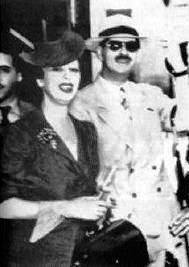
-
Roy Castle.
- Charlie Chaplin, his wife,
Lady Oona Chaplin and his
family. Oona was born in Bermuda, of American parents.
- Jordan Chipangama, of
Zambia. Runner, he came atclose third in the 2016 January Bermuda Invitational
Mile.
- Joe Clark, Canada's External Affairs
Minister, November 13, 1990.
- Shirley Chisholm, the first
black woman to be elected to the US Congress, during her visit to Bermuda
soon after her election in 1975. She was a guest speaker of the-then
Opposition Progressive Labour Party.
- Deepak Chopra. This New
York Times best-selling author was in Bermuda in April 2019 for a
sold-out talk on health. The event saw Dr Chopra discuss his latest book, The
Healing Self. Dr Chopra is a New York Times best-selling author
with more than 85 books translated into more than 43 languages, including 22
New York Times bestsellers. He is the founder of The Chopra
Foundation and co-founder of The Chopra Centre for Wellbeing. Dr Chopra is
also a Fellow of the American College of Physicians, a member of the
American Association of Clinical Endocrinologists and a Clinical Professor
in Medicine at the University of California, San Diego.
- Winston S. Churchill.
British Prime Minister. Visited Bermuda January 1942.
- Diane
Cilento (in 1959, who later became the wife of the film-star Sean Connery).
- John Cleese (in October 2002 for a
motivational speech at a business conference)
- Samuel Clemens (Mark
Twain), repeatedly.
- Charles Clover. British The
Sunday Times investigative journalist who reported in the award-winning
documentary The End of the Line. He visited the island at his own expense
in May 2016 and met with government representatives about a possible
partnership. As Executive chairman for the Blue Marine Foundation he is involved
with a British marine conservation charity that could, if agreed, help the
island close the net on illegal fishing in Bermuda waters.
- Chuck Collins. An
author who has long worked to tackle the issue of a growing wealth gap
between the rich and the rest. He spoke at a Bermuda business audience in
Hamilton in late November 2017. Mr Collins is from a privileged background,
having been born into the family that started the Oscar Mayer meat empire,
and gave away his $500,000 inheritance to charity at the age of 26. He is
the author of Born on Third Base: A One Percenter Makes the Case for
Tackling Inequality, Bringing Wealth Home, and Committing to the Common
Good.
- Phil Collins, first in 1991.
- Command Performance
- Miranda Connell, 1959
- Dennis Conner, sailing
legend, four-times America's Cup winner.
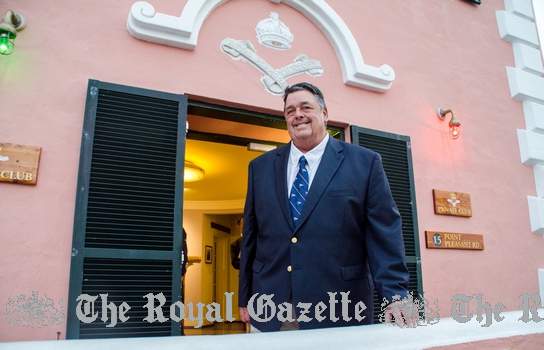
Sailing legend
Dennis Connor, see above
-
Bill Cosby and
his wife.
-
Sir Noel Coward, in the 1950s
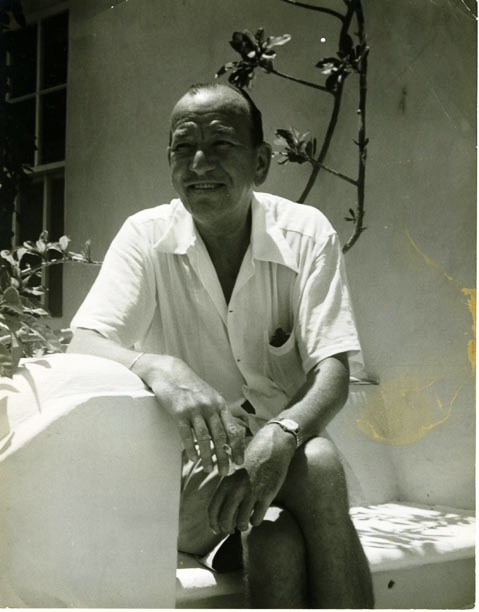
Sir Noel Coward in
Bermuda in the 1950s
-
General Andre Cox, Salvation
Army’s world leader was the Island in 2015 for a congress to mark the 150th
anniversary of the organization, along with his wife Commissioner Silvia Cox,
the world president of women’s ministries,
-
Walter Cronkite, 1969 and
1993.
- Macaulay Culkin, June 1991
- Tony Curtis
- Ryan Cuskelly, then the
world No 16 in squash, visited Bermuda in June 2016 to play
professionally at the Bermuda Squash Racquets Association.
- Johnny Dankworth
- James Darin
- Doris Day (for the movie
"A Touch of Mink").
- F. W de
Klerk, former South Africa President, who visited in 1997
- Robert
DeNero. US film actor
- Anthony
and Marsha Devaux,1980. Devaux is a writer and political
commentator. He and is wife live in Colorado.
- Joseph
Devaux. St. Lucia-born businessman and former chairman of the St. Lucia
Tourist Board.
- Gabriela Dias. The
Brazilian-born actress and model has made a name for herself as a
businesswoman and fashion designer and visited Bermuda in 2016 to get
married.
- Phyllis Diller. Well-known
American comedienne.
- 5th Dimension.
- Robert Dilenschneider. Frequent
visitor to Bermuda, author.
- Walt Disney, 1968
- Senator Christopher Dodd
- Chris Doleman. NFL Hall of
Famer who visited Bermuda in April 2016 for a golf classic.
-
Lonnie Donegan. British
singer.
- Commander Dilip Donde,
Indian Navy. Cdr Donde was the first Indian sailor to carry out a solo
circumnavigation in 2010, covering 21,600 nautical miles in 276 days as part of
a Navy project. He joined the Indian Navy when he was in his early twenties and
is now based in Goa, India. He was in Bermuda in June 2015.
-
William J. "Wild Bill" Donovan - see http://en.wikipedia.org/wiki/William_J._Donovan
- special advisor to President Roosevelt and soon to be appointed the first
director of the Office of Strategic Services, later the Central Intelligence
Agency. The USA was not yet at war but he was sent to Bermuda to see William
Stevenson of the UK's wartime censors based in Bermuda since July 1940. Among
other things, he colluded with Stevenson in the opening up and censorship of
mail bound to and from Europe and the USA. He did not come in his own name but
was disguised as a "Donald Williams. "
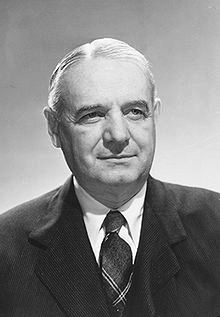
William Donovan
- Dr. Denzil Douglas, Prime
Minister of St. Kitts and Nevis for 15 years. Was in Bermuda May 20-25, 2010
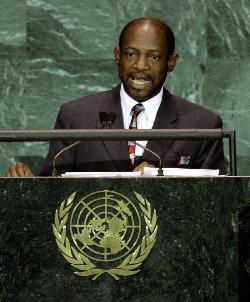
Dr. Denzil Douglas
-
Michael Douglas (son of Bermudian
Diana Dill and American actor Kirk Douglas), he and his family are major
shareholders in their family-owned local hotel, with his wife,
the British-born American actress Catherine Zeta-Jones and for several years
lived in Bermuda.
- Richard Dreyfuss, in 2007. Oscar
winner.
- Duke and Duchess of
Windsor. Arrived August 1940 and stayed at Government House before going
down to the Bahamas where the Duke. formerly King Edward VIII before he
abdicated and was replaced by his brother, became the Governor for several
years.
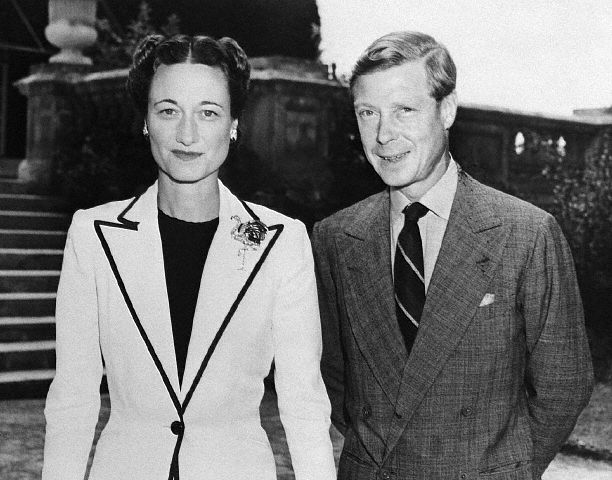
- Duchess of Gloucester. Arrived
in Bermuda on October 31, 2015 to take part in the weekend events marking the
Royal Bermuda Regiment’s 50th anniversary. The Duchess, whose husband,
Prince Richard of Gloucester, is the Queen’s first cousin, has been the
Colonel-in-Chief of the Regiment since 2006 and was last in Bermuda five years
ago.
-
Duchess of York.
-
Jason Dufner, golfer 2013.
-
Michael Clarke Duncan, in March
2005, invited by the Bermuda International Film Festival (BIFF), to sit on
its jury.
-
James Edwards. He starred in
the1949 movie about racial prejudice in the U.S. army, Home of the Brave) He
arrived in Bermuda in 1950 to showcase the colony to American blacks.
-
Albert Einstein. Visited
Bermuda in the 1930s.
-
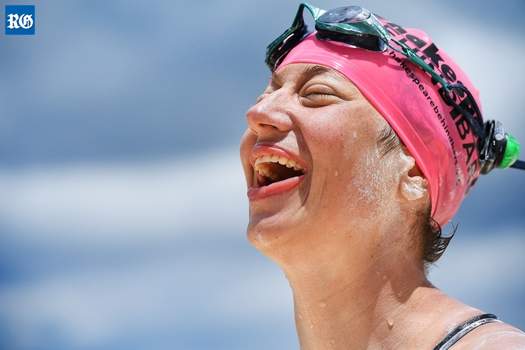 Sarah Eismann. 2018. June 21.
This American actress took a bow yesterday after finishing a grueling 31-hour
swim around Bermuda. She completed the 63-kilometre non-stop attempt at
Gates Bay in St George’s on the day before her 40th birthday. Ms Eismann, from
New York, said she was “swollen and pruney” but happy to have achieved her
goal. She added: “That was the hardest, the most challenging thing I have ever
done in my entire life. We finished south side just as the sun was going down
[Tuesday]. The night was very scary because I couldn’t see the boat very well.
We had to hang a bunch of glow-sticks on the side.” Ms Eismann’s online
tracker recorded her swim as 62.9km, which took her 31 hours, 34 minutes. The
epic open-water swim was the culmination of a year-long Swimming for Shakespeare
campaign. Ms Eismann said she wanted to support Shakespeare Behind Bars, a
programme designed to help rehabilitate prisoners through theatre. She set out
on her voyage about 5.30am on Tuesday, diving off the boat Miss Katie off Fort
St Catherine, on the northeastern tip of St George’s Island. Her father, Roy
Eismann, and several friends were on board the boat which shadowed her on her
marathon swim. Mr Eismann said when his daughter told him she wanted to swim
around the island he thought she was crazy. He said: “Over the last three
years, she has been doing marathon-type things — Ironmans, half Ironmans —
but I still thought she was crazy.” Mr Eismann said he and others on the boat
became concerned near the end of the swim after her lips and eyelids began to
swell. He said: “We started Goggling the possible outcomes of the swelling. We
were worried about her tongue swelling up. There was a constant concern since
the morning when we could actually see her.” Mr Eismann said he was extremely
relieved for the feat to have his daughter safely back ashore. He said: “From
a dad’s point of view, I just wanted my daughter safe, but the fact that she
accomplished this was amazing.” James Adams of In Depth Bermuda Ltd said he
didn’t initially realize the scope of what Ms Eismann wanted to do when he
agreed to guide her with the Miss Katie. He said: “I actually didn’t think
it would take as long as it did. I don’t think I realised how big of an ordeal
it is. That’s a lot of swimming. It’s a long way. It’s hard enough to sit
in the boat that long.” Ms Eismann is not the first to fully circumnavigate
the island, but she is in a very elite group. Seán O’Connell was the first to
complete the feat in 1976. He later detailed the 43-hour marathon swim in his
book Shark Bait: How I Battled Tides, Fins and Fatigue to Complete the First
Non-stop Swim Around Bermuda. American open-water swimmer Lori King
successfully broke Dr O’Connell’s record in 2016, swimming counterclockwise
around the island in 21 hours.
Sarah Eismann. 2018. June 21.
This American actress took a bow yesterday after finishing a grueling 31-hour
swim around Bermuda. She completed the 63-kilometre non-stop attempt at
Gates Bay in St George’s on the day before her 40th birthday. Ms Eismann, from
New York, said she was “swollen and pruney” but happy to have achieved her
goal. She added: “That was the hardest, the most challenging thing I have ever
done in my entire life. We finished south side just as the sun was going down
[Tuesday]. The night was very scary because I couldn’t see the boat very well.
We had to hang a bunch of glow-sticks on the side.” Ms Eismann’s online
tracker recorded her swim as 62.9km, which took her 31 hours, 34 minutes. The
epic open-water swim was the culmination of a year-long Swimming for Shakespeare
campaign. Ms Eismann said she wanted to support Shakespeare Behind Bars, a
programme designed to help rehabilitate prisoners through theatre. She set out
on her voyage about 5.30am on Tuesday, diving off the boat Miss Katie off Fort
St Catherine, on the northeastern tip of St George’s Island. Her father, Roy
Eismann, and several friends were on board the boat which shadowed her on her
marathon swim. Mr Eismann said when his daughter told him she wanted to swim
around the island he thought she was crazy. He said: “Over the last three
years, she has been doing marathon-type things — Ironmans, half Ironmans —
but I still thought she was crazy.” Mr Eismann said he and others on the boat
became concerned near the end of the swim after her lips and eyelids began to
swell. He said: “We started Goggling the possible outcomes of the swelling. We
were worried about her tongue swelling up. There was a constant concern since
the morning when we could actually see her.” Mr Eismann said he was extremely
relieved for the feat to have his daughter safely back ashore. He said: “From
a dad’s point of view, I just wanted my daughter safe, but the fact that she
accomplished this was amazing.” James Adams of In Depth Bermuda Ltd said he
didn’t initially realize the scope of what Ms Eismann wanted to do when he
agreed to guide her with the Miss Katie. He said: “I actually didn’t think
it would take as long as it did. I don’t think I realised how big of an ordeal
it is. That’s a lot of swimming. It’s a long way. It’s hard enough to sit
in the boat that long.” Ms Eismann is not the first to fully circumnavigate
the island, but she is in a very elite group. Seán O’Connell was the first to
complete the feat in 1976. He later detailed the 43-hour marathon swim in his
book Shark Bait: How I Battled Tides, Fins and Fatigue to Complete the First
Non-stop Swim Around Bermuda. American open-water swimmer Lori King
successfully broke Dr O’Connell’s record in 2016, swimming counterclockwise
around the island in 21 hours.
-
Ben Ensall. Came to Bermuda in 2011 for a
modeling assignment.
-
Dr. Milton Eisenhower, 1959.
-
Dr Tony Evans. American
Author and pastor, the first African-American to graduate from Dallas
Theological Seminary with a doctoral degree, He is the author of several
Christian books including Kingdom Agenda: What a Way to Live!, Kingdom Man:
Every Man’s Destiny, Every Woman’s Dream and Kingdom Woman. He is also the
pastor of Oak Cliff Bible Fellowship in Dallas and the voice of the radio
programme and US ministry “The Urban Alternative”. Visited Bermuda in
January 2016.
-
Nigel Farage. Former leader
of the UK Independence Party and prime mover behind the campaign for Britain to
leave the European Union. Was in Bermuda in July 2018.
-
José María Figueres.
Founder of Ocean Unite and former president of Costa Rica.
-
Bobbie Fischer, 1972.
-
Carrie Fisher,
in 2007. Actress and former Bermuda
International Film Festival judge, who died on December 27, 2016 was the
daughter of Debbie Reynolds when she was married to Eddie Fisher. She rose to
stardom for her role as Princess Leia in the Star Wars film series.. In
addition to her leading role in the Star Wars series, Ms Fisher appeared
in hit films including The Blues Brothers and When Harry Met Sally.
She transitioned her success in film to writing, penning eight books and
memoirs, one of which she later adapted into her one-woman show Wishful
Drinking. In 2007, Ms Fisher joined friend and fellow actor Richard Dreyfuss
at the Bermuda International Film Festival. She also spoke at BIFF Talk Back,
discussing her career and personal challenges.
-
Ella Fitzgerald.
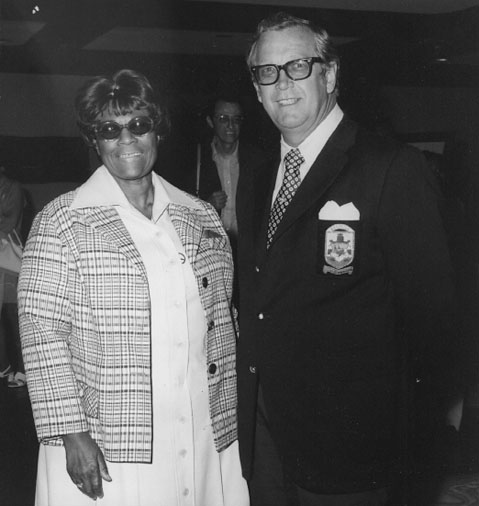
Ella Fitzgerald
vacationing in Bermuda
-
F. Scott Fitzgerald.
Put the finishing touches to his masterpiece “Tender Is The Night” in
Bermuda while vacationing here. His wife Zelda, the archetypal flapper and
an accomplished painter, novelist and dancer in her own right, also created
artwork and writing of lasting value on the Island (she provided a vivid
word picture of 1933 St. George’s in her diary: “Bougainvillea cascaded
down the tree trunks and long stairs passed by deep mysteries taking place
behind native windows. Cats slept along the balustrade and lovely children
grew.”)
- Ian Fleming.
- Joe Flower. Healthcare
and technology futurist,
keynote speaker at the June 2016 Bermuda Captive Insurance
Conference.
- Eugene Fodor.
Violinist. Stayed at Sonesta Beach Resort.
- Gerald Ford. Visited
Bermuda in both January and June 1983 for events/meetings. Mrs. Ford
traveled with him for the June 16-21st trip to attend the Shearson/American
Express Chairman's Council Meeting.
- Joan Fontaine, 1968.
- Aretha Franklin. Multiple
Grammy winner, who died at her home in Detroit aged 76 on August 15, 2018
was still a little-known figure in 1965 when she appeared in Bermuda.
Drummer Lance Furbert opened a show for her with the other members of the
Bermudian act, the Arpeggios.
- Wayne Frederick,
president of Howard University in Washington, visited Bermuda in November
2019 as the keynote speaker at a Bermuda Progressive Labour Party
celebration. The Trinidadian-born academic started at Howard aged 16
and earned science and medical degrees by 22.
- John Freeman, 1969, then
British Ambassador to USA.
- Morgan
Freeman, Oscar-winning actor and veteran yachtsman who has sailed sailed his
43-foot Shannon ketch around the Caribbean and north to Bermuda.
- Aaron
Fresh.
- Childs
Frick.
Visited in the 1930s.
- Arthur Frommer, travel author.
- David Frost. 1972.
A luminary of British broadcast journalism who once chose Bermuda to fete
some of the most eminent celebrities of the day. His impromptu January 1972
Bermuda bash garnered widespread coverage for the Island, from The New York
Times to ‘Life’ magazine. The television star was simultaneously hosting
talk shows in the UK and US when he chartered a 747 to bring 60 of his
closest friends to Bermuda. Guests flown in from New York ranged in
celebrity from US Senator Jacob Javits to world-famed economist John Kenneth
Galbraith — and actor Richard Roundtree, star of the just-released film
“Shaft.” Others included US author James Michener, chess grandmaster
Bobby Fischer, journalist Barbara Walters, and film producer Joseph Levine.
After treating his guests to a meal at the old Castle Harbour Hotel,
followed by a chartered cruise of local waters, Sir David quipped to the
British press that he thought “it would be jolly to start the New Year by
taking some friends to lunch in Bermuda”. The veteran TV journalist
specialised in interviews with leading figures, including eight UK prime
ministers and seven US presidents. His most widely known claim to fame was
his 1977 series of interviews with disgraced US president Richard Nixon. He
died in 2013 of a suspected heart attack aboard the cruise ship Queen
Elizabeth, where he had been booked as a speaker.
- John Fugelsang.
American comedian. Visited Bermuda in August 2016 for an American radio show
from New York.
- Sir Peter Gadsden, Lord Mayor
of London, and Lady Gadsden.
- John Kenneth Galbraith,
1972.
- Eunice Gayson, actress. When
in Bermuda to make a movie, she had her shorts measured by a policemen to
make sure they were not too short.
- Lewis Gilbert,
film director
(for Admirable Crichton filmed in Bermuda in 1959).
- Christopher Gillespie,
UK barrister, a criminal lawyer at the London firm 2 Hare Court, who in
early 2014 was paid $40,000 by the Bermuda Government for his help in
drafting gaming (gambling) legislation.
- Danny Glover, actor (several
visits).
- Lucas Glover,
golfer.
- Lord Goldsmith. He
served as Attorney General of the British Government under former British
Prime Minister Tony Blair. He visited Bermuda in 2006 and was hosted by
Bermuda's Governor.
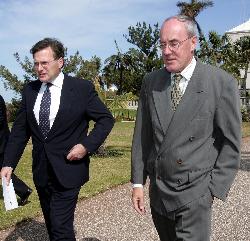
Lord Goldsmith
(left) in Bermuda April 2006 with Governor
-
Barry M. Goldwater, then a US
senator, stayed at the Hamilton Princess for an American Bankers Association
Convention.
-
Bruce Gordon
-
Cary Grant (for the movie
"A Touch of Mink).
-
Stedman Graham. Best-selling
author, businessman and educator. CEO of S Graham and Associates, the
long-term partner of Oprah Winfrey and has visited Bermuda about ten times over
the past 12 years. Mr Graham’s talks in the United States and around the world
have a strong focus on identity and how the key to success is leadership
capability. With few people of colour holding top positions in the reinsurance
industry in Bermuda, Mr Graham’s talk in late August 2017struck a chord with
many.
- Peter Graves, 1959
- Lorne Greene.
- Lance Gross.
- Peter Guber. Producer
of the Bermuda-made film "The Deep."
-
Sir Alec Guinness (as a World War 2 tank landing craft
captain).
Sir Alec Guinness
-
Nicky Gurret. Floral artist
and architect. She won a bronze for Bermuda at the 2014 Chelsea Flower Show.
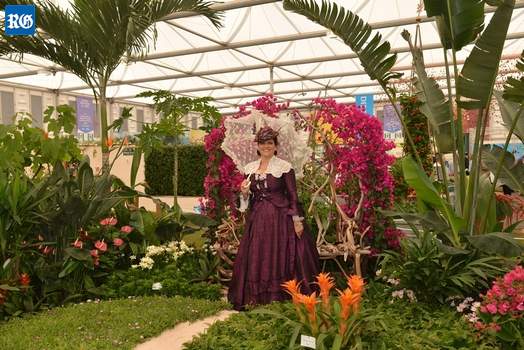
Nicky Gurret at
the Chelsea Flower Show
-
Stelios Haji-Ioannou, in April
2006. Owner of the ground-breaking EasyJet airline company, which is
generally credited with bringing low price airfares across Europe through
its own services and those of imitators.
-
Dorothy Hamill. Visited in
June 1979
-
Lionel Hampton.
-
Lord Michael Hastings.
Visited Bermuda in May 2016 as global head of corporate citizenship at
professional services firm KPMG, to speak after he highlighted the UN’s
sustainable development goals, aimed at ending poverty and hunger and promoting
peaceful and fairer societies. Lord Hastings, listed as one of the most
influential black Britons and sixth on this year’s list of top black British
business leaders, said: “I would encourage it — a minimum wage sets a
benchmark standard for basic dignity. It doesn’t turn the poor into the
wealthy, it’s not about vast transfers of money. It’s giving them latitude.
The difference between seven dollars an hour and ten dollars an hour is
life-changing.” Lord Hastings said that poverty affected about 16 per cent of
the population in the US and 10 per cent of the population in the UK. “Bermuda
is a small community — 60,000. I don’t know what the numbers would be which
are below an acceptable level. But it would surprise me if Bermuda didn’t have
an equal number — 4,000 out of the 60,000. In a community of 60,000, 4,000
people is a lot of people to have out of the corner of opportunity. Who knows,
there could be an entrepreneur lurking there who could get an education
elsewhere and transform the whole economy. A living wage is not transfer of
wealth from the rich to the poor, it’s an investment every community needs to
empower dignity and the poor will benefit — it will raise their opportunity
and raise their potential.” Lord Hastings, who has also held senior posts with
the World Economic Forum and is vice-president of the UN’s Children and
Education Fund, discussed KPMG’s commitment to sustainable development at the
Bermuda Underwater Exploration Institute and told the audience that the
developed world needed to work harder to create fairer and more prosperous
societies in poorer countries.
-
Mercy Haystead, 1959
-
Lena Headey, Bermuda-born English
actress.
-
Padraig Harrington, golfer
2013.
-
Jimi Hendrix, legendry
guitarist, who toured Bermuda in spring 1964 with the Isley Brothers.
- Charlton Heston. In his first visit,
he performed in Born
Yesterday. In his next appearance, he played the lead role in Bell, Book
& Candle, directed in Bermuda by Burgess Meredith.
- Theresa Hightower, singer
- Alfred Hitchcock, 1960s.
- Winslow Homer, artist,
several times.
- George Hook. The guest
speaker at the 2016 St Patrick's Day Dinner in Bermuda. A broadcaster and
journalist from Ireland, who at the event covered the history of Ireland from
the 1916 uprising in Dublin, the partition of the country in 1922 into Saorstat
Eireann — the Irish Free State — and Northern Ireland, which remains part of
the UK, up to Ireland’s modern status as a republic.
 Bob
Hope. Leading
British born, American naturalized humorist Sir Bob Hope, who died
on July 27, 2003 at the age of 100, was
in Bermuda in December, 1990, with his wife and entourage. It was his
second visit, the previous one being in 1946 or 1948 when he came to entertain
the American military in Bermuda.
On this last occasion, he came to film
his
NBC television 1990 Christmas Special on the NBC network.
He was awarded
his honorary knighthood in May, 1998.
He made many perceptive jokes about
Bermuda.
He, his wife Dolores, actresses Loni Anderson and Dixie Carter,
associates and production crew occupied forty rooms at the Belmont Manor
Hotel during their five day stay.
He was a unique institution.
Here are some of his comments:
Bob
Hope. Leading
British born, American naturalized humorist Sir Bob Hope, who died
on July 27, 2003 at the age of 100, was
in Bermuda in December, 1990, with his wife and entourage. It was his
second visit, the previous one being in 1946 or 1948 when he came to entertain
the American military in Bermuda.
On this last occasion, he came to film
his
NBC television 1990 Christmas Special on the NBC network.
He was awarded
his honorary knighthood in May, 1998.
He made many perceptive jokes about
Bermuda.
He, his wife Dolores, actresses Loni Anderson and Dixie Carter,
associates and production crew occupied forty rooms at the Belmont Manor
Hotel during their five day stay.
He was a unique institution.
Here are some of his comments:
- Bermuda is so British, the whole island is shaped
like a stiff upper lip.
- It's easy to tell Bermuda's British. We had to
land on the left side of the airstrip."
- The Admiral was on his way to Virginia but took
one look at these isles and said, "To hell with colonizing America. Pour
me another rum swizzle.
- Oh yes, it's very traditional here. Even the
lamb chops wear Bermuda shorts. I borrowed mine from a cop.
- You can get a $25 ticket for speeding and another
$10 fine for laughing at officers' nobbly knees. And they don't carry guns.
It's hard to hold up Bermuda shorts and have a gun attached to them.
- I know a fellow who couldn't get away to Bermuda,
so he stayed at home and tipped every person he saw. They're really into
tipping at my hotel. I ordered a deck of cards and they sent them up to
my room one card at a time.
- Bermuda's surrounded by cannons. I haven't seen
a place fortified like this since my opening night at Carnegie Hall. There
are hundreds of cannons all around this island. It's impressive, but couldn't
you come up with a better way to make sure the tourists tip?
- Every restaurant here has a smoking and non-smoking
section. The smoking section's for people who are eating the Portuguese
red bean soup. That's the soup that won't just put hair on your chest,
it'll give it a permanent. I had too much of it the other day, belched
in bed and set off the sprinkler system.
- The speed limit is supposed to be just over 20
mph. Unless you've had a bowl of Portuguese red bean soup. Then you're
in a hurry, it's an emergency.
- They serve a very popular seafood chowder made
out of fish heads, but I get nervous eating food that winks at me.
- You're only allowed one car per family here.
In Southern California, you're only allowed one car in each color.
-
Sally
Ann Howes, British actress, 1959.
- Karel Van Hulle,
architect of the European Union’s Solvency II enhanced regulatory regime
for insurers, who visited Bermuda in December 2012.
- Herve Humler. Co-founded
the Ritz-Carlton Company in 1983 and serves as its president and chief
operating officer, as well as being president of Bulgari Hotels and Resorts.
He is responsible for leading the brand’s global growth, which includes
the $400 million Ritz-Carlton Reserve resort being built at Morgan’s
Point, as well as presiding over 92 Ritz-Carlton properties. He visited
Bermuda in June 2016.
- Engelbert Humperdink.
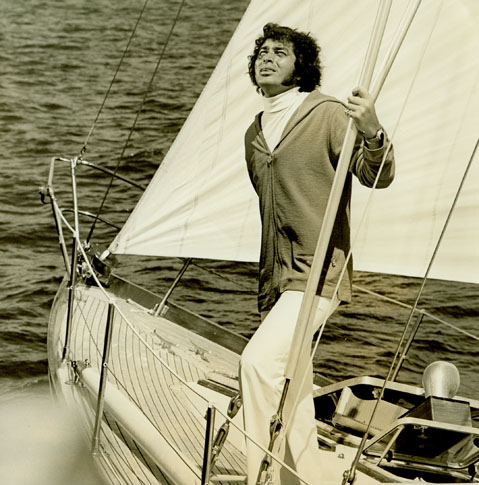
Engelbert
Humperdink in Bermuda
- Kim Hunter, star of the movie "Bermuda
Affair" filmed in Bermuda in 1956.
- Martita
Hunt. 1959
- Isley Brothers, 1964
- Burl Ives. 1978.
- Dr. Edward “Donnell”
Ivy. Visited Bermuda in September 2015 to talk to the Bermuda Sickle
Cell Association.
- Anne Jackson. Died
April 14, 2016 at the age of 90. Acclaimed Broadway and film actress Anne
Jackson, who spent six weeks in Bermuda in 1976 working alongside husband
Eli Wallach, Jaqueline Bisset and Robert Shaw on the treasure hunting
thriller The Deep. According to The New York Times, Ms
Jackson and Mr Wallach appeared together 13 times on Broadway, seven times
off Broadway, and occasionally in movies and on television, where they did
most of their work, both together and apart, in the later years of their
careers.
- Reverend Jesse Jackson
- Michael Jackson, June 1991
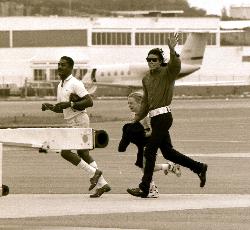
Michael Jackson
leaving Bermuda by private jet
- Senator Jacob Javits and Marian Javits
- Wyclef Jean. Performs
in Bermuda as part of the America’s Cup festivities. The three-time Grammy
Award-winning entertainer, was on the main stage at the America’s Cup
Village in Dockyard, on Saturday, May 27, 2017. Wyclef Jean first received
fame as a member of the acclaimed New Jersey hip hop group the Fugees, the
trio that also included Lauryn Hill and Pras. Jean is Pras’s cousin and a
fellow Haitian immigrant to the United States.
- William Jefferson, US Con.
- Cullen Jones. US
Olympic swimmer, in Bermuda in March 2016.
- Star Jones
- Catherine Zeta-Jones,
British-born American TV and film actress, star of the Darling Buds of May,
etc. (husband is Michael Douglas).
- Heather Kampf. In
January 2016 she stormed to a fourth consecutive Bermuda Invitational Front
Street mile title in the elite women’s race.
- Yousuf Karsh, an
Armenian-born Canadian photographer whose work is featured in some of the
world’s most prestigious galleries. Karsh was born in Armenia in
1908 but took refuge in Canada 16 years later after his family fled Turkish
genocide in their homeland. He achieved international acclaim for the 1941
image of Churchill — which appeared on the cover of Life magazine
— and went on to photograph scores of dignitaries and celebrities
including the Queen and Martin Luther King Jr. Karsh came to Bermuda in 1948
with his wife, Estrellita.
- Martin Kaymer, German
professional golfer, 2014 Bermuda Grand Slam winner.
- Senator Edward Kennedy, 1967
- Senator John Kerry
- Robert Kennedy
- Judge John Keogh, 1971.
- Richard Kessio.
Visiting Bermuda Marathon Winner in 2013 and 2014.
- King Khalid of Saudi Arabia.
- Kwame M. Kilpatrick. 2006
visitor. Youngest mayor in the history of Detroit, and then the youngest current
mayor of any major US city. His mother is US Congresswoman Carolyn Cheeks
Kilpatrick. He was later reported as having also made a 2007 visit.
- Chaka Khan.
- Rudyard Kipling. Famous
British author, a 1930 visitor.
- Lori King. 2016.
June 18. From New York, she swam around Bermuda for 21 hours straight. With
a support crew of 11 people by her side, Mrs King, 40, took to the water at
Elbow Beach at noon to begin the longest, most challenging swim of her life.
Her inspiration, she said, was resident Sean O’Connell, who was the first
and only person to have completed the swim 40 years ago. “I read his story
and I had been thinking about doing a 24-hour swim,” she said. “I’m
from New York and I had been to Bermuda for the Round the Sound event for
the past six or seven years and it holds a special place in my heart. So, I
knew when I thought about doing a swim and reading that one other person had
done it and it was possible, that this was the place. It’s special to me,
I love the people and the water.” The swim was planned and certified
through the Bermuda Open Water Swimming Association, with president Nick
Strong acting as event co-ordinator and first observer. Devon Clifford,
on-site coach and support swimmer, described some of the challenges they
faced. “Lori swam counterclockwise around the island and throughout the
swim she missed Portuguese man o’ wars, there were two to three foot
swells coming into the boat that she was swimming through. Going around Fort
St Catherine, starting off in the north shore of the island, it was very
rough.” They also dealt with multiple kayak rescues and their boat hitting
a reef because of the high winds. Mrs King was overwhelmed with emotion as
she thanked her crew and the residents who had supported her in becoming the
first woman to ever complete the swim. “I am just totally indebted to
these people, I don’t even know how to repay them.”
- Dr. Henry Kissinger.
- Sir Robin Knox-Johnston. An
English sailor and the first man to single-handedly circumnavigate the globe
non-stop. He set sail from Falmouth in England on June 14, 1968, and
completed his voyage on April 22, 1969. He was knighted in 1995 and in 2006
he became the oldest yachtsman to complete a round-the-world solo voyage in
the VELUX 5 Oceans Race. Last visited Bermuda in June 2015.
- Dr. Martin Luther King III -
son of Dr. Martin Luther King Jr. and Coretta Scott King - in September 2006
to preached a message of unity and love at the 25th annual Labour Day
Banquet.
- Coretta Scott-King. Late wife
of slain civil rights leader Dr. Martin Luther King. She visited Bermuda in
May, 1997.
- Dr Bernice King.
Daughter of Dr. Martin Luther King Jr. Visited in 2015.
- Rudyard Kipling.
Used Bermuda for some of his stories.
- John Kluge
- Martin Kymer, golfer,
2014.
- Michael Landon
- Brian Lara. West Indies
cricketer, frequent visitor.
- Aerin Lauder. Beauty
and fashion entrepreneur, a granddaughter of Estée Lauder. Her AERIN
hotel amenity line was launched when Bermuda's luxury Rosewood hotel
reopened after undergoing $25 million of renovations in 2018. Ms Lauder is
the founder of AERIN, a luxury lifestyle brand that offers curated
collections of beauty, fashion and home decor products. She honeymooned in
Bermuda in 1996 at the urging for her grandmother, who cofounded cosmetics
company Estée Lauder. Ms Lauder has made return visits to the island
- John Lennon, Beatle, June 1980.
He sailed here. He was assassinated in New York a few months after leaving
Bermuda. His son Sean was also here. It is said he titled his last
album ‘Double Fantasy’ after seeing a ‘Double Fantasy’ freesia
flower while touring the Botanical Gardens in Paget. Double flower blooms
are often extra frilly and have more petals than a single flower. The album
cover has a picture of him and his wife, Yoko Ono, on the cover. But it was
the wrong time of the year for the Bermuda freesia.
- Lord Heseltine, former UK
Cabinet Defence Minister (visited in early 1980s and November 2003).
- Bruce Levenbrook, CEO
of The Original Bagel, who sampled his own fare at an October 2015 food
Butterfield & Vallis in Bermuda trade show.
- Ryan Lindley. NFL star
who visited Bermuda in 2016 for a golf classic.
- Jessica Lynn, country
music artist. Was a featured act in the 2017 Bermuda Festival of
Performing Arts. Her grandparents honeymooned here some 59 years ago and
travelled back for the first time since to see their granddaughter perform.
- Gerald Harper, 1959.
- Michael Jackson
- Tom Jones, 1970/71
- Senator Edward Kennedy, who
attended a conference of British and US legislators at Castle Harbour in
1967 and made many subsequent trips.
- Lil’ Kim. Rap star. Shared
a July 2019 break in Bermuda with more than 2.5 million followers. The
platinum-rated rapper posted a video of her time on the island to her
Instagram account at @lilkimthequeenbee She was seen relaxing on a lounger
at what appears to be the Hamilton Princess & Beach Club before the
cameras pans out to a view of the harbour. The video was watched by almost
170,000 people by yesterday afternoon. Lil’ Kim, who headlined Island Soul
Fest on Saturday, announced her arrival to the island last Tuesday. She said
on her Facebook page: “Whats up Bermuda? It’s your girl Lil Kim, and
I’m going to be on the island July 27th for the Island Soul Festival which
was held in Southampton, make sure y’all pull up on us, it’s going to be
lit.” A spokeswoman for the hotel said it could not comment on guests
“for privacy reasons”. Lil’ Kim’s Facebook page is liked by two
million users, and the video received 996 likes, 93 comments and 66 shares.
- Ben E. King
- Kingston Trio
- Heidi Klum
- Beyoncé Knowles, whose
Bermuda presence included a visit at the 2008 Music Festival at the Bermuda
National Stadium.
- Cleo Laine
- Frankie Laine
- Munro Leaf. Author,
visited 1939.
- Jake Obetsebi-Lamptey,
Ghanaian Minister of Tourism and President of the Africa Travel Association,
in 2006.
- Cindi Lauper.
- Joseph Levine, 1972.
- Annie Lush. Yachtswoman
who came to Bermuda in January 2016 to compete in the M32 races.
- Dame Perlette Louisy, Governor
General of St. Lucia.
- Miles Malleson, 1959.
- Manhattan Transfer.
- Patrick Manning, former
Prime Minister of Trinidad and Tobago. Mr Manning led the People’s
National Movement for 24 years and had two stints as the country’s Prime
Minister — from 1991 to 1995 and from 2001 to 2010. He was the keynote
speaker in Bermuda at the PLP Annual Banquet in the 1990s. He died in July
2016.
- John F. Mariani, Jr. in 2006
as a guest of Ross Perot.
- Nancy Marchant (who later appeared as the imperious but
kindly role of Mrs. Pynchon, the newspaper. publisher in the long-running TV
series Lou Grant).
- Willard Marriott,
Jr. and Mrs. Marriott.
- Mario. R&B singer from
Baltimore, visited and performed in Bermuda in 2005. Wrote the song
"Bermuda."
- Winton Marsalis
- Harpo Marx.
- Frederick Van Wyck
Mason. Author. Wrote a unique book about Bermuda's history.
- John
McCain, Arizona
Senator (August 2007)
- Rory McIlroy, golfer,
2014.
- Leigh McCloskey, 1978.
- Christopher
McDougall, author of 'Born to Run', September 2010.
- Maureen McGovern.
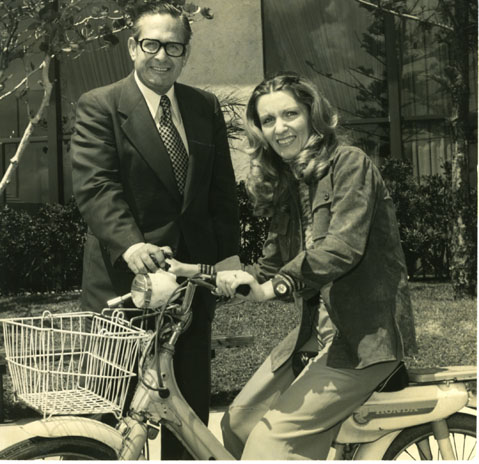
Maureen McGovern
in Bermuda
- Rory McIlroy, golfer.
- Thabo
Mbeki,
South African President, who came to Bermuda in 1989 for secret talks
with opponents of South Africa's government at the time.
- Burgess Meredith, American
actor
- Gary Merrill, a star of the movie "Bermuda
Affair" filmed in Bermuda in 1956.
- George de Mestral, inventor of
Velcro.
- Benjamin Meto. Kenyan
runner who won the January 2015 Bermuda Marathon at his first attempt.
- Rebecca Middleton. On
July 3, 1996 this 17 year old visitor was repeatedly raped, sodomized and
racially murdered in Bermuda and her Bermuda-based killers received only
light sentences in a mockery of justice, to international outrage.
- David Miliband, MP, then UK's
Foreign Secretary, November 2009.
- James Michener, author,
1972.
- Arthur Mitchell. Famous
African-American ballet dancer. He and his troupe visited Bermuda in 1970.
- John Mitchell, 1969, then US
Attorney General.
- Thomas Moore, Irish
poet who earlier spent three months in Bermuda.
- Kenneth More, British actor,
who starred in the Admirable Crichton filmed partly in Bermuda in the 1950s.
- Ralph Nader. Stayed at
Castle Harbour Hotel.
- Jim Nicholson, US Cabinet
Secretary, as a 2006 guest of Ross Perot.
- David Niven, actor.
1910-1994). Oscar-winning actor whose pencil moustache, debonair manner and
easy charm made him the screen embodiment of British urbanity for more than
40 years, took a circuitous route to Hollywood stardom — one which brought
him through Bermuda in 1934. After leaving the British military in 1933, he
departed the UK for Canada, and subsequently travelled to New York where he
found a job as a liquor salesman. A subsequent venture into pony racing
failed spectacularly and a near penniless Niven was invited to spend time in
Bermuda in 1934 with his American friends Maurice (Lefty) Flynn and his wife
Nora Langhorne Phillips. As he wrote in his best-selling 1971 memoir The
Moon’s A Balloon, Niven arrived in a Bermuda during the island’s golden
era. Staying with the Flynns at a cottage they had rented on Devonshire Bay,
Niven said Bermuda restored his spirits — if not his bank account —
after the disastrous collapse of his rodeo business.
- Nick Nolte, actor
- Queen Noor of Jordan, American
by birth, an avid campaigner for global environmental issues, speaker and
guest of honour at The Bermuda Biological Station for Research (BBSR)
fundraising gala on March 10, 2006.
- Georgia O'Keefe,
artist.
- Eugene O'Neill. His daughter Oona - later the wife of Charlie
Chaplin - see below - was born in Bermuda to himself and his then-wife Agnes
Boulton.
- Oona O'Neill, later, Chaplin.
Born 14 May 1925 at Spithead, Warwick Parish, Bermuda, later went to the USA
with her by-then-divorced mother. She and Charlie Chaplin later had actress
Geraldine Chaplin (b.1944), actor Michael Chaplin (b.1946), Josephine
Chaplin (b.1949), Victoria Chaplin (b.1951), Eugene Chaplin (b.1953), Jane
Chaplin (b.1957), Annette Chaplin (b.1959) and Christopher Chaplin (b.1962).
- Jack Palance. One of
his movies was made in Bermuda
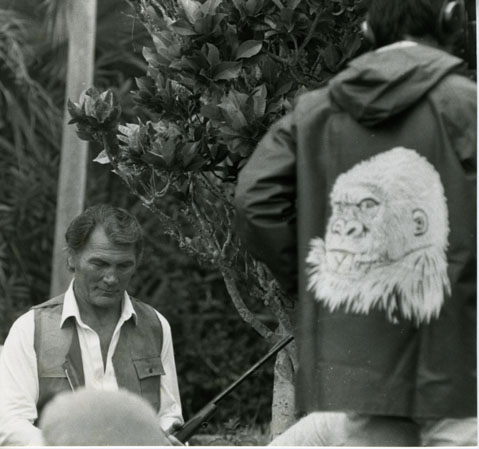
Jack Palance in
Bermuda
- Betsy Palmer
- David Palmer, 2003
World Champion Squash player, Australian, has a home here.
- Cecil
Parker, British actor, 1959.
- Ewan
Partridge, visited 2014 as co-author of the 2014 book "Wings Over
Bermuda" with fellow-author Tom Singfield.
- Rt. Hon. P. J. Patterson, PC.
QC, Prime Minister of Jamaica.
- Pope Paul VI. Made a
brief visit to the island in 1968.
- William Payne. One of
those who in April 1990 met at the Lantana Colony Club in
Somerset, Bermuda, the enemies of apartheid, as well as its diehard
supporters. It was a historic gathering. Payne was then a member of the New
Jersey General Assembly. He had come from prominence in the National
Association for the Advancement of Coloured People to find himself sitting
next to a staunch, “rabidly prejudiced” believer in South Africa’s
racist regime. Mr Payne arrived with United States delegates for secret
talks in Bermuda organized by the Aspen Institute on the fate of the
crumbling apartheid regime. It was the second round of covert discussions at
the Lantana Colony Club, following on from a forum in March of 1989. Mr
Payne attended with his brother, the late Congressman Donald Payne. The
Aspen Institute brought members of Congress and Senators to discuss issues
of national importance, away from their offices and across party lines. They
met with leaders from South Africa, from both sides, under the radar.” A
media blackout protected both meetings between members of South Africa’s
National Party and the African National Congress. At that time in 1990, a
ban on the ANC had only just been lifted with the freeing of Nelson Mandela,
the jailed revolutionary and opponent of apartheid (who would become
president of South Africa in 1994). The Aspen Institute identified those
people in South Africa who were either fighting apartheid or were part of
it, and they brought those adversaries together. They had discussions with
the fighters for freedom and the Afrikaners who were defenders of apartheid.
Bringing ideological enemies into the same room without courting disaster
was a testament to the power of Dick Clark, the director and moderator from
the Aspen Institute — a persuasively soft-spoken man. Having joined the
NAACP at the age of 18 and becoming the chairman of its Youth Work
Committee, Mr Payne was personally acquainted not only with Dr King, but
Malcolm X and Medgar Evers, the Mississippi civil rights activist who was
assassinated in 1963. Mr Payne recalled speaking with Mr Evers over the
rumours that he was being targeted by white supremacists, only to be told
that the activist was determined to go back and make Mississippi “safer
for his children”. He was shot dead in the driveway of his home. “One
thing that kept me going was that I personally know people that gave their
lives,” Mr Payne said. Delegates spent four nights at Lantana, changing
seats each night. “People got to know each other better, even that guy who
was such a crude individual — I’m not sure his attitude changed, but I
can’t imagine it was an easy task to convince them to come in the first
place,” Mr Payne said. “There was less rancor. Obviously it was
extremely valuable, especially for those who were in favour of apartheid to
have a more intimate knowledge of those who were against it. It was also
valuable to be removed to a place where the pressure was not on them.” Mr
Payne served on the New Jersey General Assembly from 1998 to 2008. Among the
legislation passed under his tenure was the state’s banning of racial
profiling by police.
- Mary Peck
- Iain Percy, multiple
Olympic gold medallist and world champion, has visited for sailing events.
- Neal Petersen. From
South Africa. Business executive and adventurer, completed the Around
Alone, a 27,000-mile around-the-world sailing race in his 40ft home-built
boat in 1999. Born in Cape Town, he had to overcome racial prejudice during
the Apartheid era, a childhood physical disability and poverty in order to
even make it to the starting line. A professional motivational speaker, he
was in Bermuda in June 2015 to speak in the community and has toured schools
to “talk about the power of a dream” and to teach children to never give
up hope.
- Regis Philbin
and his wife Joy, most recently in June 2003
- Clementa Pinckney,
American state senator from Georgia and AME church pastor, one-time
visitor murdered in June 2015 in an Atlanta church by a white man.
- William (Bill) Pinkney,
navigator, who visited in 1992 and 1993
- Gary Player, South African golf pro, who coached at Castle Harbour Hotel, from 1966.
- Christopher Plummer. Came to
Bermuda in the 1960s to do theater at the old Bermudiana Hotel (as did
Charlton Heston, earlier). Noted Canadian film star, in more than 100 films, perhaps
best known for his role as Captain Georg von Trapp in the 1965 family
classic, ‘The Sound of Music’ made in Salzburg, Austria.
- John Podesta. Former
counselor to President Barack Obama and White House chief of staff to
President Bill Clinton.
- Pope Paul VI, who stopped
briefly in Bermuda on his way to address the UN General Assembly in New York
on October 3, 1965. He was greeted by then-Governor Lord Martonmere and the
Roman Catholic Bishop of Bermuda.
- General Colin Powell
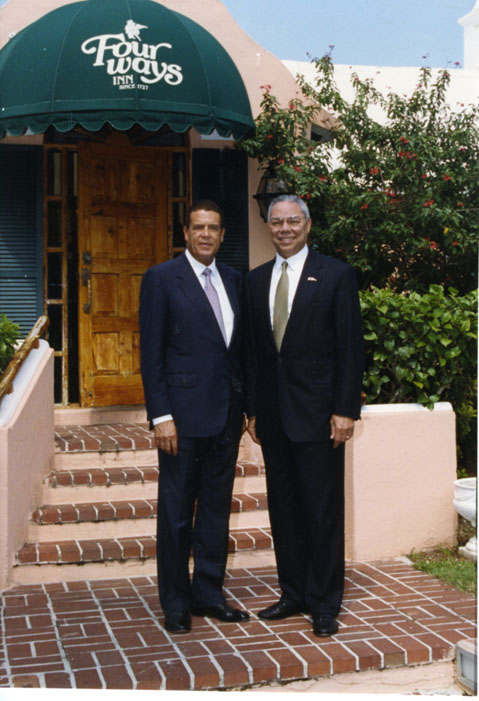
Colin Powell and
Sir John Swan in Bermuda
- Billy Preston, keyboardist and
session player known for his exuberant playing style, who headlined the
reopening of the 40 Thieves Club in 1982 in a series of dynamic concerts
that instantly established the Front Street night spot as Bermuda's premier
entertainment venue.
- Maxi Priest. British born reggae,
soul and pop artist with Jamaican roots. Last in Bermuda for the October
2015 America’s Cup races and his performance the night before. The
singer's real name is Max Elliott. Best known for his hit song, Close to
You, which reached number one on the American Billboard charts, making him
the first British reggae act to do so. He is also known for Wild World and
That Girl which he released with Shaggy in 1996. Maxi has been visiting
Bermuda for years.
- Princess Margaret.
First arrived in Bermuda in November 1965 as then Colonel in Chief of the
new Bermuda Regiment, which paraded in her honor. Was also here later,
several times.
- Prince Albert II of Monaco.
In Bermuda in May 2018 for an Ocean Summit.
- Robert Pugh. Welsh
actor who visited Bermuda in November 2015 to play in a golf charity
tournament.
- Nathan Purdee, Young and the
Restless actor.
- Dan Quayle.
- Queen Noor of Jordan.
In Bermuda in May 2018 for an Ocean Summit.
- Ron Randell, a star of the movie "Bermuda
Affair" filmed in Bermuda in 1956
- Pat Rafter, former tennis champion,
Australian, has a home in Bermuda.
-
Dr. Michael Ramsey, Archbishop of
Canterbury (in 2001).
-
Sir Terence Rattigan. Spent
the last few years of is like in Bermuda as a British tax and cultural exile and
died here in late 1977 at the age of 66.
- Lou Rawls.
- Otis Redding III. Son
of the singer Otis Redding who was dubbed “the King of Soul". A
singer too, he performed in Bermuda in April 2019.
- Sir Steve Redgrave.
- Harry Redknapp, leading
British football club manager, a frequent
visitor who used to run soccer camps here.
- Maureen Regan
- Kate Reid
- Jerry Rice. NFL Hall of
Famer who visited Bermuda in 2016 for a golf classic.
- Robert Ripley, founder of
"Ripley’s Believe It or Not!" since October 1919. He visited Bermuda
in the 1950s. At the peak of its popularity, the syndicated feature was read
daily by about 80 million readers.
- Burt Reynolds
- Reveen
- Abbey Aldrich Rockefeller. Built
a summer home in Bermuda
- Governor and Mrs Jay
Rockefeller
- Nelson Rockefeller, 1969,
Governor of New York
- Justin
Rose, golfer 2013.
- Barney Ross, former boxing
champion
- Richard Roundtree. 1972.
Star of Shaft.
- Victoria Rowell, actress, from
Young and the
Restless, etc.
- Ken Russell.
- Babe Ruth. Baseball
icon. Normally as good with a club as he was
with a bat, at the Bermuda Mid Ocean Club he played the 433-yard fifth,
known as the "Cape," he knocked eleven straight balls into
Mangrove Lake before finally driving one over the hazard.
- Telly Savalas. Visited
in 1976.
- Adam
Scott, golfer 2013.
- Rolling Stones, iconic
rock band.
- Mike Ruddock, Welsh Rugby
Grand Slam winning coach, vacationed briefly Bermuda in 2005 with his wife
Bernadette.
- Babe Ruth. The famous
baseball player played golf at the Mid Ocean Club.
- Morley Safer. Died May
2016 at 84. Retired journalist and former Bermuda resident. Safer, a fixture
on the news programme 60 Minutes since 1970, lived for a period in the 1980s
at Mizzentop in Warwick with his wife, commuting to New York for work. He
served as a TV news correspondent during the Vietnam War before joining the
award-winning 60 Minutes, which aired every Sunday on CBS. It has been
described as “the most successful television broadcast in history” and
Safer enjoyed the longest run anyone has had on primetime network television
— 46 years.
- Prunella Scales.
British actress. Wife of actor Timothy West. Visited Bermuda in the 1980s
during a Bermuda Festival and appeared in a play at the Ruth Seaton
Auditorium.
- Saudi royal family.
- Baroness Scotland of Asthal,
QC
- Adam Scott, Bermuda
2013 PGA Grand Slam winner .
- Seal
- A. K. Sebrowski.
-
Michael
Sefi, official Keeper of the Queen’s stamps, was in Bermuda in 2012 to
oversee some of the Queen’s most valuable stamps, including several from
Bermuda, that were briefly on display in a special exhibition at the
Masterworks Museum in the Botanical Gardens.
- Connie Selleca, 1978.
- David O. Selnick. With
writer Jo Swirling, he produced, in St. George's, the final shooting script
of Gone With The Wind from dozens of earlier drafts (including contributions
by Fitzgerald) just weeks before principal photography began on the
quintessential Golden Age Hollywood classic in early 1939.
- Yara Shahidi, American
actress, of Black-ish and Grown-ish, visited with her family in June
2019. Ms Shahidi and her family also met David Burt, the Premier, and his
wife, Kristin. The visit was part of the BTA’s efforts to double the
number of African-American leisure air visitors by 2025 and to highlight the
island’s appeal to young families.
- Sir Eric Sharp, Chairman,
Cable & Wireless
- Robert Shaw, actor
- Brooke Shields,
actress.
- Kenia Sinclair,
Jamaican runner, set the race record of 4:33:61 en route to her third
Bermuda Invitational Women's title in 2011.
- Tom
Singfield, visited 2014 as co-author of the 2014 book "Wings
Over Bermuda" with fellow-author Ewan Partridge.
- Sam
Sneed. US golfing legend, visited Bermuda and played at the Mid Ocean
Club.
- Admiral
Sir George Somers, founder of Bermuda 1609.
- Soraya — given the
title Princess of Iran after the Shah of Persia divorced her because she
was unable to produce an heir — visited Bermuda as a tourist in 1958. She was an
international celebrity at the time, her every move tracked by the
paparazzi.
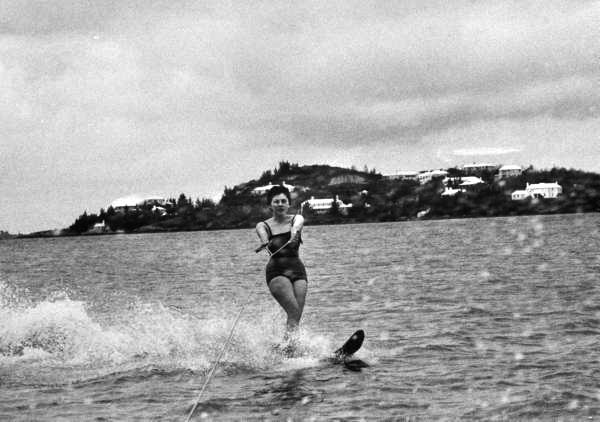
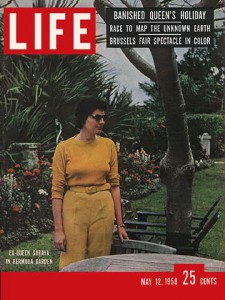
Photos of Princess
Soraya
- Dr. Akinwande Oluwole "Wole"
Soyinka,
political activist who visited in 2006. Africa's first Nobel Prize winner
for Literature, he fled his native Nigeria to escape the clutches of a
dictator who wanted to execute him.
- Louis St. Laurent.
Canadian Prime Minister, visited Bermuda with his wife.
- Tommy Steele. Famous
British singer and actor, original name Tommy Hicks, who in his early days
joined the “Queen of Bermuda” as a bellboy and a member of the crew of
the Queen of Bermuda. As such, he used to jam at Bermuda nightspots with
local musician Hubert Smith, who remained a life-long friend.
- Robert Stigwood. Famous
impresario who once owned a prominent Bermuda home.
- Drew Soucy,
runner. From USA, he nearly won a January 2016 major Bermuda sporting
event.
- Matthew Bradford Sullivan,
classical actor. Performed in Bermuda Festival 2006. His girlfriend, screen
and television actress Harriet Harris, joined him in Bermuda.
- Max Starks and his wife.
Both avid mini-golfers. Former NFL star.
- Dr. Otto Strasser - see http://en.wikipedia.org/wiki/Otto_Strasser
- from but who had fled Germany, traveling under a false last name and
under a Swedish passport. He had left his wife and two children behind in
Lisbon. He arrived in Bermuda on the American Export Line ship Excambion
(later to bring another famous visitor to Bermuda) on October 10, 1940 and
spent a total of six months in Bermuda, under some surveillance but also
with some patronage and freedom, not interned like other German nationals.
Later, he lived in Canada where he achieved a claim to fame.
Dr. Strasser
- Darryl Strawberry. Baseball
superstar who won four World Series titles. He was an inspirational speaker
in Bermuda in October 2017.
- Gay and Nan Talese, married,
author and publisher respectively. Visited in 2006 and 1982.
- James Taylor, musician.
- The Five Bells.
- Shirley Temple. Visited
Bermuda in July 1938. Died 2014 at the age of 85, 75 years after a celebrated
call on Bermuda brought the Island's attractions to international attention.
Hollywood's child starlet in the 1930s, she was at the height of her fame
when she visited the Island, garnering intense local excitement along with
overseas headlines. She arrived on the ocean liner Queen of Bermuda and
stayed at the Castle Harbour Hotel. During her vacation she visited a number
of the Island's attractions, including the Aquarium in Flatts. While sailing
to Bermuda she had met American millionaire and philanthropist Vincent
Astor, a fellow passenger on the Queen of Bermuda. He invited the young
movie star to ride on the narrow gauge private railway, which ran through
his 22-acre estate at Ferry Reach. One of her young local admirers,
nine-year-old David Wadson, worked up the courage to leave a message for the
child star at her hotel, asking her to call him. When Shirley called David
he asked her to a party at her house but Shirley's mother regretfully
declined. However, David was asked to one of Shirley's parties. Remembered
best for her singing and tap-dancing role in such films as 1934's Bright
Eyes, she died at her California residence. She made her last feature film
appearance in 1949, before pursing a career in television. Ms Temple married
Charles Aiden Black in 1950, her second marriage. For the rest of her life
she preferred to be known as Shirley Temple Black. In the late 1960s she
became involved in politics, representing the US at the United Nations in
1969 and in 1974 becoming the US ambassador to Ghana.
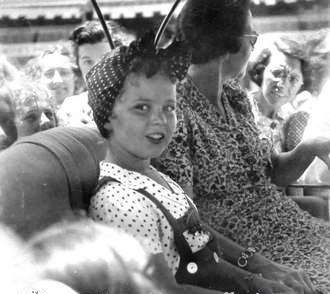
Shirley Temple in
Bermuda, 1938
- The Drifters.
- The Three Degrees.
- Lowell Thomas. American
writer and explorer who visited Bermuda in 1928. In the photo below, he was
with Carveth Wells.
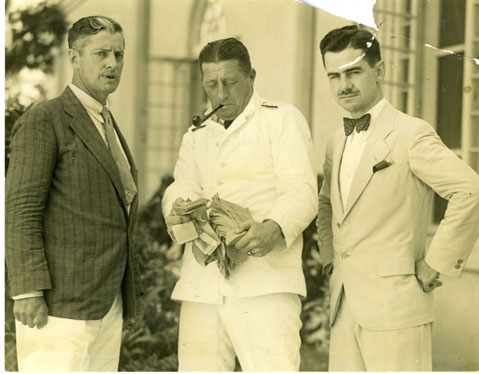
Lowell Thomas with
Carveth Wells in Bermuda, 1928
- James Thurber. As a
frequent visitor, contributed locally flavored cartoons and stories to The
Bermudian magazine as a part-time Sandys resident at the same time the work
which made him synonymous with sophisticated urban humor was appearing in
The New Yorker.
- Billy Joe Tolliver, the
former NFL quarterback, visited Bermuda for the first time in early 2015 and
again in April 2016 for a golf classic..
- Sir Alan Traill, GBE, Lord
Mayor of London, and Lady Traill
- John Travolta. As a
frequent guest of Robert Stigwood, who financed the first major Travolta
movie.
- Anthony Trollope, 1859 (famous
British author).
- Mark Twain. See Twain
in Bermuda.
- Robert Vaughn
- Sarah Vaughn
- Jules Verne. Spent some
time in Bermuda hatching his stories.
- Greta Waitz. Norwegian athlete
who in the 1980s won the Bermuda Marathon Weekend 10K eight times. She died
in 2011 when only 57.
- Earl and Countess De La Warr
- Derek Walcott. St
Lucian prize-winning author who in 1998 attended a Bermuda version of a play
he wrote.
- Jack Watling, 1959
- Charlie Watts
- Dionne
Warwick,
singer, 2006
- John Wayne
- Carl Weathers. 1978.
- Carveth Wells. Author and
explorer. He first visited Bermuda in 1928 with Lowell Thomas and wrote "Bermuda in Three
Colors." 1935. Had chapters on Bermudian history, train travel,
bicycling, carriage trips, a "who's who" of Bermudians, old
recipes, etc. Explorer, world traveler, author radio commentator.
In the 1950s, he and
his wife became regular visitors to Bermuda.
- Barbara Walters, 1972.
- Eli Wallach. In 1976 Mr
Wallach, perhaps best known for his roles in such movies as The
Magnificent Seven and The Good, The Bad & The Ugly, was cast
as Bermudian sea-dog Adam Coffin in a big-budget adaptation of Peter
Benchley’s best-selling novel The Deep. Also in the movie was
his wife Anne Jackson and other notables. The Deep immediately rose
to the top of worldwide best-seller lists when it was published in 1976. The
subsequent film adaptation directed by Peter Yates, shot largely on location
in Bermuda, was a box-office smash when it was released in 1977.
- Bubba Watson, golfer,
2014.
- Dr Adrian Webb. He
heads up the UK’s Hydrographic Office in Somerset. Visited Bermuda in 2016
to launch his book about Thomas Herd and his Bermuda exploits.
- Lynn Whitfield,
actress, 2006.
- Pearl White (1920)
- Robert Blake Whitehill,
author of thriller books. Inspired by a trip to the Island — he found the
class tensions intriguing - he wants to write a novel about Bermuda.
- Jennifer Williams. Former
chief executive of Britain’s Gambling Commission. She met with
local politicians in May 2016 to discuss the coming implementation of
integrated resort casinos. Ms Williams set up the UKCS, which regulates
commercial gambling and lotteries in the UK, in 2005 and led the body until
her retirement in 2015. She was invited to the island by Richard Schuetz,
the CEO of the Bermuda Casino Gaming Commission.
- Robin Williams
- Mary Wilson
- Nancy Wilson.
- Oprah Winfrey.
World-famous television personality, probably the best-ever social
commentator and television program host with her Oprah Winfrey show. Has twice visited
Bermuda with her long-time partner Stedman Graham.
- Jonathan Winters. His 1963
visit was memorable.
- Andrew
Wyeth. Made his own pilgrimage to the Island in 1952. Regarded as
one of the pre-eminent American painters of the last century, just three of
his Bermuda works are known to have survived. And one of them, “Royal
Palms”, has joined the permanent collection of the Masterworks Museum of
Bermuda Art.
- Devon Wylie. NHL star
who visited Bermuda in 2016 for a golf classic.
- Ryan Yang. HSBC
executive, in Bermuda in June 2015 for a conference.
- Dick York (for the movie
"A Taste of Mink". He was later in the "Bewitched" 1970s
TV show).
- Andrew Young, former US
Ambassador to the UN.
Many American, British, Canadian,
French and other artists have come, shown by name in Overseas
Artists in Bermuda. For details of
which millionaires and billionaires currently visit Bermuda and own Bermuda homes, see
Bermuda's
Connections of World Business Leaders.
Banner.jpg)
Authored,
researched, compiled and website-managed by Keith A. Forbes.
Multi-national © 2020. All Rights Reserved