Click on graphic above to navigate the 165+ web files on this website, a regularly updated Gazetteer, an in-depth description of our island's internally self-governing British Overseas Territory 900 miles north of the Caribbean, 600 miles east of North Carolina, USA. With accommodation options, airlines, airport, actors, actresses, aviation, banks, beaches, Bermuda Dollar, Bermuda Government, Bermuda-incorporated businesses and companies including insurers and reinsurers, Bermudians, books and publications, bridges and causeway, charities, churches, citizenship by Status, City of Hamilton, commerce, communities, credit cards, cruise ships, cuisine, currency, disability accessibility, Devonshire Parish, districts, Dockyard, economy, education, employers, employment, environment, executorships, fauna, ferries, flora, former military bases, forts, gardens, geography, getting around, golf, guest houses, highways, history, historic properties, Hamilton, House of Assembly, housing, hotels, immigration, import duties, internet access, islands, laws, legal system and legislators, main roads, marriages, media, members of parliament, money, motor vehicles, municipalities, music and musicians, newcomers, newspaper, media, organizations, parks, parishes, Paget, Pembroke, performing artists, residents, pensions, political parties, postage stamps, public holidays, public transportation, railway trail, real estate, registries of aircraft and ships, religions, Royal Naval Dockyard, Sandys, senior citizens, Smith's, Somerset Village, Southampton, St. David's Island, St George's, Spanish Point, Spittal Pond, sports, taxes, telecommunications, time zone, traditions, tourism, Town of St. George, Tucker's Town, utilities, water sports, Warwick, weather, wildlife, work permits.

By Keith Archibald Forbes (see About Us).

Bermuda's official currency in the Bermuda Dollar which is fixed to the US Dollar. Because of the latter, the US dollar is accepted everywhere at par. British Pounds sterling, Canadian dollars, Euros and other currencies should not be brought as they cannot be used. Most major international credit cards will be accepted from visitors, but overseas debit cards, even in the USA, cannot be used in Bermuda. Most if not all Bermuda places to stay, stores and restaurants will no longer accept traveler's checks, so they should not be bought for your Bermuda visit.
The local-only Bermuda Dollar pictured below, is not exportable. It is not traded internationally. Visitors to Bermuda, irrespective of from where they fly to get here, cannot buy or sell Bermuda dollars abroad. It is used only by local citizens and residents - not by international companies based in Bermuda (all of which use US dollars). It is not cashable or exchangeable by any foreign banks. They should bring US dollars - freely accepted and officially at par everywhere. The Bermuda dollar is pegged to and is based on the international value of the US dollar. Why?
Because Bermuda's total land area is only 21.75 square miles or 35 square kilometers.
The nearest country is the USA (North Carolina), 600 miles to the west.
75% of Bermuda's imports, visitors, commerce and international business operations come from the USA.
When visitors wish to use an ATM card in Bermuda to get money from their non-local bank before they go home, they receive Bermuda dollars only. They cannot use these in any other country except Bermuda. If you, as a visitor, purchase any goods in cash in US dollars and get change from shops or restaurants in Bermuda money, make a point of asking for US dollars instead. Explain that you have no choice as you will be leaving soon and can't use that Bermuda money beyond Bermuda. Most local retailers will have US dollars and US change and will gladly do this for you.
If you work in Bermuda for a local (Bermudian) company or organization, are paid in Bermuda dollars and wish to send money back to your home country, go to the Bermuda bank where you are a customer to buy foreign exchange at the prevailing rate and arrange for a wire transfer, safer and far quicker than by postal mail. You can do this online.
A History of Bermuda and its Money. Book by Dr. Nelson Page Aspen. 1979/1980. Wm. T. Cooke Publishing, Devon. PA, USA. Updated in 2000. Hardcover.

Bermuda Banknotes
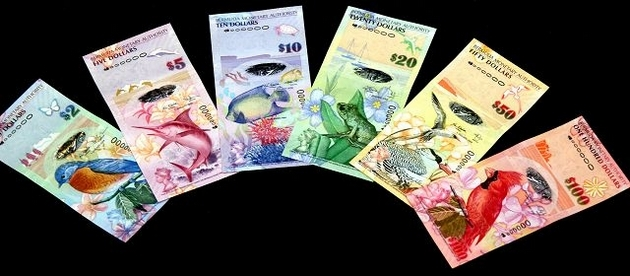
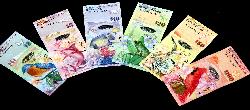
Latest Bermuda Money notes, to take effect from January 1, 2014
One of Bermuda’s banknotes is among the nine most beautiful in the world. That’s the opinion of the International Bank Note Society (IBNS), which each year names a “banknote of the year.” It joins only eight other “banknotes of the year” named by IBNS to date. The members of the IBNS Board said they considered the Bermuda $2 note an example of the most attractive elements which “create interest among the ever-widening community of banknote collectors.”
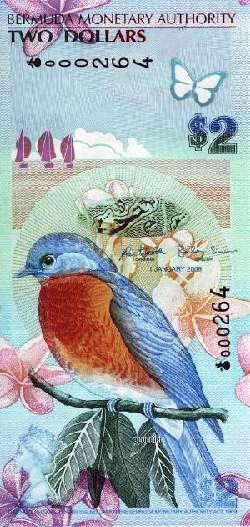
They said the combination of colours were “appealing and blended well throughout all components of the design. Additionally, the range of items depicted on the note were attractively presented and allowed the eye to linger and to search for natural and historical design elements which were not immediately apparent. The Bermuda bank note concerned was outstanding for its puffed up Bermuda bluebird that towers over a less-than-prominent profile of Queen Elizabeth II on the front of these new vertical notes. The back is more subtle, featuring the clock tower at the Royal Naval Dockyard and a famous statue of Neptune. One of the factors recommending the note to the judges was an interesting array of security features, despite its low face value. These include an Optiks embedded metallic thread, with an aperture on the front depicting the island; a Hibiscus watermark on the top section on the front; the Cornerstone — a watermark feature on the four corners of the note enhancing the durability of the banknote; and, on the back, the Gemini feature portraying a compass which fluoresces in two colours under UV light.
The vertical banknote series was introduced in Bermuda in 2009 — the first major redesign of Bermudian banknotes for 40 years. 2013 marks the last for Bermuda’s old-style horizontal bank notes, which cease to be legal tender as of January 1, 2014. From June 30, 2013 the vertical note series began to replace the “legacy” notes of $2, $5, $10, $20, $50 and $100 over the course of the year. The Bermuda Monetary Authority (BMA) which issues them as the regulatory authority arm of the Bermuda Government said members of the public can exchange them for the new vertical notes at their own bank or credit union. The initial concept designs for the vertical series were created by Gene Bothwick, one of firm De La Rue’s long-serving designers, who retired in 2007 after 23 years of service. These concepts were then developed for production by the De La Rue banknote Preliminaries Department with input and guidance from the BMA.
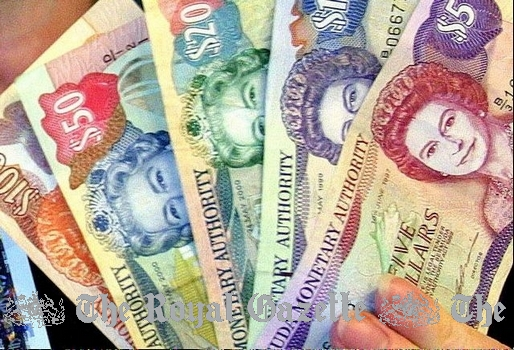
Bermuda money notes in circulation until December 31, 2013
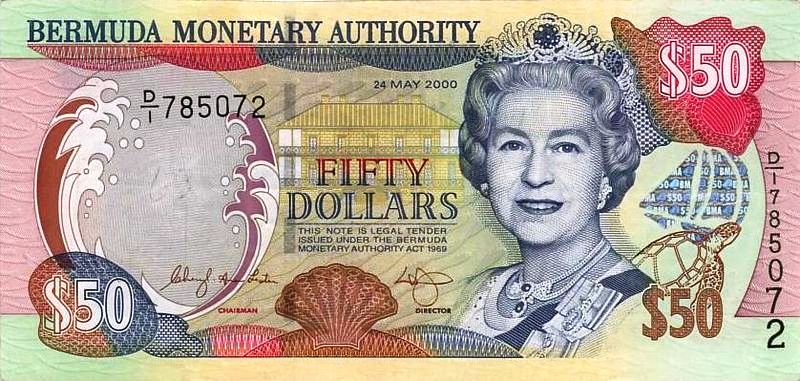
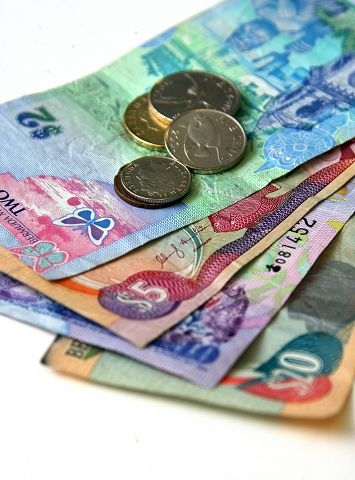
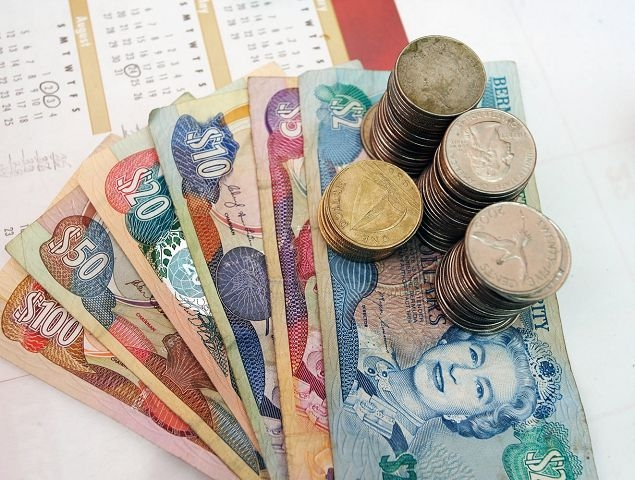
Bermuda dollar notes (bills) and coins, showing bills of $100, $50, $20, $10, $5, $2 and coins of $1 (it replaced the $1 bill), 25 cents, 10 cents, 5 cents and 1 cent (missing from photo).
 Update: 2013.
November 28. The end is nigh for Bermudas legacy horizontal bank
notes. Bermuda Monetary Authority (BMA) reminded the public today that the
December 31, 2013 deadline is fast approaching. After that cut-off point, the
old notes will no longer be considered legal tender but can be exchanged for new
notes at banks and credit unions. The BMA cannot exchange notes and they cannot
be switched at stores or other cash businesses. The switch to new banknotes was
announced in June and the BMA's director of operations, Shanna Lespere, said the
legacy notes had been gradually culled from circulation since, in tandem with
local banks. Although the legacy notes will only be legal tender for a matter of
weeks, the public has ten years to exchange them.
Update: 2013.
November 28. The end is nigh for Bermudas legacy horizontal bank
notes. Bermuda Monetary Authority (BMA) reminded the public today that the
December 31, 2013 deadline is fast approaching. After that cut-off point, the
old notes will no longer be considered legal tender but can be exchanged for new
notes at banks and credit unions. The BMA cannot exchange notes and they cannot
be switched at stores or other cash businesses. The switch to new banknotes was
announced in June and the BMA's director of operations, Shanna Lespere, said the
legacy notes had been gradually culled from circulation since, in tandem with
local banks. Although the legacy notes will only be legal tender for a matter of
weeks, the public has ten years to exchange them.
June 7, 2013. This year marks the last for Bermuda’s old-style horizontal-print bank notes, which cease to be legal tender come January 1, 2014. Starting June 30, the vertical note series introduced in 2009 is to replace the “legacy” notes of $2, $5, $10, $20, $50 and $100 over the course of the year. As old currency gets taken out of circulation, members of the public can exchange them for fresh notes at their own bank or credit union. Banks will also switch notes for visitors — up to a cut-off date to be set by each institution. ATMs and retailers will continue to dispense legacy tender — but the amount of old notes will steadily decrease. Although the old notes will no longer be accepted in stores after the start of 2014, they will still be accepted by banks for exchange. The Bermuda Monetary Authority yesterday announced the launch of an Island-wide public awareness campaign on the switch. However, neither the BMA nor retailers will be exchanging the legacy banknotes for the public.
Bermuda Dollar Notes began in February 1970 (see "History of Bermuda banknotes" below). Before then, the Currency Act of 1841 tied coins and notes to the United Kingdom. Until then, currency notes were distinctly Bermudian yet tied to sterling. They were issued in British pounds and shillings. Today's notes are tied to the American dollar and are worth the same as the latter. They are in different colors and as $2, $5, $10, $20, $50 and $100 notes, printed by Thomas De La Rue of London.
In early 2009 Bermuda's bank notes had a completely new look and feel.
The $1 million worth of new notes ere launched to coincide with the 400th anniversary of the settlement of the Island and the Bermuda Monetary Authority's (BMA) 40th anniversary. They feature the first total redesign of the country's note currency since the Bermuda dollar was issued in 1970. They incorporate a distinct Bermudian look with the use of bold colours, as well as local scenes, flora and fauna, in addition to including some of the most up-to-date anti-counterfeiting technology. The Queen's head has been moved from the main image to the front left corner of the notes after the BMA was given approval by Buckingham Palace and the UK Post Office.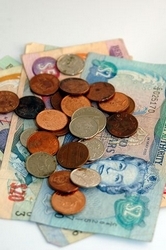 The Authority updated the design of the bank notes to include the latest features, including a
new watermark in the form of a hibiscus flower and an electrolyte in the shape
of a sail boat which can be seen when it is held up to the light, a see-through
feature comprising completed images of creatures individual to each
denomination, serial numbers increasing in size, an iridescent band on the $20,
$50 and $100 bills, and a latent image.
The Authority updated the design of the bank notes to include the latest features, including a
new watermark in the form of a hibiscus flower and an electrolyte in the shape
of a sail boat which can be seen when it is held up to the light, a see-through
feature comprising completed images of creatures individual to each
denomination, serial numbers increasing in size, an iridescent band on the $20,
$50 and $100 bills, and a latent image.
The BMA, which is responsible for issuing Bermuda's notes and coins, started planning for the bank note redesign project in 2005 and received permission and support from Finance Minister Paula Cox and the Cabinet for the design via the passage of the Bermuda Monetary Authority Regulations 2007. The BMA's currency unit worked with UK-based De La Rue Currency to develop the features on the new bank notes. The BMA consulted financial institutions and will carry out training sessions with industry groups, schools and other associations, including the New Banknote Working Group, which discusses institutional needs and addresses concerns about the new notes.
One of the Longtails featured on Bermuda's new $50 banknote as been described as the wrong bird, a species that does not nest on the Island. It is the Red-billed Tropicbird, which hails from the West Indies and eastern Pacific, for the main image on the note. The Bermuda Monetary Authority apologized for "any specific technical error" but said the Red-billed bird was occasionally present on the Island and was chosen as the main image because its colour better fits the design of the note. The bird in question is larger than the Bermuda type, which is formally known as the White-tailed Tropicbird. It has a slight black bar on the upper wing, black wing tips and little black lines through the eye. It also has fine black barring on its back and a red bill, when the Bermuda bird, which is of a type found in all three of the world's oceans, has an orange one.
A banknote design has to combine aesthetics, accuracy of depiction and technical concerns.
Bermuda notes feature graphical representations of the colours, flora and fauna present in the Island. The choice of the non-local bird is not the only thing that has riled environmentalists. Other creatures that are not endemic to Bermuda feature on some of the other banknotes. The whistling frog ($20) was an accidental introduction. Similarly, the cardinal bird ($100) was introduced by man. The blue marlin is not unique to Bermuda but the Bermuda Bluebird is. However, the Cahow, Bermuda's national bird, isn't featured.
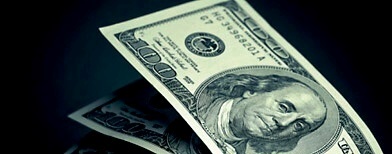
All who work in or have business dealings in Bermuda or who visit should note that Bermuda, uniquely in the economies of the international business centers, has a Foreign Currency Purchase Tax (FCPT). It applies to the purchase of all non-local currencies including the US Dollar. On February 26, 2010 the Bermuda Government doubled this tax, from one half of 1% to a full 1% per transaction and has since increased it again to 1.25% with a further increase in 2020 04 2021 now probable. This includes all purchases of foreign currencies for travel and business purposes and all telegraphic (wire) transfers of monies from Bermuda to individuals and businesses abroad. In addition to bank charges built into the cost of wire transfers, the Bermuda Government charge consumers $1,000 for every $100,000 taken or wired abroad. There is no Government Receipt given for this FCPT charge.
Currently, none independent of the Bermuda banks above.
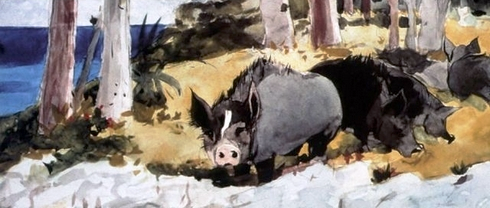
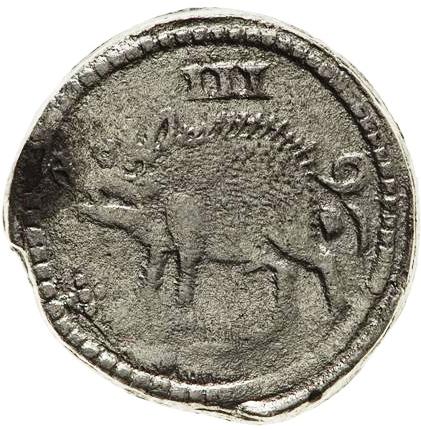
Left: Bermuda feral hogs. From them came Hog or Hogge Money
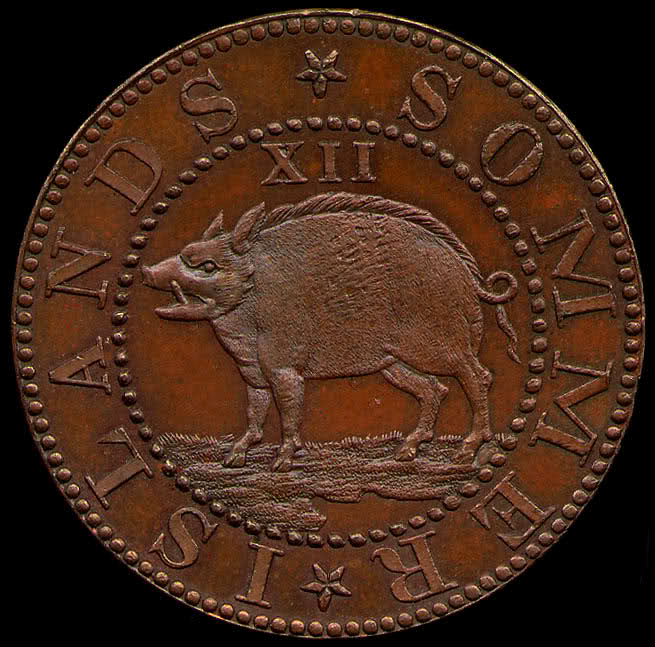
Hogge money, 12 pence (1 shilling)
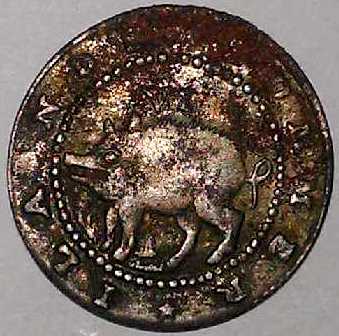
Hogge money, three pence and six pence
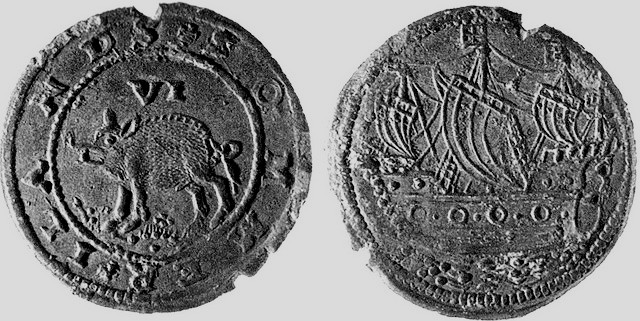
Hogge money, sixpence, seen on both sides
It has been long been claimed by modern-day descendants of early to mid 17th century British colonists in Bermuda, some of whom came from Scotland, that this both distinctive and unique money with which they were paid was the original source of the Scottish tradition of Hogmanay, the name given in that part of the world to New Year's Eve celebrations. It is pronounced and spelt only slightly differently. Most non-Scots believe the term to have been of French origin, from about 1604. But Hogge Money must now surely have an equal claim, being both of similar vintage and pronunciation undisturbed by the French variations shown in the Hogmanay reference at http://en.wikipedia.org/wiki/Hogmanay, plus having once been real money by that name. At any rate, in 1995, a unique collection of 15 pieces of Hogge Money was handed over to the Bermuda Monetary Authority on permanent loan, by the Bermuda National Parks Commission. Hogge Money was followed by the Bermuda Ship's Penny in 1793. Today, coins in circulation are about the same size and shape as American coins. They are in values of $1 (it replaced the $1 bill), 25 cents, 10 cents, 5 cents and 1 cent. On their reverse sides, the $1 coin features the Bermuda Fitted Dinghy, the 25 cents the national bird, the Bermuda Longtail, the 10 cents the Bermuda Easter Lily, the 5 cents an Angel fish and and the 1 cent the pig on the original early 17th century Hogge Money. On their obverse, Her Majesty the Queen is profiled.
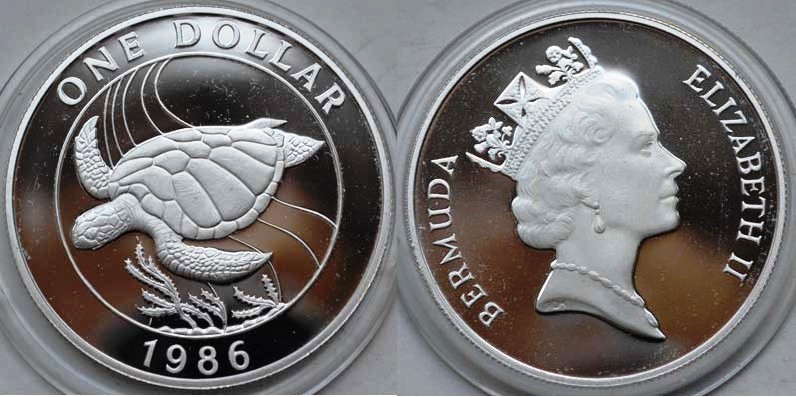
1986 Turtle
A distinctive one-of-a-kind 1987 Aviation Commemorative is shown below.
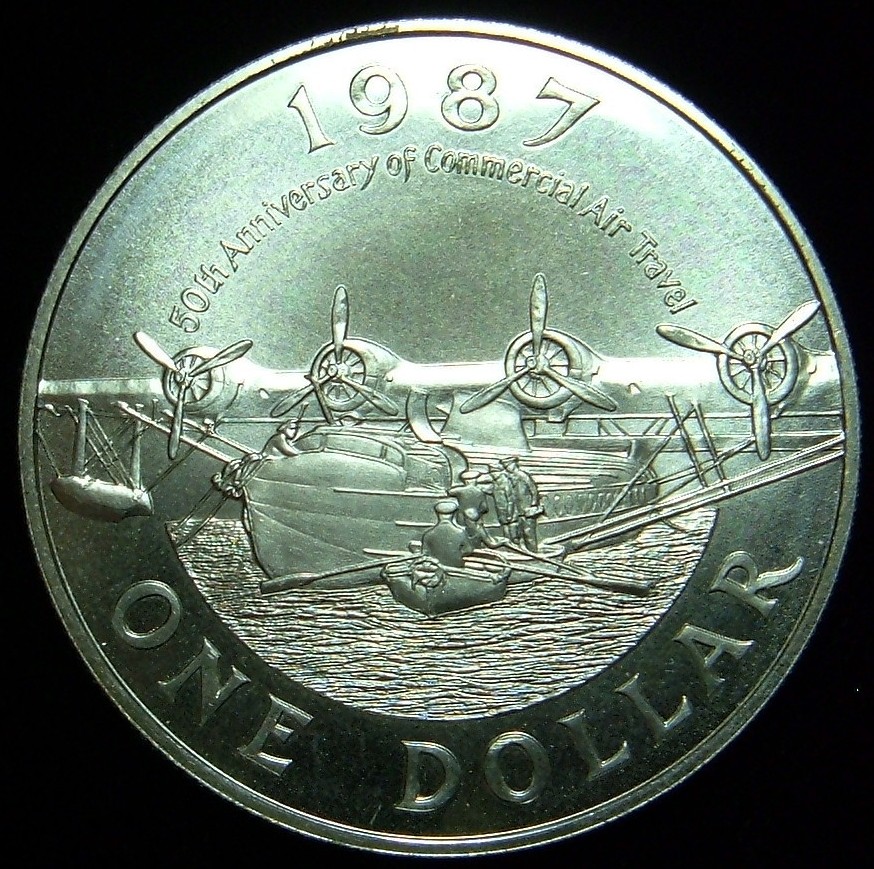
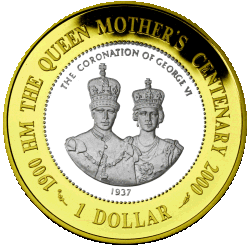
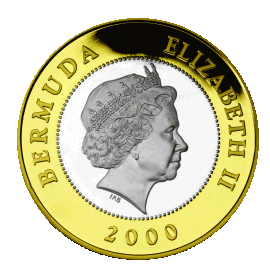
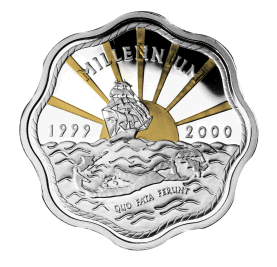
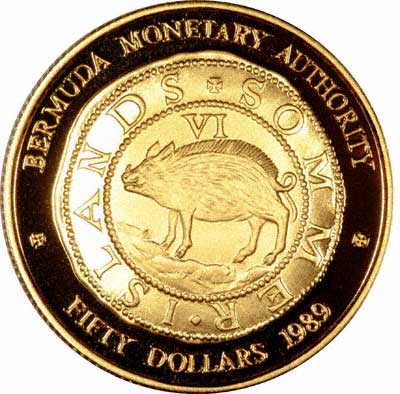
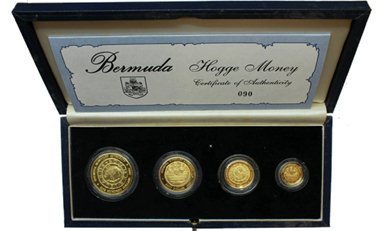
Bottom two above, Hogge money commemoratives 1989
The 2008 Silver Proof Hawksbill Turtle coin - not shown below - depicts one of Bermuda's most rare sea creatures, the Hawksbill Turtle, also found in a few other exotic places. This critically endangered turtle is found swimming among the coral reefs surrounding the Island.
In descending order of issue
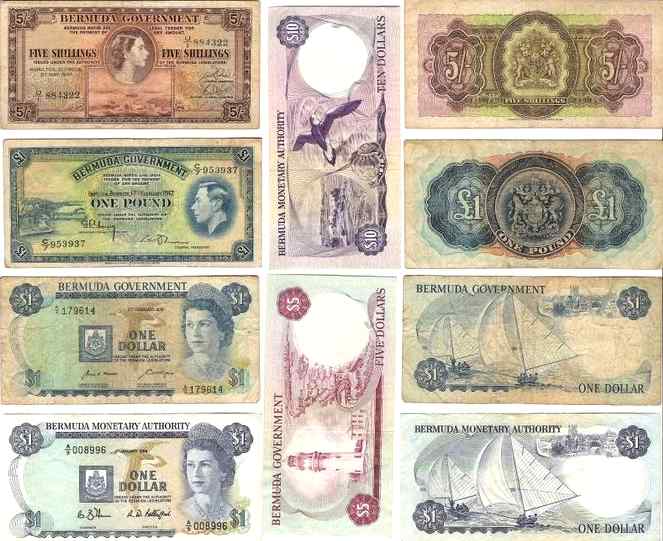
The old (pre-1970 Bermuda Pound) notes and since 1970 the Bermuda Dollar notes
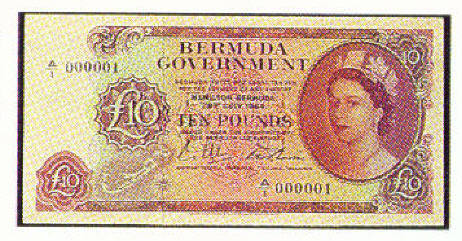
Above. May 1964.
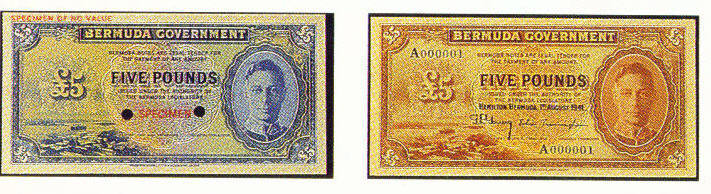
Above. 1941. These notes were issued after the US Bases were established, all showing Bermuda Government and King George VI. Only the orange note was circulated.
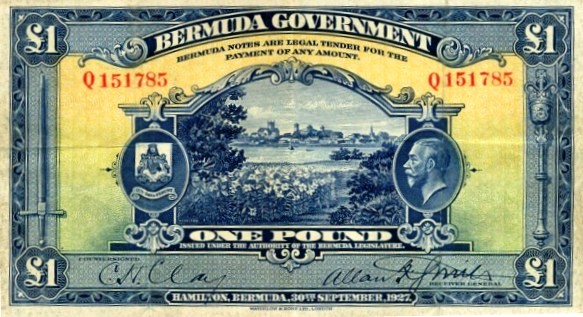
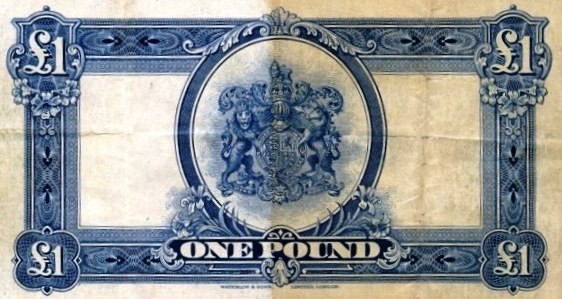
Above. 1927. September 30. A £1 note, front and back.
1920. Five shillings notes (re-issued 1935).
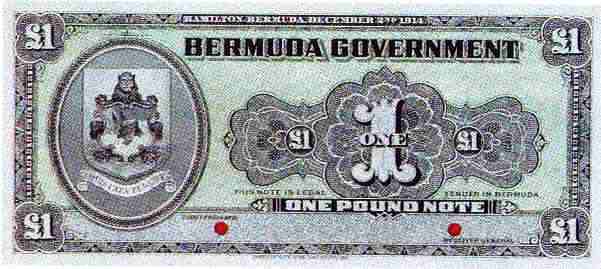
Above. 1914. Proof of first Bermuda Government £1 note
1914, December 2. First Bermuda £1 note. Printed by the American Bank Note Company in Ottawa, showing King George V.
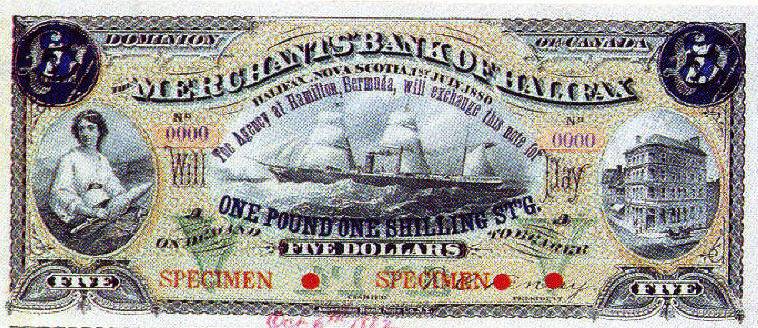
Above. 1883. First Bermuda Banknote. A Canadian $5 note printed for the Merchant Bank of Halifax and converted to a £1 and 1 shilling (one guinea) note for use in Bermuda.
Should not be brought by newcomers, tourists or visitors. No longer accepted or issued by any Bermuda banks, hotels, guest houses or other accommodation or any restaurants or stores.

No longer usable in Bermuda, see above story
Banner.jpg)
Authored,
researched, compiled and website-managed by Keith A. Forbes.
Multi-national © 2020. All Rights Reserved