Click on graphic above to navigate the 165+ web files on this website, a regularly updated Gazetteer, an in-depth description of our island's internally self-governing British Overseas Territory 900 miles north of the Caribbean, 600 miles east of North Carolina, USA. With accommodation options, airlines, airport, actors, actresses, aviation, banks, beaches, Bermuda Dollar, Bermuda Government, Bermuda-incorporated businesses and companies including insurers and reinsurers, Bermudians, books and publications, bridges and causeway, charities, churches, citizenship by Status, City of Hamilton, commerce, communities, credit cards, cruise ships, cuisine, currency, disability accessibility, Devonshire Parish, districts, Dockyard, economy, education, employers, employment, environment, executorships, fauna, ferries, flora, former military bases, forts, gardens, geography, getting around, golf, guest houses, highways, history, historic properties, Hamilton, House of Assembly, housing, hotels, immigration, import duties, internet access, islands, laws, legal system and legislators, main roads, marriages, media, members of parliament, money, motor vehicles, municipalities, music and musicians, newcomers, newspaper, media, organizations, parks, parishes, Paget, Pembroke, performing artists, residents, pensions, political parties, postage stamps, public holidays, public transportation, railway trail, real estate, registries of aircraft and ships, religions, Royal Naval Dockyard, Sandys, senior citizens, Smith's, Somerset Village, Southampton, St. David's Island, St George's, Spanish Point, Spittal Pond, sports, taxes, telecommunications, time zone, traditions, tourism, Town of St. George, Tucker's Town, utilities, water sports, Warwick, weather, wildlife, work permits.


By Keith Archibald Forbes (see About Us)
By sea from a boat, you can access private beaches legally, up to the high water mark. Inshore waters like the Great Sound, Castle Harbor and Hamilton Harbor have many little beaches, coves, grottos and islets.
Safe zones to discharge sewage from their vessels.
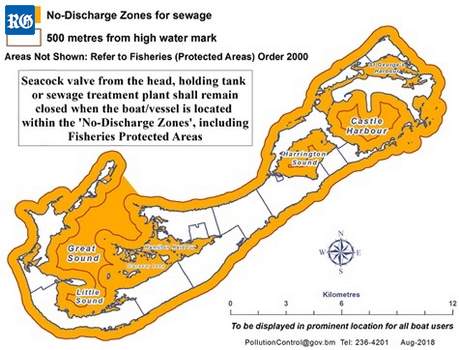
Sewage is permitted overboard outside of no-discharge zones, beyond the near shore area — or greater than 500 metres from the nearest land. Waste is not allowed overboard in the enclosed areas of Great Sound, Little Sound, Harrington Sound, Castle Harbour, Hamilton Harbour or St George’s Harbour, as well as fisheries protected areas. A spokeswoman said that the Water Resources (Prevention of Pollution by Sewage from Boats) Regulations 2018 had come into force in August 2018. The restrictions cover the owners and operators of recreational boats, as well as live-aboard boats, charter vessels, and all other boats that sail or motor in and around Bermuda. Disposal options include certain marinas, shore-side sanitation trucks, or moving outside of the no-discharge zones. A brochure outlining regulations is available from Marine and Ports. Regulations also require an instruction sticker showing no-discharge zones to be visible adjacent to toilets on board. The discharge valve from the toilet or sewage holding tank should be set to closed whenever vessels are moored or at anchor in no-discharge zones. The instruction stickers and brochures are available from either the Department of Environment and Natural Resources in the Botanical Gardens, or from the boats and mooring section of Marine and Ports Services, in the old Paget Post Office at Middle Road, Paget. For more information, call 239-2356 or 239-2303, or e-mail pollutioncontrol@gov.bm
Includes pleasure yachts and other pleasure craft. There is no restriction on how many, size or type a person may have, but all must be licensed annually and some require licensed moorings. Expect to pay from $79,000 for a 20' 6 inch boat new. Customs Duties (import duties) on all new boats apply, averaging 30% of purchase cost if bought from a non-local dealership. All boat owners who claim on their insurance for damage should be prepared to offer their insurer proof that their mooring has recently been inspected - every year or every other year depending on mooring and insurer. Mooring certificates are required.
The Maritime Offences Procedure Act 2006 provisions include giving Police officers, Marine and Ports Services Officers and Fisheries Inspectors the power to issue tickets for a wide range of offences. The recipient will be able to pay within seven days without the need for the matter to go to court. Among the on-the-spot fines that could be issued are:
All types of small boats are available for rent at various sites all over Bermuda, from Boston Whalers to jet ski craft. They are fun to rent but expensive, partly because boats - and the fuel they use - attract a very high rate of import duty imposed by the Bermuda Government.
A boat that costs US$10,000 in the USA - for example, a 19 ft sailboat from a boatyard in Florida (such as Noble's Marine in Leesburgh) - will cost as much as $34,000 in Bermuda if bought locally. If bought yourself from Florida, the additional cost to get it to Bermuda for a boat of this size will be about $5,000 for shrink-wrapping, hauling to the docks and ocean freight; duty will be 55% and there will be other costs. Buying directly from the USA offers a much bigger choice but buying locally may have fewer headaches over servicing and warranties. There are no restrictions on size or type. All motor boats must be registered and licensed by March 31 by the Bermuda Government's Department of Marine and Ports. Transfers of ownership must be documented. All must show decals. Regulations apply for classification and safety equipment. Supply a boat photograph when registering. Some require a mooring, handled privately. Note Bermuda Government Licensing fees for boat trailers.
Visitors should not venture beyond inshore protected waters.
Water Safety Council. Bermuda Government appointed under the Bermuda Constitution Order 1968, Section 61. For members, under Bermuda Government Boards.
Remarkable efforts were taken to secure stunning Bermuda underwater cave footage for a 2010 four-part mini-series on the Island produced by Discovery Channel Canada.
Five five-and-a-half-minute mini-documentaries highlighted the Island's caves, cahows, roof rainwater systems and research into ocean algae biofuels.. Cave diving specialists spent ten days practicing for the underwater filming assignment. They strapped air tanks under their arms rather than on their backs in order to squeeze through tiny spaces to capture never-before seen pictures of the Island's mysterious submerged caverns and labyrinths. Divers explored the dark waters of the 2,000m long caves around Castle Harbour. The magnificent formations of stalagmites and stalactites provided evidence the Island was once 400 metres above sea level. Bones of long-gone birds and creatures that lived on the Island before it was settled by man were uncovered in the submerged caves, while sponges and plant life that cling to the rocks exhibit antibacterial and even anti-cancerous properties. The divers were part of a wide-ranging collaborative effort instigated and directed by the newly formed Bermuda Environmental Alliance that brought together an extensive group of scientists, conservationists, wildlife experts and film technicians to create the mini-series for Discovery Channel Canada.See more details under "Scuba diving" and "snorkeling."
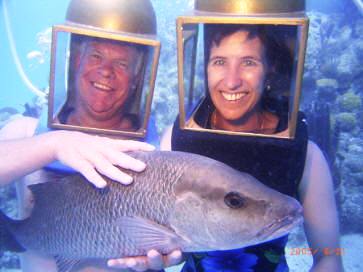
For those not used to the ocean such as non-swimmers, this is an adventurous and far less strenuous than snorkeling way to enjoy the wonders of the deep. Even those physically handicapped but ambulatory or not fit or not good swimmers or who don't swim, can really enjoy this marine aspect of Bermuda if they are capable of getting on and off the vessel concerned. Shallow-water helmet diving will amaze and delight you. The diving helmet protects you yet lets you see everything. Fresh air is pumped into the helmet via a hose. See underwater and colorful fish in the reefs. Return home with memories and photographs of an unexpected but fantastic highlight of your visit that you never thought you would experience.
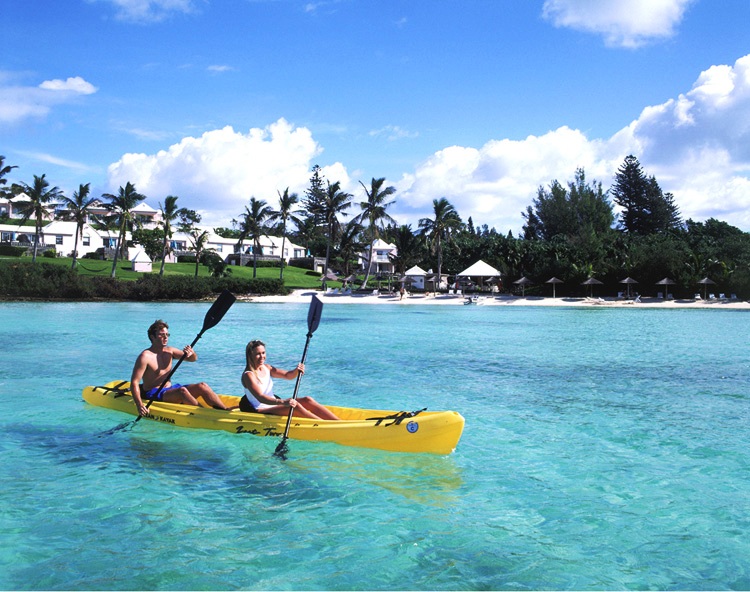
A kayak or canoe offers the opportunity to explore places even many Bermudians don't know exist, such as in Hungry Bay, Paget, or Paradise Lake - some of the islands of the Great Sound. Plus, for those in search of marine life, mangroves and quiet coves are easily accessible by kayak. Check to see which water sports outlets rent or sell canoes or kayaks.
Takes place periodically, mostly at Ferry Reach.
Periodic races include boys and men's singles and doubles; girls and women's singles and doubles; mixed doubles and coxed fours in competition. A local rowing group
has a fleet of fours, quads, pairs, doubles and single sculls. Holds an annual summer regatta for Men's Mixed Doubles; Women's Open Doubles; Women's Intermediate Doubles; Mixed Quadruple Sculls; Mixed Novice Doubles; Men's Novice Doubles; Novice Quadruple Sculls and Men's Open Doubles.Bermuda Pilot Gig Club. Pilot gig rowing stems from the days when crews would row out to an incoming ship to guide it to shore. The first crew that reached the ship, got the job. This was common in Bermuda until the 1930s when government started paying a branch pilot to do the job. For more information visit the website bermudapilotgigclub.com.
Bermuda Rowing Association. Boathouse: White's Island, Hamilton Harbor. PO Box HM 3044, Hamilton HM NX. With a fleet of fours, quads, pairs, doubles and single sculls. Holds an annual summer regatta for Men's Mixed Doubles; Women's Open Doubles; Women's Intermediate Doubles; Mixed Quadruple Sculls; Mixed Novice Doubles; Men's Novice Doubles; Novice Quadruple Sculls and Men's Open Doubles.
Sightseeing boats, sometimes sailing boats as well, are licensed by the Bermuda Government and are numerous. Unlike Bermuda Government-owned ferry boats which are not sightseeing but commuting, these offer you much greater freedom of choice in where you want to go and when. Some are licensed to serve liquor aboard. There are two types of liquor licenses. One is for beer and wine only, the other more comprehensive. Types of vessels are many, from small to large. One service has a custom-built amphibious vehicle, a combined bus and boat, offering educational tours from Dockyard in Somerset. It was made for Bermuda's roads. Its engine can power the vehicle at about ten knots in the water and 19 mph on land. Once it leaves the water, the bus will take passengers on a three-hour tour of the Island.
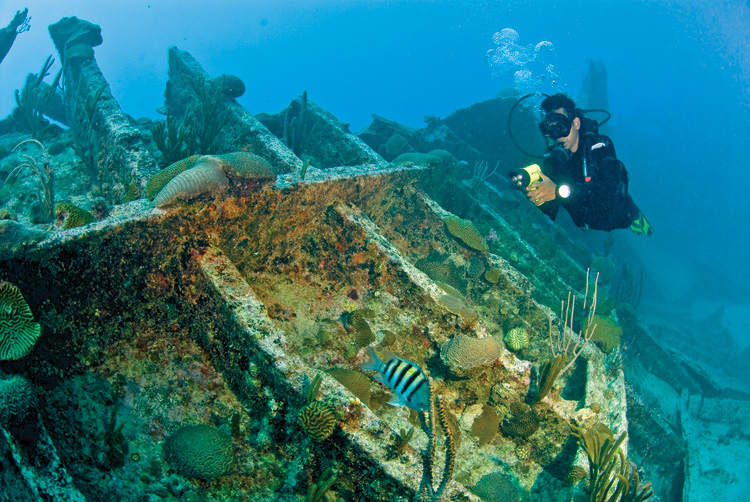
Examining a wreck in Bermuda
It is magical, a wonderful experience, to be buoyant deep below the waves, gliding past coral and through shoals of fish. Before scuba diving, visitors should take care not to use sun screen lotions, commonly used by beach-going and reef-roaming tourists worldwide. It has been determined they are a major cause of reef coral bleaching, according to a 2008 study commissioned by the European Commission. In experiments, the cream-based ultra-violet (UV) filters -- used to protect skin from the harmful effects of sun exposure -- caused bleaching of coral reefs even in small quantities, the study found. Coral reefs are among the most biologically productive and diverse of ecosystems, and directly sustain half a billion people. But some 60 percent of these reef systems are threatened by a deadly combination of climate change, industrial pollution and excess UV radiation. The new study, published in US journal Environmental Health Perspectives, has now added sun screens to the list of damaging agents, and estimates that up to 10 per cent of the world's reefs are at risk of sunscreen-induced coral bleaching. Chemical compounds in sunscreen and other personal skin care products have been detected near both sea and freshwater tourist areas. Previous research has shown that these chemicals can accumulate in aquatic animals, and biodegrade into toxic by-products. Even small doses provoked large discharges of coral mucous -- a clear sign of environmental stress -- within 18 to 48 hours. Within 96 hours complete bleaching of corals had occurred. Virus levels in seawater surrounding coral branches increased to 15 times the level found in control samples, suggesting that sunscreens might stimulate latent viral infections, the study found.
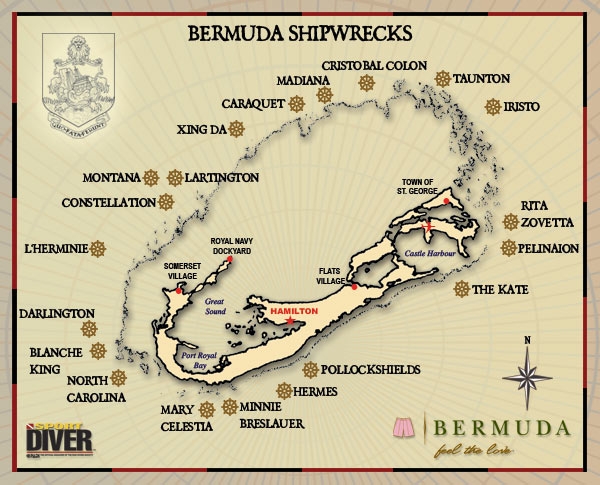
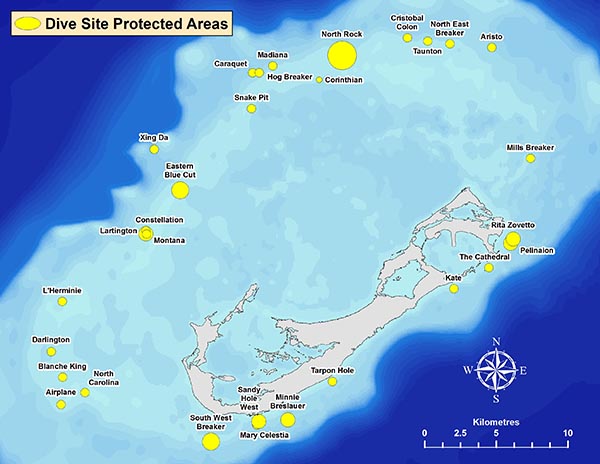
Several dive centers with certified dive masters take visitors down to Bermuda's depths, give lessons and test for certification. They also offer wreck and reef dives, and night dives for the certified experienced. Certain times of the year, weather or sea conditions are not conducive. Scuba divers who have the time take the Shipwreck Certificate program, with a parchment certificate upon completion of a dive on any of six most popular wrecks. Each certificate bears the name of the diver, dive operator and signature of dive master, with a history of the wreck. If with less time, cruise ship or other visitors can take preliminary training for an Open Water PADI Certificate by signing up for the basics. Price per person for a "resort course" was $135 in 2010 which includes use of equipment. Newcomers to scuba diving are first taught the scuba do's and don'ts. They can also try snuba, a cross between scuba and snorkeling, which involves a dive to 20 feet while oxygen tanks remain on dinghies or rafts. Sites include the Darlington, an English steamer that went down in 1896, a rotting wreck; an eerie but remarkably intact submerged US military aircraft that crashed in 1963, taking the pilot to his watery grave. In 1997, the one-time Chinese illegal immigrant smuggling ship Xing Da was sunk in local waters. She made quite a splash in October 1996 when she was arrested near Bermuda by the US Coast guard, boarded by US Marines, and brought into Bermuda under escort. She was then was loaded with Chinese nationals who had spent their entire fortunes to get to the USA. They were flown from Bermuda via the USA's military aircraft to an internment camp at the USA's Guantanamo Bay, Cuba, complex.
Overseas visitors should know that local waters are less than 64 degrees Fahrenheit in temperature from November through March. Bermuda has exceptionally salty water. So wear an appropriate wet suit and additional weights. Bermuda has 230 square miles of offshore reefs, 10 times the physical land area. There are wrecks from five centuries. They are ideal from May through September. There are 13 official major shipwrecks since 1940 alone. These wrecks do not include the numerous yacht wrecks, or between 4-6 big ship groundings that are believed to have happened during World War 2.
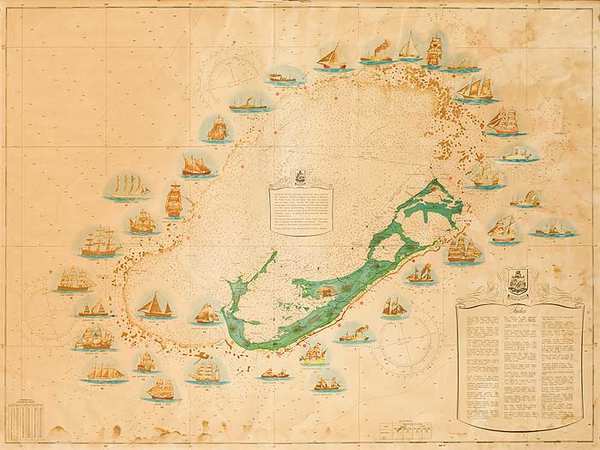
See Scuba Diving above. Shipwrecks are one of Bermuda’s most important cultural resources. They are underwater museums offering the public, tourists, students and scholars a unique opportunity to investigate the remains of vessels that made our Western Hemisphere what it is today. Remnants of Spanish naos, English galleons, French frigates, American schooners, brigantines, paddle steamers, steamships, gunboats and (to name a few) can all be found on Bermuda’s ocean floor. They all show an extensive cross section of maritime technology and cultures over five hundred years, thus putting Bermuda on the map as the “Shipwreck Island” of the Western Atlantic.”
Note the salty water. Bermuda is a great snorkeling location from late May to mid September. At other times, the waters are much cooler and attract mostly Canadians or Britons or Europeans. Prime areas include Church Bay in Southampton Parish and Tobacco Bay in St. George's. Rent masks, fins and snorkels. To snorkel with non-native dolphins see under "Dolphin Quest" in Sandys Parish.
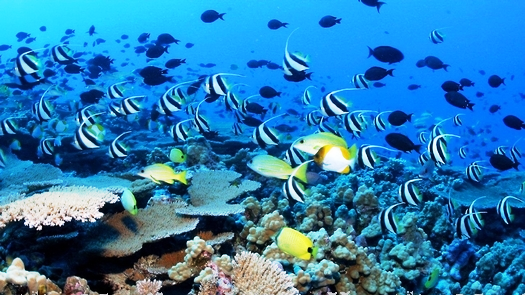
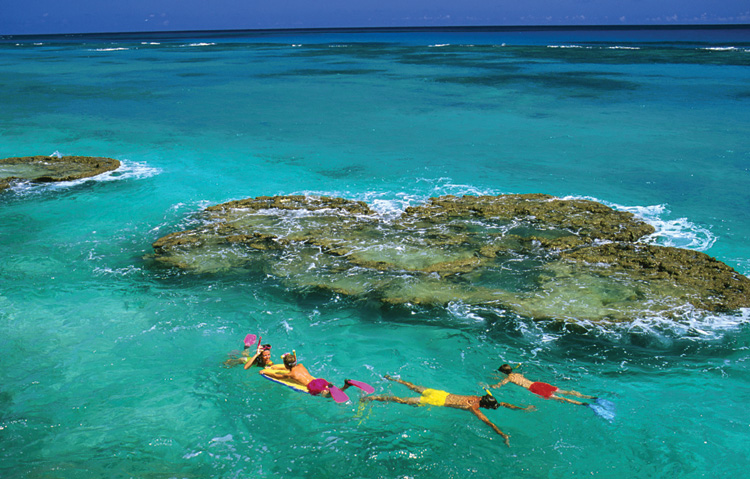
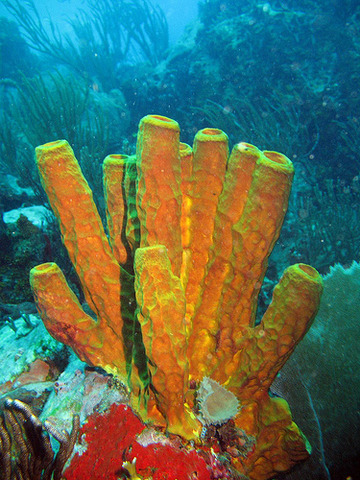
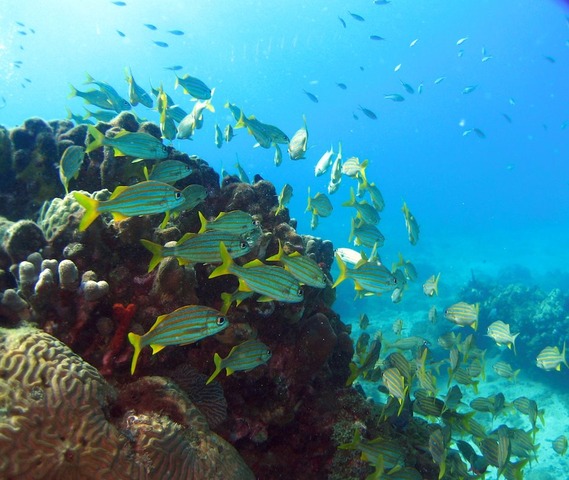
Snorkeling in Bermuda
Before snorkeling, visitors should take care not to use sun screen lotions, commonly used by beach-going and reef-roaming tourists worldwide. It has been determined they are a major cause of reef coral bleaching, according to a 2008 study commissioned by the European Commission. In experiments, the cream-based ultra-violet (UV) filters -- used to protect skin from the harmful effects of sun exposure -- caused bleaching of coral reefs even in small quantities, the study found. Coral reefs are among the most biologically productive and diverse of ecosystems, and directly sustain half a billion people. But some 60 percent of these reef systems are threatened by a deadly combination of climate change, industrial pollution and excess UV radiation. The new study, published in US journal Environmental Health Perspectives, has now added sun screens to the list of damaging agents, and estimates that up to 10 per cent of the world's reefs are at risk of sunscreen-induced coral bleaching. Chemical compounds in sunscreen and other personal skin care products have been detected near both sea and freshwater tourist areas. Previous research has shown that these chemicals can accumulate in aquatic animals, and biodegrade into toxic by-products. Even small doses provoked large discharges of coral mucous -- a clear sign of environmental stress -- within 18 to 48 hours. Within 96 hours complete bleaching of corals had occurred. Virus levels in seawater surrounding coral branches increased to 15 times the level found in control samples, suggesting that sunscreens might stimulate latent viral infections, the study found. Pesticides, hydrocarbons and other contaminants have also been found to induce algae or coral to release viruses, hastening the bleaching process. According to the World Trade Organisation, around 10 per cent of tourism takes place in tropical areas, with 78 million tourists visiting coral reefs each year. An estimated 4,000 to 6,000 tonnes of sunscreen are released annually in reef areas, with 25 per cent of the sunscreen ingredients on skin released into water over the course of a 20 minute submersion.
Under the 1972 Fisheries Regulations, this is illegal in waters in or less than 1 mile from shore and offenders caught will be fined up to US$5,000.
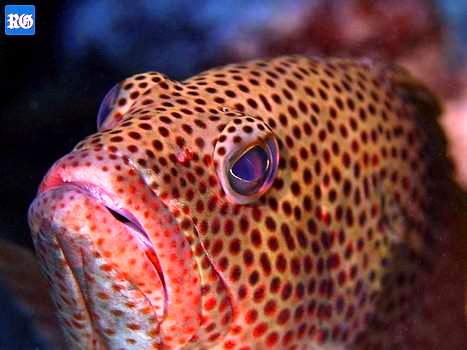
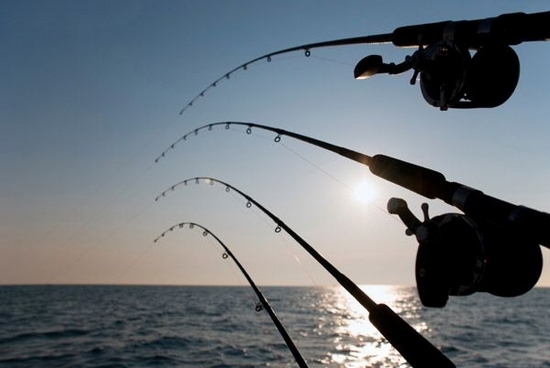
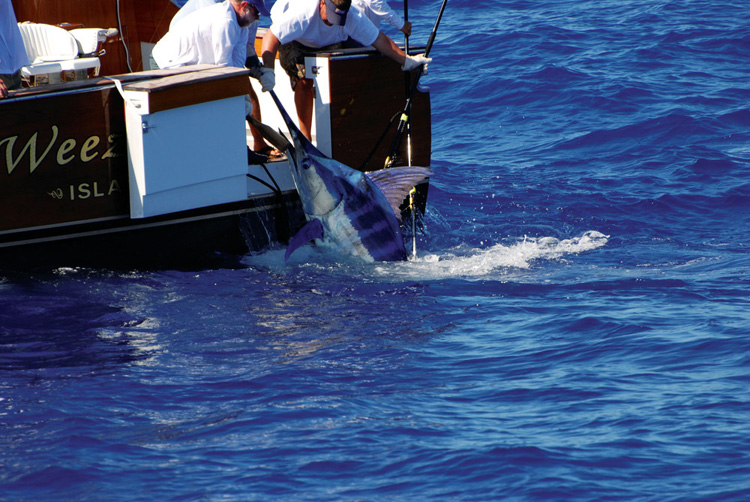
Full day and half day, group and individuals, fishing trips are readily available but expensive. Many of the International Game Fishing Association's World Record catches were once made in Bermuda waters. Over 650 species of fish inhabit Bermuda waters. Around and beyond the reefs, amber jack, barracuda, bonefish, chub, dorado or mahi mahi, hogfish, (most are 4-8 lbs but some are up to 30), mackerel, marlin (blue and white), shark, snapper (mostly grey), pompano, rainbow runner, tuna, wahoo, yellowtail are plentiful. There is legislation limiting the catches of blue and white marlin. Lobsters may not be caught by visitors, only by those licensed to do so. They need a special permit, with the catch seasonal and with a limit.
Residents and visitors should note that under Bermuda's Fisheries (Protected Species) Order 1978, the Queen Conch (Strombus Gigas), other conchs including the Harbour Conch (Strombus Costatus) are illegal to import, an offence to purchase and possess and illegal for boaters, skippers and clients or guests to take from Bermuda waters. Similarly protected are Atlantic pearl oysters, Bermuda cone shells, bonnet shells, calico clams, corals, dolphins, marine turtles, porpoises, sea fans, sea rods, scallops, top shells, turtles and whales.
No charter boat captain will guarantee your catch. Fishing is a gamble. Experienced charter boat captains know where the fish are, but can't tell you whether they are hungry enough to take the bait. You could be very lucky and have an early strike, or you could wait for hours, or not make any at all. If on a charter vessel, you get space on a boat equipped for fishing, plus services of the Captain and his First Mate, lines and bait. Many captains take their vessels to where cruise ships berth. But they know where fish are most likely to be caught. If you're on a cruise ship, ask in advance for a boxed lunch and beverage. Dress lightly and casually, with a hat. Wear comfortable, rubber soled footwear for safety when moving about on the deck or bridge. Bring good sun block lotion, a camera and bottled water or your favorite other light beverage and food. An experienced charter boat captain may take you 10 miles or so offshore, for strikes.
On the ocean, captains or first mates bait and cast lines on the port and starboard sides. Clients are assigned to a particular rod, or the fighting chair, in rotating order. If a strike is made when a client has the fighting chair, he or she is given the rod and instructed on how to use it to fight the fish, wear it out, and bring it alongside. Move quickly from any danger area when a struggling fish is caught, gaffed and manhandled aboard by the vessel's crew. It will go into one of the deck's large freezer chests.
Always check ahead to see if there are any restrictions like a tag and release policy or program. Some encourage it. But visitors get the thrill in catching a huge bill fish and may want to take it home for stuffing and mounting. Ask in advance the catch policy of the charter boat captain. He may let you take your fish home, in which case he can advise you on who to consult for stuffing and mounting. Other captains may feel the catch belongs to them and this should be well understood and accepted in advance of any charter.
Angling tournaments occur throughout the year, on charter and private fishing and sports boats. Most welcome visitors. Big Game Fishing involves fishing for the fierce fish like barracuda, blue marlin, dorado or mahi mahi, marlin, shark or wahoo. Light Tackle Fishing is for amber jack, bonefish, chub, hogfish, snapper, mackerel, pompano, rainbow runner, tuna or yellowtail. Local fishermen have made catches of groupers weighing 90 pounds or more. No license is required. Bring your own gear, or rent or buy locally.
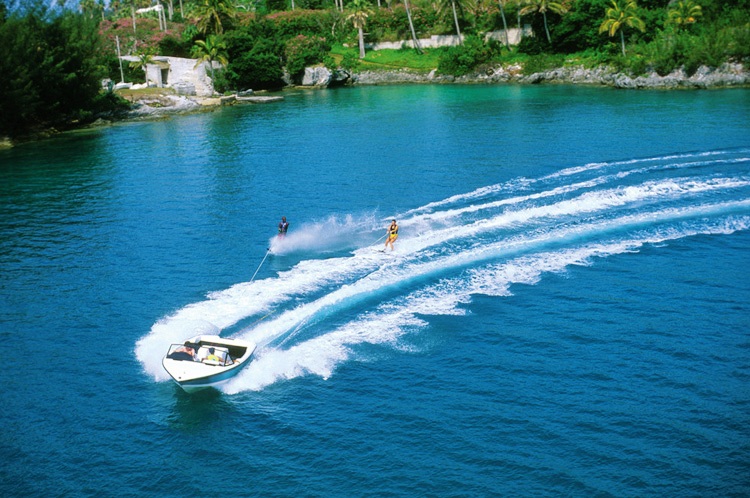
For water skiers, Bermuda's protected harbors are great. June through September are the warmest sea temperature times, but some go at it all year. Water temperature in August can be as high as 86 degrees Fahrenheit, yet out at sea or even 200 yards offshore, it does not feel like a warm bath. Local water ski centers have all the best equipment, including custom made craft. You can slalom, trick ski, knee board, skurf, or water sled if you're experienced, or take lessons from experienced skiers if you're not.
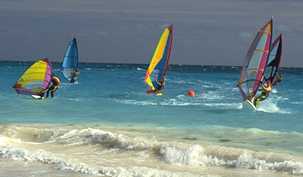
One of the world's fastest growing sports, well represented in Bermuda. Rent boards from water sports centers. Staff give lessons. See colorful craft skimming over the waves at incredible speed. Warmer sea and air temperatures are from May through September. Locals with their own gear will find Shelly Bay in Hamilton Parish one of the best sites in the winter months because of the frequent high winds.
Every spring, International Race Week in Bermuda acts as a magnet for American, British, Canadian, European and local sailors. Every day of the year, Bermudians, residents and visitors can see splendid yachts from around the world moored in the city of Hamilton, or Town of St. George. Choice sightseeing spots to view the fleets at anchor, or when parading in the harbor, include Albouy's Point in Hamilton, or nearby Barr's Park.
Bermuda Offshore Cruising Association (BOCA).
Bermuda J-24 Class Association
Bermuda Pilot Gig Club.
Bermuda Sailing Association.
East End Mini Yacht Club. Convict Bay, St. George's, GE 05. Phone 297-0558.
Royal Bermuda Yacht Club. In City of Hamilton.
Royal Hamilton Amateur Dinghy Club. Located in Paget Parish.
St. George's Dinghy & Sports Club. 24 Cut Road, St. George's. Phone 297-1612
Sandys Boat Club. Somerset. Phone 234-2248 or 234-4137
Team BDA
West End Sailboat Club. Watford Island, Somerset. Phone 234-1252
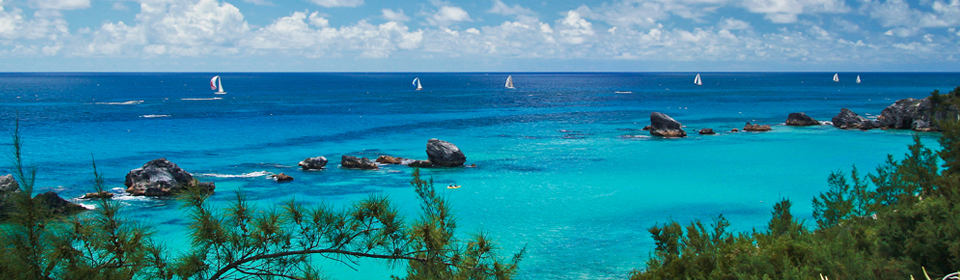
Events which attracted a large number of vessels, include the:
 Amlin International Moth
championships
Amlin International Moth
championships
Aon Youth World Championships.
Argo
Group Gold
Cup.
History of the formerly-named King Edward VII
Gold Cup: The oldest match-racing trophy in the world for competition
involving one-design yachts. It was given at the Tri-Centenary Regatta at
Jamestown, Virginia, in 1907 by King Edward VII in commemoration of the 300th
Anniversary of the first permanent settlement in America. C. Sherman Hoyt won
the regatta and was the first to accept the now historic cup. After three
decades of holding the Cup, Mr. Hoyt gave it to the Royal Bermuda Yacht Club and
proposed a regular one-on-one match-race series in 6-Meter yachts. In his letter
he expressed the propriety of "my returning a British Royal trophy to the
custody of your club, with its long record of clean sportsmanship and keenly
contested races between your Bermuda yachts and ours of Long Island Sound, and
elsewhere..." The first winner of the Cup in its new format was the
celebrated Briggs Cunningham, who was also the first skipper to win the
America's Cup in a 12-Meter. In the post-war years, the Club placed the Cup in
competition in 1956 for match-racing in yachts of the International One Design
Class. Bert Darrell had the honor of being first to defend the Cup in this class
and won it a total of six times. By winning his seventh championship in 2004,
Russell Coutts surpassed Darrell to become the event's all-time winner. Through
the years Bermuda has won the Cup 21 times, the United States 17 times, New
Zealand 10 times, Australia 5 times, the United Kingdom twice, and in 2002
Denmark claimed the King Edward VII Gold Cup for the first time.
2020. The Argo Group Gold Cup was held May 11 to 16 in Bermuda. Event organisers at the Royal Bermuda Yacht Club also confirmed that Argo Group, an international underwriter of speciality insurance and reinsurance, was again title sponsor. An expected field of 12 teams battled for the King Edward VII Gold Cup, the oldest match-racing trophy in the world for competition involving one-design yachts that dates back to 1907, and a $100,000 prize purse.
Bacardi
Keelboat Regatta
Bermuda
1-2 Yacht Race. A famous every-other-year yacht race to Bermuda.
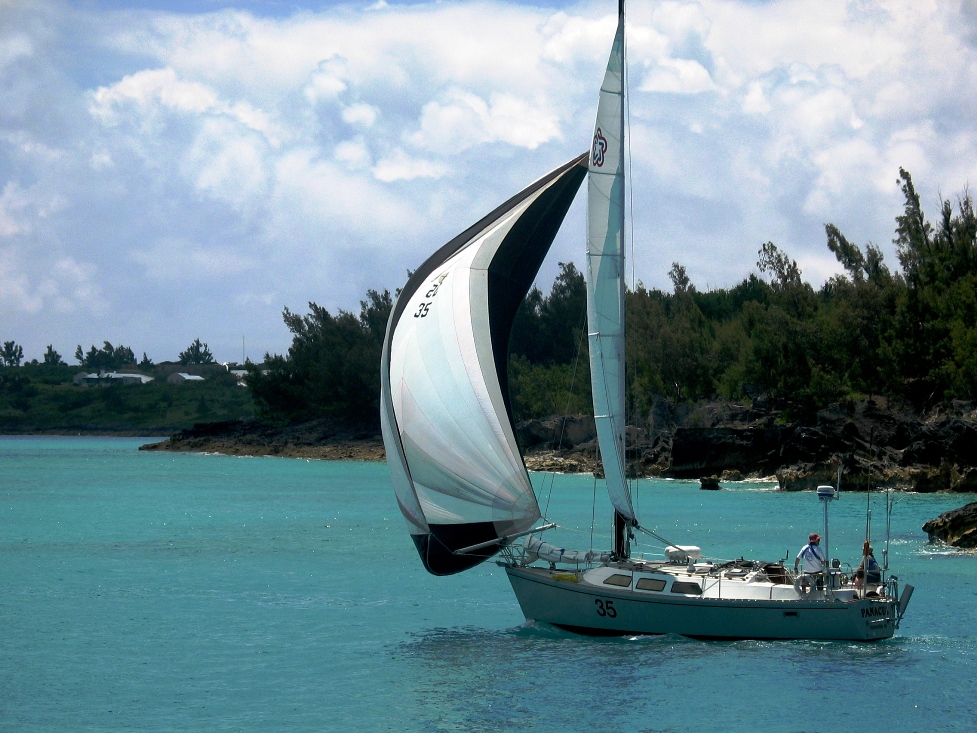
Bermuda
International Invitational Race Week. Sponsored by Bacardi,
headquartered in Bermuda. International invitational racing in the Great Sound, in boats including
Comet, J105, Laser, International One Design (IOD), Optimist and
Etchells. Sailors competing include those from Bermuda,
USA, elsewhere overseas.
Bermuda Cruising Rally. From
Hampton, Virginia, to St. George's Dinghy & Sports Club
Bermuda Ocean Race (in even
years) from Annapolis, MA, to Bermuda.
Caribe 1500 race that
docks at the St George's Dinghy club between June 28 and July 3.
Charleston
to Bermuda Race. Every three years. Organized by the South Carolina
Maritime Heritage Foundation in conjunction with the Charleston Ocean
Racing Association and Royal Bermuda Yacht Club.
D-6
Flying Phantom Series
Daytona to Bermuda Race, from
Ponce de Leon, FL, to Bermuda.
Etchells
World Championships
IOD World Championships
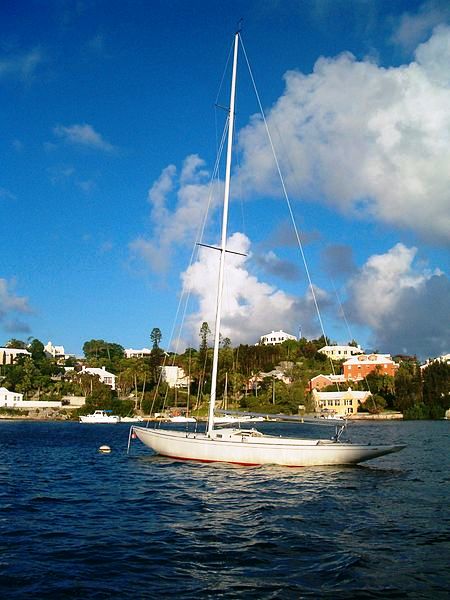
IOD vessel moored in Hamilton Harbour
ISIF
Argo
(formerly King Edward VII) Gold Cup. Mentioned separately, above.
M32 Series North America
Marion to Bermuda Cruising Yacht Race, from Marion, MA, to Bermuda. Every other year.
Moth World Championships
Newport to Bermuda Ocean
Race. This June classic is held every other year in conjunction
with the Cruising Club of America and the Royal Bermuda Yacht
Club. It is one of the most famous ocean yacht races, part of the Onion Patch series.
It was first raced in 1906, from Gravesend Bay and
except for the war years has been a continuous biennial event. The race
moved to Newport in 1936. One
of the world's leading blue water races, held every other year. Newport,
Massachusetts to St. David's Head, St. George's.
Host club, Royal Bermuda Yacht Club. Sailing
Secretary, Royal Bermuda Yacht Club, Point Pleasant Road, Hamilton HM
11, tel 441 294 6716.
North American
Optimist Dinghy Championships. When in Bermuda, hosted by the Royal Bermuda Yacht Club, International
Optimist Dinghy Association and Bermuda
Optimist Dinghy Association. Teams come from Argentina, Bermuda.
Brazil, BVI, Canada, Japan, Mexico, Uruguay and USA.
One Two Single Handed Race, from
Newport, RI, to Bermuda.
Optimist sailing
RC44
Championship Tour
Sir John Cox Yacht
Race.
Annually, usually in October.
Spanish Point
Boat Club. Pembroke.
Phone 295-1030. Fax 292-8024
Sunfish Sailing World
Championships. Bermuda has a
former Sunfish World Champion, with Malcolm Smith having won the Sunfish
World Championship title three years in a row.
Swedish
Match Grand Prix. Bermuda is one of the places for this circuit.
Women's Match Race Championship. Sailing in International One Design sloops, this
second-time women's match
racing competition is a unique, eight-team qualifier series to the ADT
Gold Cup. Held in Bermuda periodically.
Banner.jpg)
Authored,
researched, compiled and website-managed by Keith A. Forbes.
Multi-national © 2020. All Rights Reserved