
Click on graphic above to navigate the 165+ web files on this website, a regularly updated Gazetteer, an in-depth description of our island's internally self-governing British Overseas Territory 900 miles north of the Caribbean, 600 miles east of North Carolina, USA. With accommodation options, airlines, airport, actors, actresses, aviation, banks, beaches, Bermuda Dollar, Bermuda Government, Bermuda-incorporated businesses and companies including insurers and reinsurers, Bermudians, books and publications, bridges and causeway, charities, churches, citizenship by Status, City of Hamilton, commerce, communities, credit cards, cruise ships, cuisine, currency, disability accessibility, Devonshire Parish, districts, Dockyard, economy, education, employers, employment, environment, executorships, fauna, ferries, flora, former military bases, forts, gardens, geography, getting around, golf, guest houses, highways, history, historic properties, Hamilton, House of Assembly, housing, hotels, immigration, import duties, internet access, islands, laws, legal system and legislators, main roads, marriages, media, members of parliament, money, motor vehicles, municipalities, music and musicians, newcomers, newspaper, media, organizations, parks, parishes, Paget, Pembroke, performing artists, residents, pensions, political parties, postage stamps, public holidays, public transportation, railway trail, real estate, registries of aircraft and ships, religions, Royal Naval Dockyard, Sandys, senior citizens, Smith's, Somerset Village, Southampton, St. David's Island, St George's, Spanish Point, Spittal Pond, sports, taxes, telecommunications, time zone, traditions, tourism, Town of St. George, Tucker's Town, utilities, water sports, Warwick, weather, wildlife, work permits.


By Keith Archibald Forbes (see About Us)
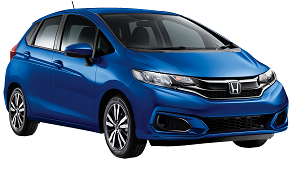 Automobiles
in Bermuda are imported
at a Government import duty rate of up to 150%.
Automobiles
in Bermuda are imported
at a Government import duty rate of up to 150%.
Adults with a qualifying local residence may own and drive only one private car for their household. Only one (pre-approved for size and engine capacity) private four-wheeled vehicle per person or family or household unit is allowed in Bermuda - and only when the person concerned can qualify by both residence and appropriately registered home or apartment unit. Residents include locals and Work Permit approved newcomers and their dependents, and those buying or leasing a property or retired. The only exceptions are the Premier, Governor and US Consul General who may have larger and more powerful cars for their official use.
Residency means being resident for a minimum of 30 consecutive days and planning to stay resident indefinitely if a Bermudian or for the Work Permit duration or Permanent Residency qualification if not a Bermudian. You need to personally and physically live in Bermuda and register where you live with the TCD both when applying for a local drivers license and to purchase an automobile (car). To register where you live, quote your unique residential house or home or apartment assessment number. (TCD assessment number records will say whether or not you are entitled to own a single automobile (car) or if one has already been registered to that assessment number address). Presently, there is no limit on the number of mopeds or scooters a family may have.
A private car must be
a cabriolet, saloon, sedan, hatchback, or station wagon. Light trucks, pickups, trucks, vans and
other vehicles that carry freight are NOT private cars but "commercial
vehicles" and may NOT be owned by individuals, only by qualifying local Bermuda
marketplace businesses, not international or
exempted companies. This ruling effectively deprives any newcomer from abroad
from owning any kind of truck or pickup or van.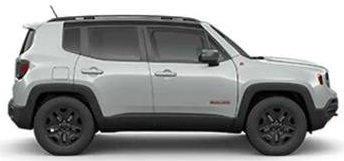
Only local medical doctors may own a second car.
If acquired locally second-hand instead of new, the current owner have the vehicle "tested for transfer" before selling it to the new owner to immediately register it. All drivers must have current private car driver's licenses.

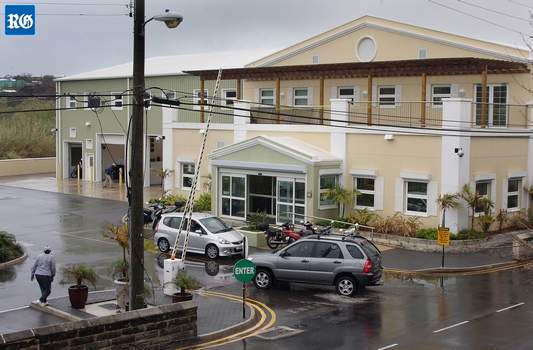 Transport
Control Department (TCD) - an agency of the Bermuda Government - administers
the operation of all motor vehicles on the roads. The Department
regulates and controls the size, number and quality of vehicles on Bermuda's
roads as well as their operation. It alone is the authoritative
regulatory authority in Bermuda for all aspects of private and public transport.
The Department is also responsible for the regulation and control of the public
service vehicles and their operations.
Transport
Control Department (TCD) - an agency of the Bermuda Government - administers
the operation of all motor vehicles on the roads. The Department
regulates and controls the size, number and quality of vehicles on Bermuda's
roads as well as their operation. It alone is the authoritative
regulatory authority in Bermuda for all aspects of private and public transport.
The Department is also responsible for the regulation and control of the public
service vehicles and their operations.
The TCD is equivalent to the Department of Motor Vehicles (DMV) in every US state. (Bermuda gets about 85 percent of its visitors from the USA with the rest coming from Canada (4%) the UK (4%) and rest of the world (2%).
Apply for a Bermuda Driver's license from the TCD above by going in person to the TCD at 11 North Street, Hamilton HM 17, Post Office Box HM 718, Hamilton HM CX, telephone (441) 292 1271. You may find you will have to wait and queue and take a number before you can be served. All persons driving cars in Bermuda must have a valid Bermuda-issued driving license, issued only to Bermudians or residents (see above). Non-local drivers' licenses - those issued outside Bermuda by any country - are not valid in Bermuda.
A Bermuda Driver's licence must be obtained for every resident who drives any motor vehicle. It is issued in photo ID format meeting international standards. It also contains numerous security features, such as micro-printing, images visible via ultraviolet light, and a holographic image of the Bermuda crest. It will show whether the holder is licensed to drive a car or scooter or moped or other vehicle. The full Bermuda residential address must be given as Post Office Box numbers and businesses addresses are not accepted. The correct Land Valuation Assessment Number of the residential property concerned must be shown, before a license to drive a car at that address can be issued
Non-Bermudian applicants for a public service or commercial vehicle license - distinct from a private car license - must have a permit from the Department of Immigration. A Driving Test is required to be taken, arranged by appointment only (via telephone numbers 292-2255 or 292-1271) and must be confirmed by 12:00 noon on the previous working day or will be subject to cancellation.
The Driving Test is in two parts, practical - with an official Examiner with you, on the road, to assess your skill - and written. A separate appointment is required for the written part, which will test your knowledge of the local Highway Code. (A booklet is available at moderate cost as a guide). Both parts of the test are carried out by the Examinations Section of the Transport Control Department, on North Street in the city of Hamilton. Newcomers must pass both parts to be issued with an automobile's registration, licensing and a current Bermuda driver's license (recognized by most overseas jurisdictions for up to six months).
Applicants for a driver's licence can take the test on an ATM-like touch-screen computer terminal that will automatically record the answers selected and grade the test. Each test is individually constructed in a random fashion from a database of over 250 questions. This makes certain that no two test applicants ever get the same test, and goes a long way in protecting the integrity of the tests by virtually eliminating cheating.
Bermuda drivers' licenses are now valid for up to ten years for most applicants, when they expire automatically. They, and the vehicle's annual registration, expire on the applicant's (owner's) birthday. When there are co-owners as well, the owner or co-owner with the first birthday during the calendar year is the one selected for the vehicle's annual registration date.
Bermuda has no reciprocal arrangements with the United Kingdom or Canada or USA or any Caribbean island for mutual recognition of driving licenses. It means that when Bermudians or non-Bermudian newcomers go to the UK to work or study, they are not allowed to have the same arrangements there as do those holding driving licenses from Australia, Barbados, British Virgin Islands, Canada, Cyprus, Gibraltar, Hong Kong, Japan, Malta, New Zealand, Singapore, South Africa and Switzerland. However, in some overseas jurisdictions, on a discretionary basis, Bermudians and Bermuda residents may be allowed to drive on their valid Bermuda licenses if they are visitors for up to a certain period. In all cases they should check this out in advance with the authority of the country they wish to visit. But the same gesture is not extended by the Bermuda Government to newcomers retiring or working or visiting Bermuda.
Newcomers from abroad may have to wait for a few weeks before they can get a local license and in the meantime are strictly forbidden to drive any 4 or 2 wheeled vehicle until then, except a rental moped or scooter. To obtain a local driving license, an application form must be completed, handwritten in block capitals, with acceptable proof of identity and age (such as birth certificates or passports) presented as well. The application includes a Declaration on physical fitness of the applicant which must be signed by a local medical practitioner. This necessitates a medical appointment with one at the applicant's cost.
If your Bermuda Driving License has expired, bring it with you and contact directly the Transport Control Department about when it expired, your age and driving record abroad, whether it can be renewed without testing, what time limits apply if applicable and what the fee will be. Be prepared to wait at TCD until your turn comes to be served.
Senior citizens (over 65).
At 65 years of age, a driver’s licence is renewed every 5 years. After the age of 75, the licence has to be renewed every 2 years.
To renew a licence the applicant must have a medical examination by a locally registered medical practitioner. The medical form is found in Section C of the Drivers Licence Application. This can be obtained from the information desk at the Transport Control Department, at a doctor’s office, or downloaded from the TCD website. Once completed and signed, the medical form is only valid for 3 months. Applicants come in any morning by 8:30 AM with their completed medical form to be tested for licence renewal. Note: Senior testing at 8:30 AM is available without appointment. Applicants will be required to take a driving examination to demonstrate their driving competency. (When arranging a driving test please notify the examination clerk whether an applicant wishes to do a zigzag/reversing test or a road test).
A license granted to drive one type of vehicle (for example, a private car) does NOT automatically qualify the applicant to drive any other type of vehicle. Separate Driving Tests are required for all other types of vehicles. Details of other types of vehicles for which you have passed the appropriate tests and are licensed to drive are entered on your Driver's License.
On November 26, 2016, Bermuda's Parliamentarians approved legislation to allow tiny 2-seater rental minicars introduced in Bermuda for the first time. The Motor Car Amendment (No 2) passed without any objections in the House of Assembly. Government MPs maintained that the small covered vehicles, capable of carrying a maximum of two passengers, would offer business opportunities for entrepreneurs and safer options for visitors. Until the laws were relaxed, visitors to Bermuda were not allowed to rent cars under any circumstances.
 All
aspects of road traffic are the control and administration of the Transport Control Department
- e-mail tcd@gov.bm - of the
Ministry of Transport of the Bermuda Government. It manages and regulates
public and private transportation in Bermuda, including the airport, weather services, buses and
ferries.
All
aspects of road traffic are the control and administration of the Transport Control Department
- e-mail tcd@gov.bm - of the
Ministry of Transport of the Bermuda Government. It manages and regulates
public and private transportation in Bermuda, including the airport, weather services, buses and
ferries.
All residents of Bermuda are allowed only one automobile (private car) per household. In the meantime, motorists must live at the same address at which their car is registered. People are prohibited from having more than one registered vehicle per household. Residents are required to prove they are entitled to have a car at their residence, with owners of buildings or landlords of leased or rented premises held accountable. Landlords who use an assessment number for their own family’s use before renting out an apartment and so prevent the renter from having a car will be prosecuted. Those breaking the law face having their vehicle registration cancelled and prosecution. Government can and will impound unlicensed and uninsured vehicles, or those not licensed to a specific approved property and also where a driver is disqualified or without insurance. A demerit points system bans legitimate motorists for any serious or too many infractions.
Many businesses - for example, those that deliver groceries to a home, visitor at an efficiency unit or business - are allowed only one truck. Overall, the traffic situation is so bad - so crowded - that 120 proposals are being studied for possible implementation. They include further limiting car ownership - already long reduced to a maximum of one per household - by any or all of the following:
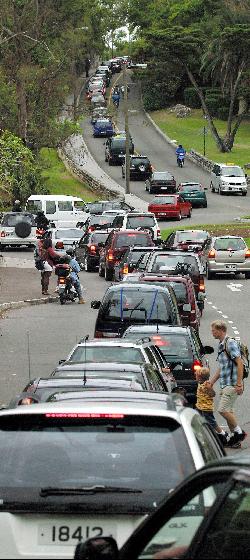
Despite the above, density per square mile of motor traffic on the roads is the highest in the world - more than 2,300 vehicles per square mile. (Most tourists don't commute during rush hours, so don't see the traffic chaos then). Also, many tourists on mopeds - one behind the other as two abreast is a no-no - go well below the speed limit, which makes locals want to pass them.
Motor vehicle density:
49,300 registered vehicles in Bermuda in 2019 (when last counted) compared with 6,000 on March 1, 1951.
The current figure includes 4,597 privately-owned cycles under 55 cc, 1,582 livery cycles (rent units), 15,677 motorcycles over 50cc, 22,600 private cars, 4,074 trucks, tank wagons and 600 taxis.
The figures above are the equivalent of over every member of Bermuda's adult population having a motorized vehicle on the roads.
Government needs to find ways to deal with Bermuda’s increasingly clogged roads. Expatriates working in Bermuda may have to be targeted in the future. Action is taken to curb abuse of assessment numbers with landlords leaving apartments empty to allow their family to run more than one car. There are also some huge anomalies. Some government ministers, through their use of GP (government) cars, are the leading exemplars of the abuse of the one car per household rule in Bermuda. Would all Ministers give up their most obvious perk? Unlikely. Should expatriates, who cost the Government no votes, be targeted? No, not unless Bermuda is to apply even more restrictions on expatriates already facing more restrictions in Bermuda than in any other jurisdiction. A better policy on car ownership would be a points system, in which age, family, length of residence in Bermuda, physical needs and the like were all taken into account, and which applied to Bermudians and non-Bermudians alike. Thus, a 25-year-old single person would have less right to own a car than a couple in their 30s with two school-age children.
All the above are among the extremely dangerous habits of residents that should be avoided at all costs by tourists.
In its total land area of 21 square miles, Bermuda has more vehicle accidents per square mile than anywhere else in the world. More than a thousand unsuspecting visitors end up in hospital each year because they have accidents on these vehicles.
Carried out by a TCD-approved entity only
Annual examination for all vehicles. Book a time with the Bermuda Government's Transport Control Dept.
Annual licensing and registration and examination. World's most expensive by far. See https://www.gov.bm/online-services/renew-your-vehicle-licence. Costs vary greatly, depending on the licensing class of the vehicle. Classes A to H apply. All costs shown are annual, in Bermuda/ US $ and depend on the dimensions of the vehicle. Costs are payable to the Bermuda Government's Accountant General. Vehicles must be inspected and passed beforehand and be covered by a prepaid Insurance certificate. Once the applicable annual fee shown below is paid, a decal is placed on the windscreen and the registration goes in the accompanying pocket. (Only qualified Bermuda senior citizens qualify for a discount on the one car they own.
For residents only, not visitors
Costs of annual registration and licensing or licensing of private cars and other vehicles in Bermuda vary greatly, depending on the licensing class of the vehicle. See Classes A to H.
| Licensing class of all vehicles | Length of vehicle or cc other measurement | Available to |
| Airport Limo 1 | N/A | Bermudians only who qualify |
| Airport Limo 2 | N/A | Bermudians only who qualify |
| Boat trailer | for use by bona fide clubs or members | only those who qualify |
| Boat trailer | for commercial use | Bermudians only who qualify |
| Bus, community service | N/A | Bermudians only who qualify |
| Bus, mini | N/A | Bermudians only who qualify |
| Cycle - Auxiliary | no more than 50 cc | anyone who qualifies |
| Cycle License plate | N/A | anyone who qualifies |
| Cycle - livery | N/A | tourist or newcomer usually |
| Community Service | N/A | Bermudians only who qualify |
| Duplicate Vehicle License | ||
| Farm tractor (FT) | Bermudians only who qualify | |
| Fuel tanker | From June 2011 maximum weight of fully loaded fuel tankers went up 50 percent, from 22,000 pounds to 33,000 pounds | Bermudians only who qualify |
| Hearse | N/A | Bermudians only who qualify |
| Heavy trailer | SP & HT | Bermudians only who qualify |
| Heavy truck, class A | From June 2011 the upper limit for Class A trucks went from 14,000 pounds to 18,000 pounds | Bermudians only who qualify |
| Heavy truck, class B | From June 2011 the upper limit for Class B trucks went from 20,000 pounds to 22,500 | Bermudians only who qualify |
| Heavy truck, class C | N/A | Bermudians only who qualify |
| Heavy truck, class X | N/A | Bermudians only who qualify |
| Intermediate trailer | N/A | Bermudians only who qualify |
| Intermediate truck | N/A | Bermudians only who qualify |
| License Plate (non cycle) | N/A | |
| Light trailer (LT) | N/A | only those who qualify |
| Light truck | N/A | Bermudians only who qualify |
| Mini Bus | N/A | Bermudians only who qualify |
| Motorcycle | 51-100cc | anyone who qualifies |
| Motorcycle | 102-125cc | anyone who qualifies |
| Motorcycle | 126-150cc | anyone who qualifies |
| Motor Taxi | N/A | Bermudians only who qualify |
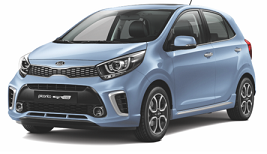
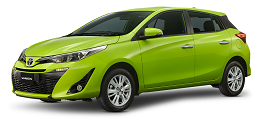
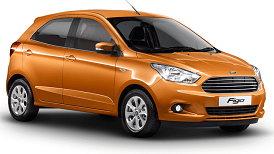
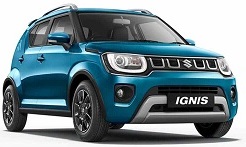
| Private Car Class A | Up to 138 inches long | anyone who qualifies, one per household |
| Private Car Class B | 138 to 144 inches long | anyone who qualifies, one per household |
| Private Car Class C | 144 to 150 inches long | anyone who qualifies, one per household |
| Private Car Class D | 150 to 156 inches long | anyone who qualifies, one per household |
| Private Car Class E | 156 to 162 inches long | anyone who qualifies, one per household |
| Private Car Class F | 162 to 166 inches long | anyone who qualifies, one per household |
| Private Car Class G | 166 to 169 inches long | anyone who qualifies, one per household |
| Private Car Class H | More than 169 inches long | anyone who qualifies, one per household |
| Special garbage collection vehicle | From June 2011 the upper limit rose from 30,000 pounds to 36,000 pounds. | Bermudians only who qualify |
| Tractor trailer | N/A | Bermudians only who qualify |
| Vehicle Registration Transfer Fee | ||
| Water truck, class B | N/A | Bermudians only who qualify |
| Water truck, class C | N/A | Bermudians only who qualify |
| Auto Solutions | Sales of Daihatsu, Honda, Hyundai, Mazda, Mitsubishi, Nissan, Subaru, Suzuki, Volkswagen | 61 St. John's Road, Pembroke. Phone 295-5000 |
| Bermuda Motors | Sales of BMW, Fiat, Ford, Kia, Lexus, Mini, Toyota, Kymco motorbikes and scooters. | 63 Church Street East, Hamilton HM 12. Phone 292-0893 |
| Bermuda Rental Car Ltd | Rental of electric 2 seater vehicles | Phone 236-2453 |
| Bermy Car Rental | Rental of electric 2 seater vehicles | 18 Happy Valley Road, Pembroke HM 19. Phone 504-7197 |
| Continental Motors Ltd | Sales of Peugeot vehicles | 12 Curving Avenue, Pembroke HM19. Phone 296-9337 |
| Current Vehicles | Rental of electric two-seater Renault Twizy |
7 Mills Creek, Pembroke HM 05 . Phone 296-8949 |
| Eco Electric Vehicles | Sales of 4 seater ECO EVI A-class | Middle Road at Frank's Bay, Southampton. Phone 232-8499. |
| Eurocar Limited | Sales of Renault vehicles | 2 Woodlands Road, Pembroke HM 07. Phone 292-3240 |
| Evolution Motors | Rental and sale of electric 2 seater Zuojun Z60 and Levdeo i5. | Addendum Lane, Pembroke |
| Executive Autos Ltd | Sales of Mercedes Benz | 2 Woodlands Road, Pembroke |
| Noble Automotive | Sales of Peugeot vehicles. Acquired Continental Motors | North Shore, Pembroke |
| Prestige Autos Ltd | Sales of Jeep Compass, Jeep Patriot, Jeep Renegade | 4 Woodlands Road, Pembroke HM 09. Phone 278-2535 |
| RayClan Chevrolet | Sales of Chevrolet (small size, right hand drive, from South Korea) | 8 Addendum Lane, Pembroke. |
| Rugged Rentals Ltd | Rental of small 2 seater electric Hummer HXT. | Tiger Bay, St. George's. Phone 705-7368. |
| Technics Auto Centre Ltd | Sales of Motor cycles & trucks | Unit 9c, Southside, St. David's. Phone 297-5005 |
| Ultimate Motors | Sales of vehicles, associated with Bermuda Motors | 63 Church Street, HM12. Phone 292-0893 |
Rates can vary considerably in Bermuda, where only a Bermudian insurance company can insure a vehicle.
Bermuda has by far more vehicles per square mile than anywhere else in the world - all of which must be insured for at least 3rd Party liability by a Bermudian insurance company licensed and registered to offer insurance business. Comprehensive coverage is required for people paying a bank or other lender for their vehicles.Insured persons have the choice of insuring for comprehensive insurances less excesses if there is no loan on the vehicle, or third party only - which means no insurance payout to the owner, only to an appropriate third party. An extra insurance is levied on all vehicles but it does not include any payment to persons whose vehicle is stolen.
All newcomers should get their new vehicles U-Marked by the police, working with the dealer, before they take delivery, even if they have to wait longer. It is also essential that not just one but two good locks be bought and used religiously. When a claim is made from a theft is reported to the insurance company involved, there is at least a two week waiting period while the insurance company checks with the Bermuda Police to see that a theft was reported. Of bikes are not recovered during that time, the insurance company will issue a settlement check. If bike parts are stolen, there will be at least a $200 excess. Because of the alarming rate of theft, it is virtually impossible to get third part, fire and theft for a reasonable price.
Available from a number of dealers
A local trade group of automobile dealers.
They also handle commercial vehicles imported at a lower Bermuda Government import duty rate. They include light vans, pickups, trucks, buses. Limited to registered businesses and often with only one per business.
Newcomers who obtain Bermuda car licenses should know in advance that when they go abroad on vacation or business they may have difficulty renting a car in certain countries. The Royal Gazette has reported how some Bermuda driving-licence holders have had problems. Where and when this has happened is because Bermuda has always declined and has never reversed this to date - to participate in those international road traffic conventions that provide for reciprocal recognition of driving licences between countries and states. Sometimes, car rental companies abroad assume that a Bermuda licence is acceptable. However, this might not reflect the actual legal position in the country, which can have very bad consequences. These can include being denied access to a car that was being relied upon for a trip, or prosecution overseas for driving without a valid licence. Most seriously, someone could find themselves personally liable for a major compensation claim abroad in the event of an accident, and it transpiring that insurance was invalid because of the driver not having a valid licence. Bermuda licence holders have had such problems in Massachusetts, Azores and Canada, among other places. These risks will increase from January 1, 2021, when Britain will be no longer subject to European Union driving-licence laws as a result of Brexit. At that time, British licence holders may need to obtain an International Driving Permit (IDP) to drive within the EU. This increased scrutiny of British licence holders may have a knock-on effect on scrutiny of the holders of Bermuda licences as a British Overseas Territory. Unfortunately, Bermuda driving-licence holders cannot get an IDP because Bermuda is not signed up to any of the international conventions. If and once Bermuda signs the international road traffic conventions then Bermuda licence holders to drive throughout most countries in the world. In return, Bermuda will have to reciprocate by allowing new residents to use foreign driving licences for the first six months of residency, and to allow visitors to use their foreign licences — eg, if they borrow the car of a local family member they are staying with. It would not require Bermuda to introduce car rentals. But in the meantime there will likely be opposition from driving-licence instructors and taxi drivers who benefit from the red tape stopping people from driving in Bermuda short term with a foreign licence. It needs to be noted that visitors who are denied the right to rent cars in Bermuda will likely go to a Caribbean island instead where there are no such problems.
Private oat owners are required by the Department of Environment and Natural Resources to obey safe zones to discharge sewage from their vessels.
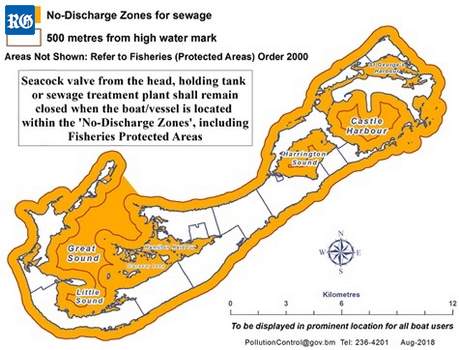
Sewage is permitted overboard outside of no-discharge zones, beyond the near shore area — or greater than 500 metres from the nearest land. Waste is not allowed overboard in the enclosed areas of Great Sound, Little Sound, Harrington Sound, Castle Harbour, Hamilton Harbour or St George’s Harbour, as well as fisheries protected areas. A spokeswoman said that the Water Resources (Prevention of Pollution by Sewage from Boats) Regulations 2018 had come into force in August 2018. The restrictions cover the owners and operators of recreational boats, as well as live-aboard boats, charter vessels, and all other boats that sail or motor in and around Bermuda. Disposal options include certain marinas, shore-side sanitation trucks, or moving outside of the no-discharge zones. A brochure outlining regulations is available from Marine and Ports. Regulations also require an instruction sticker showing no-discharge zones to be visible adjacent to toilets on board. The discharge valve from the toilet or sewage holding tank should be set to closed whenever vessels are moored or at anchor in no-discharge zones. The instruction stickers and brochures are available from either the Department of Environment and Natural Resources in the Botanical Gardens, or from the boats and mooring section of Marine and Ports Services, in the old Paget Post Office at Middle Road, Paget. For more information, call 239-2356 or 239-2303, or e-mail pollutioncontrol@gov.bm
Includes pleasure yachts and other pleasure craft. See under "Boats" in Watersports. There is no restriction on how many, size or type a person may have, but all must be licensed annually and some require licensed moorings. Expect to pay from $79,000 for a 20' 6 inch boat new. Customs Duties (import duties) on all new boats were reduced from 55% to 22.25% from April 1, 2009. All boat owners who claim on their insurance for damage should be prepared to offer their insurer proof that their mooring has recently been inspected - every year or every other year depending on mooring and insurer. Mooring certificates are required.
The Maritime Offences Procedure Act 2006 provisions include giving Police officers, Marine and Ports Services Officers and Fisheries Inspectors the power to issue tickets for a wide range of offences. The recipient will be able to pay within seven days without the need for the matter to go to court. Among the on-the-spot fines that could be issued are:
Common in USA and Canada but not generally available in Bermuda. When beyond-Bermuda employers or their jurisdictions want Driver's Abstracts as part of the credit or driving history investigations of Bermudians working abroad or non-nationals who once worked in Bermuda, they should consult Bermuda's TCD mentioned on the third line above of this web page.
A system is in effect covering all types of violations.
Roadside breath tests apply and are a priority for the Government. The police can stop anyone at any time for any issue that they feel raises suspicion. They can stop you to check your licence or if there is some safety issue with your car. They already have general power to stop persons. Whatever is done, it is to stop people from dying. It’s not to interfere or make it inconvenient for people to move around and enjoy themselves. It is only being done to stop the high level of deaths and collisions being experienced. Police doctors are authorized to take blood samples from suspected impaired drivers. Motorists including visitors convicted of drink-driving are referred to Drug Treatment Court by judges
Drivers in Bermuda of cars or auxiliary cycles or motorbikes or any other type of vehicle caught under the influence of alcohol (the legal limit of alcohol is 80 mgs in 100 mls (mL) of blood) or drugs merit on conviction automatic suspension of all driving privileges for a year or longer and also a $1,000 fine.
Illegal. Will incur a fine of from $2,000 plus penalties including demerit points and likely disqualification. But innocent motorists pay a penalty too, a surcharge on their insurance rates, as most jurisdictions abroad also impose. (See Motor Insurers Fund).
Illegal. Abusers are disqualified from driving.
The TCD has island-wide deployment of an Electronic Vehicle Registration (EVR) system. Based on radio frequency identification (RFID) technology, EVR is used to maintain an accurate registration of the island’s 47,000+ 4-wheel or more vehicles and motorcycles. RFID tags on each vehicle interact with strategically placed readers around the island to ensure that all vehicles are properly registered, insured and inspected. The system operates similar to electronic tolling, popular in high volume traffic centers around the world and combats vehicle owners who break the law by driving around with no license or insurance. The Government does not include motorcycles and mopeds in EVR.
The TCD, via the entity it has contracted, commenced vehicles examinations in April 2009, testing exhaust emissions to reduce pollution. Fees are from $45 for vehicles with four or more wheels, and from $31 for those with less than four.
Available for working commuters as well as visitors. See under "Ferries" in Transportation for Visitors.
Required. Also a source of revenue for the government as expensive import duty is payable on them.
A Bermuda Government committee under the Motor Car Act 1951 to determine the fitness or otherwise of licensed Bermuda drivers, especially those over 75 years old. See Bermuda Government Boards.
Allowed only if under a certain cc. Powerful ones are too big for Bermuda. Individual driver's licenses are required, irrespective of whether an owner already has a local license to drive an automobile. Like automobiles, mopeds and scooters must be inspected, insured for at least Third Party liability, licensed and registered annually. The average price for a new model, with extra locks and basket as extras, is well over $3,000. Newcomers to Bermuda should be aware that while they can be fun to drive, instead of a car - and can be parked outside apartments and homes which do not allow another car to be registered there - they can be treacherous in rains and gales; much more dangerous than a car; and hugely more liable to theft. The theft rate is over 70%.
Established on July 1, 1990 at the initiative of local insurance companies who agreed with the Bermuda Government to establish a method of compensation for people injured by uninsured drivers or untraced drivers in “hit and run” cases. All drivers who buy or renew motor insurance in Bermuda pay into the fund. However, the maximum payout the fund can make is $250,000. Exists because of a serious problem of uninsured and unlicensed vehicles despite police searches and periodic traffic delays for the purpose. An uninsured vehicle on its own and with a rider are a burden for the Motor Insurer’s Fund should they cause an accident or bodily harm to another individual.
Bermuda Government appointed under the Motor Car Act 1951, members are shown in Bermuda Government Boards.
Required.
Now in use. A speed limit of 35 kilometers per hour (21 mph) is the maximum speed allowed on all Bermuda's roads; less in marked built-up zones. All caught speeders are fined heavily. In local waters, many places have a 5 knot maximum and wake limits.
There are no consumer laws in Bermuda offering consumers any protection on used cars. Before buying a used car, take certain precautions. It's hugely important to get from the person selling the car that he or she is in fact the present sole legal owner of the car and can prove this by production of not only the registration certificate but the insurance certificate both in the same name as the owner and his or her driving license. Always insist on the present owner, not you as a possible buyer, getting and paying for a transfer-test for that vehicle from the Transport Control Department. But do not rely in this alone, as it is largely limited to paintwork and lights. Always get a good garage to make a thorough inspection for roadworthiness and make an offer conditional on this. It will cost you to do this but is well worth the cost. Then, get an indication from your insurance company on the present insurance value of the vehicle as an indication of market price. And ask or do the following:
Once you make an offer to buy a vehicle in writing, you will be held to it.
See Get Round.
Available brands include Bridgestone, Dunlop, Goodyear and Kelly. Sizes for automobiles are 12-17 inches. Most cars in Bermuda are front-wheel drive.
Drivers of large or slow vehicles are reminded not to use roads during weekday rush hours. The Transport Control Department issued guidance today stating that tractor trailers and self-propelled construction machines — vehicles used for building and maintenance work — are banned from roads between 7.45am and 9.15am, as well as 4.30pm and 6pm, every Monday to Friday. A Government spokeswoman said the restriction does not apply to container trucks when no container or container trailer is attached. For more information, contact the TCD on 292-1271.
Banner.jpg)
Authored,
researched, compiled and website-managed by Keith A. Forbes.
Multi-national © 2020. All Rights Reserved