Click on graphic above to navigate the 165+ web files on this website, a regularly updated Gazetteer, an in-depth description of our island's internally self-governing British Overseas Territory 900 miles north of the Caribbean, 600 miles east of North Carolina, USA. With accommodation options, airlines, airport, actors, actresses, aviation, banks, beaches, Bermuda Dollar, Bermuda Government, Bermuda-incorporated businesses and companies including insurers and reinsurers, Bermudians, books and publications, bridges and causeway, charities, churches, citizenship by Status, City of Hamilton, commerce, communities, credit cards, cruise ships, cuisine, currency, disability accessibility, Devonshire Parish, districts, Dockyard, economy, education, employers, employment, environment, executorships, fauna, ferries, flora, former military bases, forts, gardens, geography, getting around, golf, guest houses, highways, history, historic properties, Hamilton, House of Assembly, housing, hotels, immigration, import duties, internet access, islands, laws, legal system and legislators, main roads, marriages, media, members of parliament, money, motor vehicles, municipalities, music and musicians, newcomers, newspaper, media, organizations, parks, parishes, Paget, Pembroke, performing artists, residents, pensions, political parties, postage stamps, public holidays, public transportation, railway trail, real estate, registries of aircraft and ships, religions, Royal Naval Dockyard, Sandys, senior citizens, Smith's, Somerset Village, Southampton, St. David's Island, St George's, Spanish Point, Spittal Pond, sports, taxes, telecommunications, time zone, traditions, tourism, Town of St. George, Tucker's Town, utilities, water sports, Warwick, weather, wildlife, work permits.


By Keith Archibald Forbes (see About Us)
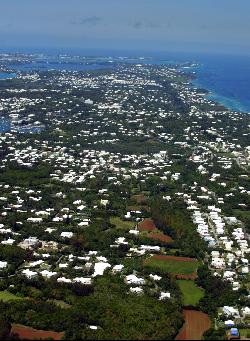
Bermuda today is the third most densely populated place on earth, with an estimated resident population at year-end 2005 of 68,500, in its 20.75 (twenty point seven five) square miles or 3,301 permanent residents per square mile.
In terms of population per square miles, this is only exceeded by Monaco with 15,921 and Singapore with 6,891 persons. After Bermuda comes Vatican City with 2,200 per square mile; Malta, with 1,229; Puerto Rico, with 1112 (yet often written about in USA, including by the National Geographic, as one of the most densely populated places in the world); Bahrain, with 1,042; Maldives, with 1,036; Bangladesh, 962; Taiwan, with 699; Mauritius, with 647; and Barbados, with 642. In contrast, note the very low populations per square mile of the United States of America - from where over 85% of its visitors come; then Canada; United Kingdom (632); Japan (870); Netherlands (1002).
In January 2006, the number of dwellings reached 34,850 in its mere 20.75 square miles. Bermuda has a total of 13,268 acres of land, of which residential land takes up more than 4,900 acres. golf courses use 777 acres and national parks take 800 acres. Bermuda, with its 69,000 resident population in its mere 20.75 square miles, an equivalent number of cars and other motor vehicles and the highest per capita income in the world, churns out more garbage per person than the population of Manhattan.
In April 2009, After a year of consultation with nine public meetings, the Bermuda Government outlined its national energy policy in a Green Paper. It states the solutions to Bermuda's energy crisis will include large-scale solar and wind turbine installations, domestic solar and photovoltaic renewables, electric and hybrid vehicles, plus an emphasis on energy conservation and efficiency. A regulatory authority is to be established to oversee the national policy, while revisions to the Building Code and Customs tariffs will seek to encourage uptake of renewable energy initiatives. Energy Minister Terry Lister announced the measures in a statement to the House of Assembly on 'A National Policy Consultation on Energy Debate.'
Bermuda ranks 15th in the world in per capita carbon emissions by country, according to the Green Paper above, producing an incredible 11 tonnes per capita.
That's more, per person, than industrialized Britain which has a population 1,000 times bigger. Bermuda also makes dirty electricity, producing 751 grams of carbon dioxide per kilowatt hour of electricity sold compared to 422 grams in the UK which has a variety of energy technologies. Bermuda's oil dependency means it has the highest electricity costs in the world. In November 2008 it stood at 42.5 cents per kilowatt hour with 48 percent of that the fuel adjustment cost. But with no manufacturing industry Bermuda can enforce more easily, stricter energy efficiency standards than elsewhere. Improving building design through insulation can reduce the need for air conditioners. Tiny it may be, but Bermuda pumps out plenty of greenhouses gases with nearly 2,300 vehicles per square mile. Car pooling is not required. Fuel economy and carbon dioxide emissions are not factored into import duty and re-licensing fees, as they are in the UK. Switching to electric vehicles is neither practical nor economic.Bermuda's strong solar resource is not utilized to produce useful forms of energy such as electricity and heat for water. Solar panels can be used far more effectively. The optimum angle for a solar panel is 32 degrees which fits in with the Bermuda building codes which specify roof pitches between 22.6 degrees and 39.8 degrees. In theory, the simplest solar power use is in heating water, rather than generating electricity, but installation would cost around $9,000 for a family of four while a smaller system for two to three people would cost $6,000. Those costs are far higher than in the US because of shipping, costs associated with the structure of Bermuda houses and duty. In Barbados, materials for solar water systems are duty free and tax deductions are offered on heater costs. The result is 38,000 such systems have been installed resulting in $6.5 million saved in fuel costs. And 50 hotels use waste heat from air conditioners to heat water.
In wind power, Bermuda has strong wind resistance but peak wind times are out of phase with peak power usage months while wind is intermittent so cannot provide a constant source of energy. However in conjunction with existing diesel power generators it's a worthy investment. With limited space for onshore turbines offshore sites are an expensive possibility.
In wave energy, studies in Australia, Hawaii, Ireland and Scotland have concluded that wave power is ideal for those territories and the report notes that Bermuda appears to have many similar characteristics. It is anticipated that once a suitable technology emerges, Bermuda may be able to take advantage of this resource, simultaneously becoming an international test-bed for some of the first commercial applications of wave energy technology. However harnessing ocean current energy will not be practical because of inconsistent current flows while tidal energy is also a non-starter.
Overall
55% of Bermuda's energy distribution network is underground
Each residential electricity consumer in Bermuda produces around 6.5 metric tons of carbon dioxide per year
Bermuda has nearly 2,300 motor vehicles per square mile
Bermuda is 99 percent dependent on imported fuels for energy.
Thus Bermuda has to takes some unusual measures in some areas to try to preserve its resources for residents and visitors. There have been some successes but also some failures. This file gives some details of what has been done and what still needs to be done.
On April 1, 2009 following publication of the Green Paper described earlier, Customs duty rates were slashed for environmentally-friendly products, in a move welcomed by green campaigners. The changes see zero duty for solar water heaters, solar thermal collectors, wind powered electrical generating sets and 'smart' electricity meters with net metering capacity. Photovoltaic AC generators are also included in the zero-percent rate these use solar cells for energy by converting sunlight directly into electricity. In addition, the duty rate for compact fluorescent bulbs will be reduced from 22.25 percent to 10 percent. And in news likely to please sailing enthusiasts during tough economic times, the duty rate for pleasure yachts and other pleasure craft has been halved from 55 percent to 22.25 percent.

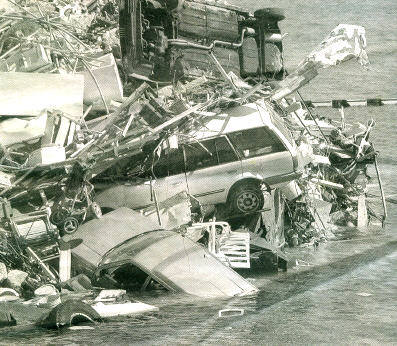 Shown in picture opposite). Otherwise known as the Airport Dump.
Hours are April to October, Monday to Saturday, 7:30 am to
7:30 pm. Closed on Sunday. Can be seen clearly by visitors
when they arrive by air. A metallic landfill
land and sea waste dump, used for dumping on land and deliberately into the
ocean - specifically into Castle Harbour - all types of cars, appliances,
computers and peripherals (monitors. printers, etc) refrigerators, etc. It
also takes acoustic tiles; air conditioning ducts;
appliances (for example, washing machines, refrigerators, dryers, stoves); bulky
metal goods (for example, bed springs, machinery sand wire); automobiles and
related (trucks, buses); motor bikes; pedal bikes; ceramic and vinyl floor
tiles; construction and demolition debris; crash helmets; dry wall; electrical
and electronic goods (for example, water heaters, televisions, computers and
peripherals; empty gas cylinders; empty fuel storage tanks; empty metal paint
cans; fiberglass; mirrors and large pieces of glass (such as sliding glass
doors); motor vehicle tires; PVC pipes, fittings and furniture; rubble and bulky
rubble; SKB roofing; water filled fire extinguishers.
Shown in picture opposite). Otherwise known as the Airport Dump.
Hours are April to October, Monday to Saturday, 7:30 am to
7:30 pm. Closed on Sunday. Can be seen clearly by visitors
when they arrive by air. A metallic landfill
land and sea waste dump, used for dumping on land and deliberately into the
ocean - specifically into Castle Harbour - all types of cars, appliances,
computers and peripherals (monitors. printers, etc) refrigerators, etc. It
also takes acoustic tiles; air conditioning ducts;
appliances (for example, washing machines, refrigerators, dryers, stoves); bulky
metal goods (for example, bed springs, machinery sand wire); automobiles and
related (trucks, buses); motor bikes; pedal bikes; ceramic and vinyl floor
tiles; construction and demolition debris; crash helmets; dry wall; electrical
and electronic goods (for example, water heaters, televisions, computers and
peripherals; empty gas cylinders; empty fuel storage tanks; empty metal paint
cans; fiberglass; mirrors and large pieces of glass (such as sliding glass
doors); motor vehicle tires; PVC pipes, fittings and furniture; rubble and bulky
rubble; SKB roofing; water filled fire extinguishers.
Its proximity to the airport in Bermuda would not be allowed by airports and their regional or national authorities in American, British, Canadian and European areas. Europe, USA, United Kingdom, etc. It is not said whether in Bermuda this metallic debris affects aircraft navigation systems. But it is of serious concern to some Bermuda environmentalists that cars, trucks, computers, motorcycles, tires and refrigerators are routinely dumped here, leeching the water, in amounts averaging 700 truckloads a week. There are fines for improper sorting and disposal of waste. Unfortunately, the Bermuda Government, owner of this airport dump, has been cited by the Bermuda Government's Auditor General for repeatedly violating the Bermuda Government's environmental laws.
Plans for a new vehicle recycling facility based at the current Airport Dump were proposed by a group of auto recycling business owners from the US. The group, who visited the current facility at the Airport Dump were appalled to see the manner in which Bermuda manages the dumping of bulky waste such as vehicles and appliances. For over 40 years now, bulky waste has been dumped at the Airport Dump with little regard for the environment. Recent research by the Bermuda Institute of Ocean Sciences (BIOS) shows that those years of dumping has now contributed to large amounts of metals, PCBs, PAH and dioxins to currently be found in the sediment in Castle Harbour.
From an environmental standpoint, research done at BIOS in Bermuda has shown excess levels of metals, PCBs, PAH and dioxin in sediments within 80m of the airport facility. Four of the contaminants in the sediments (dioxins, furans, PCBs and the oganochlorine Chlordane) are on the ‘dirty dozen’ list of persistent organic pollutants (POPs) that have been targeted by international convention as priority pollutants for elimination or reduction of release.
However, as waste management practices have improved, including the opening of the Material Recovery Facility, which sends a great deal of waste that would have in the past been sent to the Airport Dump, there is hope for the future of the environment surrounding the current facility. But BIOS has suggested that more needs to be done, including more recycling by the general public to lessen the demand on the facility, an external review of Bermuda’s current bulk waste disposal strategy, more enforcement of conditions stipulated in the Airport Waste Management Facility Operating Licence, better measures on inspection of waste entering the airport facility and more regular monitoring of environmental contamination around the environment at the facility.
The BIOS team welcomed the concept of the vehicle recycling facility, noting that it “could potentially reduce the introduction of pollutants to the surrounding area”. According to the auto recyclers, the facility could also reduce auto insurance claims, reduce the wait time on repairing vehicles and help to standardise the salvaging of used parts from the Airport site.
The team hope to get the facility going with the view to finding a local company to train and eventually take over the programme.
There has been a steady creep of algae in the sea and harbor bottoms. Shellfish beds have been smothered. Possible causes include cesspit leaching and use of fertilizers.
This should not be put out for household garbage collection. Instead, it should be allowed to dry in newspaper, then wrapped in polyethylene, taken by car or truck to Tynes Bay Public Drop-Off, or installed in a yard drain for animal waste to go into an existing cesspit, or flushed down a toilet.
They are supposed to penalize those who litter Bermuda's municipalities, open spaces, parks, and roads, and allow their horses to foul the beaches or highways. But the laws are hardly ever enforced and are not effective.
Led by the Keep Bermuda Beautiful (KBB) organization, these always conclude with at least 25 tons of garbage cleaned up from the environment by individuals and groups of residents from all walks of life. The worst litter problem of all - more than all the other litter problems put together - is broken glass. It seems to be a sport of Bermudian teenagers to break glass bottles anywhere and everywhere. There is no "bottle or can bill" - no legislation that slaps an automatic extra charge on bottles or cans and thus creates an incentive for individuals to get a refund on the empty container when they have taken it back. This has been urged time and time again by USA environmentalists., but apparently resisted time and time again by the principal soft drinks manufacturers whose products are sold in bottles or cans or both. As a result, many areas have broken glass and cans from the products of these principal manufacturers and their Bermuda agents littering the countryside. Once Bermuda was known for its incredibly clean environment, but no more. Nowadays, visitors frequently see beaches, the Bermuda Railroad Trail and parklands strewn with broken glass and debris.
A serious problem in Bermuda, with more asbestos than anywhere else in the world per square mile. In its 20.75 square miles in total land area there are 411 huge asbestos containers the Bermuda Government would love to get rid of but cannot. They include 150 container loads of asbestos collected from buildings on the former US Naval Air Station. In December 2003, it was announced that the British Government, via the international firm of WS Atkins, is advising the Bermuda Government on the problem. Currently, the Waste Management Section of Bermuda Government's Department of Works & Engineering is responsible for the administration of all activities relating to the receipt of waste asbestos. It includes the Ministry charging owners of commercial buildings a very hefty fee - currently, more than US$ 6,000 - per 20 foot container load, or US$0.60 per pound for a loose load, for collecting asbestos. So far, more than 390 container loads of commercial asbestos have been collected and stored, ready for disposal. Some have been stored for years at the Public Works & Engineering Quarry overlooking Castle Harbor, putting people living nearby on potential jeopardy. The international environmental agency Green Peace threatened to blacken Bermuda's name abroad if Bermuda dumps this asbestos well out to sea, as it is legally allowed to do by international conventions.
Asbestos burial. On June 23, 2007 it was reported by The Royal Gazette that Bermuda is planning to bury its 550 containers of asbestos at the Government quarry. Works and Engineering Minister Dennis Lister said the asbestos was stored in shipping containers at two locations — with 420 at the Government quarry and 130 at the former US Baselands in Southside. Responding in written answers to parliamentary questions from Shadow Works and Engineering Minister Jon Brunson, Mr Lister said Government had approved a report by Atkins Consulting of the UK that recommended disposal of the stored asbestos through burial at the Government quarry. He said: “The Ministry of Works and Engineering will soon be seeking approval for a consultant to complete the engineering design of the disposal facility and the manner of transferring the asbestos from the shipping containers into this facility.”
Policies have limited the number of vehicles on the roads to 87 percent of the local population to one automobile per household, but there are now easily more automobiles - as well as mopeds and scooters which are not restricted in how many an individual may have - per square mile than in any other country. They are faster, noisier, more illegally tampered with and deliberately carelessly and dangerously driven or ridden than ever before. They cause accidents galore, frequent traffic jams, great apprehension and injuries to visitors who venture out on rented mopeds yet are unfamiliar with them. The automobile restriction law does not apply to the Bermuda Government. Its employees - 13 percent of the entire workforce - can use government cars as well as their own. One effect of this, which other consumers in Bermuda do not have, is that their spouses or adult children can use privately-owned cars to go to work or for leisure or both. The restrictions on the size of cars applying uniquely in Bermuda, no-where else in the world, do not apply to the Governor, Premier, Consul General of the USA, Bermuda Government cabinet ministers, funeral directors and a few disabled who can afford PC-licensed vehicles. They are allowed to have bigger cars.
Residents and visitors should be aware that periodically - as reported by The Royal Gazette - sewage spoils prime South Shore beaches public and private. Unsightly and potentially disease-carrying balls of sewage wash up. If problems persist some beaches could be closed until the situation is brought under control. The grey, golf-ball size lumps of human waste are created from when sewage pumped offshore in outfall pumps a mile or so from Hungry Bay and from large hotels in the Parishes of Paget and Southampton. They look innocent, but once squashed they stink of human waste. The effects of the sewage have been noticed at South Shore beaches from Elbow Beach west and east, all the way to the Mid Ocean beach. Sewage outfall pipes are in plain view at the eastern end of Elbow Beach. The sewage problem arises because Bermuda is both physically isolated and one of the most densely populated countries in the world per square mile, yet with no sewage farms to treat sewage on land instead of at sea, as other countries do. A major contributor to the problem is the grease that comes from outfall pipes going from the City of Hamilton to Hungry Bay. The screening system used is not a treatment system and grease from the city's many restaurants mingles with other waste to form the golf ball-sized clumps of sewage. All waste pumped out to sea beyond the reefs is completely untreated. This includes radio-active waste from X-rays and other machinery at - and all other waste from - King Edward VII Memorial Hospital. (In the United Kingdom and Europe, Canada and United States of America, it is forbidden to dump such radio-active and other hospital waste into the ocean). It was hoped the high salinity of the sea and its volume would dilute the effects and achieve a rapid die-off. But when grease mingles with sewage, it prevents any breakdown and instead carries the sewage to shore. A sewage treatment plant in the city or nearby is a solution but no one in Bermuda wants it near them. To date, the Bermuda Government's Ministry of the Environment has not initiated any measures to ensure the safety and health of residents and visitors to UK, European, Canadian and American standards.
For years, this organization has tried to keep endangered, indigenous, native and visiting birds flying into and over Bermuda.
In the 1940's and 1950's a massive blight struck and felled most of Bermuda's native cedar (an indigenous juniper) trees. They were originally replaced with casuarina, an Australian pine. However, over the last two decades, there has been a large scale replanting of more disease resistant Bermuda cedar.
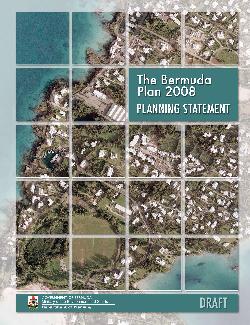
2018. December 27. Bermuda has lost almost 40 acres of tourism-zoned land due to the conversion of vacation properties to homes. A review of the draft Bermuda Plan found that condominium development at hotels and the conversion of former hotels and guesthouses to apartments had cut into the land designated for tourism. The review said that 483 homes stood on tourism land by 2016, with seven per cent of them created in the previous ten years. The review added: “Although a number of tourism establishments had already been converted to residential uses when the Bermuda Plan 2008 was being drafted, the Ministry of Tourism at that time only supported the rezoning of one tourism zoned property to a residential zoning. In the new Bermuda Plan, the 13 tourism properties which are zoned as tourism in the Bermuda Plan 2008 will be rezoned either fully or partially to a residential zoning to reflect their current use.” The report listed Sandsong Villas and The Breakers and Sea Cliffs in Warwick, the Wharf, Harbour Gardens, Loughlands, Salt Kettle guesthouse and White Sands in Paget and Palmetto Gardens in Smith’s and Somerset Bridge House in Sandys as properties that will be completely rezoned from tourism to residential. The Harmony Club in Paget, Pink Beach in Smith’s and Tucker’s Point in Hamilton Parish will be partly rezoned to account for the residential use of some sections. Southlands in Warwick will be rezoned from a mix of tourism, residential and open space reserve to a park, while this site of the former Waterloo House hotel in Hamilton, now offices, will be rezoned from tourism to commercial. The report said some land in St George’s will be rezoned as part of the St Regis hotel project. It added officials would monitor the growth of vacation rentals, most of which are based on residential land. The review said: “Current planning policy permits tourism accommodation within residential areas providing there are no detrimental impacts and the new Bermuda Plan will continue to support this. Vacation rentals are a growing and important part of Bermuda’s tourism economy, and it is necessary for Bermuda to legislatively define vacation rental property to remove bureaucratic restrictions and develop a light-touch regulatory approach.”
2018. December 11. Most of the rezoning proposals sent as part of the development of a draft Bermuda Plan want the removal of conservation protections, it has been revealed. The Department of Planning said more than 200 rezoning proposals were received as part of the consultation process and 177 of them dealt with protected areas. The Draft Bermuda Plan 2018 review and strategy report, released with the draft Bermuda Plan on Monday, said: “Of the 208 requests, 177, or 85 per cent of them, involved the rezoning of conservation land. “A few of these requests involved the swapping of areas to be zoned for conservation with no net loss of conservation land but the majority requested the complete or partial removal of conservation land.” The report said that the department’s approach to the requests was to not support the removal of conservation zones unless there was good reason. Examples included if a building has already been built in the area with planning permission or if the conservation zone was replaced with a similar-sized or larger zone on a reasonable location on the site. The report said Riddell’s Bay was the subject of one of the most significant rezoning requests, which proposed changing 22 acres for recreational conservation zone to residential and changing another 70 acres to nature reserve, park, open space and recreation zones. Another request suggested the creation of a new “coastal residential zone”, which would allow further development of homes by the sea and on small islands. Coastal reserve zones were introduced in 2008 to protect coastal areas and small islands, which are vulnerable to flooding and erosion, and to preserve the natural beauty of the areas. The report said: “The Bermuda Plan 2008 permitted the development of recreational cottages in coastal reserve areas, but this policy has proved difficult to enforce and restricts use of these cottages for recreational uses only. As such, this policy has been removed from the new plan. The new plan will continue to allow only limited development in these vulnerable areas.” Sixty-eight requests involved the removal of agricultural reserve zoning. The submissions said some land had not been used as farmland for a prolonged period, the owner wanted to build on the land or the area was not suitable for farming. The report said 738 acres of land are reserved for agricultural use, but only about half is used. The report said the Government had developed a crop strategy to help to reduce Bermuda’s dependence on imported produce through an increase in domestic production. The report added: “It is hoped that this will lead to a healthier and more food-secure community where healthy fresh fruits and vegetables are more accessible to everyone and where communities are encouraged to grow their own food.” The report said the Bermuda National Trust and the Bermuda Environmental Sustainability Taskforce reviewed the rezoning requests and submitted their own views. It added: “These included the need for the new Bermuda Plan to retain existing conservation lands, retain coastal reserve zoned areas and require the replacement of any conservation areas that are developed. It was also suggested that the Department should require greater setbacks for industrial sites located next to conservation areas.” The report also highlighted a 2008 report by the National Trust that warned of the threat of climate change. It said strategies included in the Bermuda Plan are intended to mitigate the risks caused by rising sea levels by limiting coastal development and encouraging “green” infrastructure.
2018. December 11. A new plan for Bermuda could lead to more sidewalks in an attempt to boost health and fitness. The draft Bermuda Plan 2018 review and strategy report said that walking was a healthy way to get about; there were very few pedestrians outside of Hamilton, Dockyard and St George’s. The report included the result of a survey of the island’s roads, which mapped areas that did and did not have sidewalks or verges that pedestrians could use. It said: “A detailed look at the survey results indicate a notable lack of sidewalks in certain areas including east Devonshire, west Smith’s, a large section of Southampton, north Sandys, north and east Pembroke, south and east Hamilton Parish and portions of St David’s. “Planning has a role to play in creating an environment which would make walking more attractive and appealing. Planning policies can require new or improved sidewalks to be built in certain locations and planners can negotiate for sidewalk infrastructure improvements as part of development proposals.” The report said a policy in the 2008 Bermuda Plan allowed the Development Applications Board to require sidewalks be included on a site that borders a main road. It added: “This policy will be retained and strengthened in the new Bermuda Plan and the information provided from the Department of Planning’s walkability study will be used to highlight priority areas for additional sidewalk improvements.” The report said there had been an increased focus on road safety in Bermuda and highlighted The Royal Gazette’s Drive for Change campaign. The document added: “Planning policy and community planning initiatives can assist the Drive for Change initiative’s objectives, particularly regarding road design and management, street lighting and community-wide road safety awareness. In addition, planners can advocate for the provision of more and improved sidewalks to encourage greater walkability and increased pedestrian safety.” The report also said the draft plan took into account the increased use of electric vehicles in Bermuda. It added: “In order to accommodate these, the new Bermuda Plan will include a policy requiring electric vehicle charging stations for every ten parking spaces. In the November 2017 Throne Speech, Government announced a thorough review of transportation and in March 2018, the Ministry of Transport and Regulatory Affairs launched a Transport Green Paper survey to gauge public views on Bermuda’s public and private transportation. Unfortunately, the results of this survey are not yet available. However, it is anticipated that new legislation and policies will be developed for a range of transport issues including public transport payment options, road and traffic management, the ageing public bus and ferry fleet, oversized vehicles, speeding and dangerous driving.”
Earlier Bermuda Development Plans:
2008:
Conservation area policies and the conservation base zone - aim to protect habitats, woodland, agricultural land, open space, islands, coastal areas and recreational areas.
Protection area policies, to protect historic buildings and areas, caves, water resources, airport lands and approaches;
Promotion of controlled development - an example is the new Mixed Use development base zone in St. George's, Southside and Dockyard, creating 'Community Centres' in which residents can live, work and play
More affordable housing, with residential policies to allow higher residential densities in areas close to commercial and mixed use centres. Also to allow smaller, compact lot sizes in appropriate areas;
Utilities policies, to encourage the use of renewable energy sources;
Tourism flexible policies, to ensure the Island's tourism product can meet the demands of an ever-changing industry;
Accessibility policies to ensure development is accessible to all, also allowing group housing and housing for the elderly.
1992: Open Space 4,4,46 acres. Residential 5,700 acres. Other 1744 acres.
1970. Open Space 6469 acres. Residential 4,407. Other 1,044 acres.
Can be found in every Parish.
Has done much to help preserve the environment.
Became law on 1st March 2004. The new act calls for a proactive approach to the protection of local species threatened with extinction, and their habitats. Birds are afforded a certain amount of protection under Bermuda's Protection of Birds Act 1975. All local laws are enacted solely by the Bermuda legislature.
2019. June 6. A film made to highlight the proposed development of a marine protected area by 2021 has been released. Walter Roban, the Home Affairs Minister and Deputy Premier, is featured in the short movie talking about the Bermuda Ocean Prosperity Programme the Government has launched with the Washington DC-based public policy group the Waitt Foundation and the Bermuda Institute of Ocean Sciences. Mr Roban said in the four-minute film: “Our history in protecting the ocean goes back to the beginning of settlement — we were protecting sea turtles back in the 1600s. We are very excited that the Bermuda Government is partnering with Waitt and BIOS around the development of a marine spatial plan and also the development of our blue economy. How can we ensure that our area of the ocean is used in a sustainable way to make us more prosperous? How can we ensure responsible use of our ocean? We can develop an economy around the ocean that will allow Bermuda in the 21st century and beyond to be sustainable — that creates a great opportunity to protect the ocean that is such a part of who I am and all Bermudians are.” The MPA could see at least 20 per cent of Bermuda’s Exclusive Economic Zone, 90,000 square kilometers out of 465,000 square kilometers of ocean, turned into a marine protected area. The plan also featured the development of ocean industries such as tourism and sustainable fishing. The tie-up with the Waitt Foundation is part of Blue Prosperity Coalition, an organisation set up to create long-term partnerships with governments to implement marine protection schemes for 30 per cent of seas around the world. The coalition said 30 per cent of the oceans must be protected to maximize fisheries and allow marine resources to recover. Ted Waitt, founder and chairman of the Waitt Foundation and Waitt Institute, said: “On behalf of the Blue Prosperity Coalition, we are really excited that the Bermuda Government recognizes that the key to its long-term economic growth is protecting its ocean and you can do both at the same time. You can build prosperity for all citizens and do so in a very holistic manner that not only protects the environment but builds the economy for its citizens for a long time.”
Over several years it conducted the first extensive mapping of Bermuda marine parks and reef areas.
It has concluded that Bermuda has managed its reefs better than practically any other country on the planet, so 99 percent of its reefs are amazingly healthy. Unlike the Caribbean, where coral reefs have been ravaged by human contact and disease over the past decade, Bermuda's reefs are near-pristine thanks to a long history of Government protection and sound management. Scientists have spent the past few years studying in great detail the amount of living coral cover, the types of corals, algae and fish species on Bermuda's reefs. The results are very positive. They believe, based on all their data, the reefs are in a very healthy condition. Bermuda's fish pot ban, coupled with the fact 100 percent of its reefs are classed as marine protected areas within a 200-mile zone, has been largely responsible for the health of the Island's coral reefs. Bermuda has been affluent and fortunate enough to preserve its reefs and the delicate ecosystem they support. In July 2008 Bermuda enacted new legislation aimed at protecting Bermuda's coral reefs for future generations. Maximum fines for breaking regulations under the Fisheries Act 1972 leap from $5,000 to $25,000, with the maximum jail sentence up from one year to two years, under the Fisheries Amendment Act 2008. Offenders targeted in the updated law included people who steal "ornaments" from reefs. The legislation also includes repeals to parts of the Fisheries Amendment Act 2006.
A noisy but harmless large beetle - has now died out in most places from overcrowding - far too many people in such a small land mass. It used to nest in cedar trees.
Is now endangered, from overcrowding - far too many people in such a small land mass.
Not unique to Bermuda but tiny noisy frogs by night from May to October - are a national symbol. One of the several species has died out.
Is now endangered, from overcrowding - far too many people in such a small land mass.
Bermuda is an important area in the western Atlantic region for these animals, and partners with conservation groups world-wide in efforts to protect them.
The data generated during field trips and by using tags and transmitters has tremendous value in finding out more about these turtles and learning where they go next. During these field trips each year, more than 200 juvenile green and hawksbill turtles are caught and tagged in the programme which is jointly funded by the Bermuda Government, Chevron International, the Caribbean Conservation Corporation (CCC), BZS and its US-based affiliate, the Atlantic Conservation Partnership. Some of these turtles are also fastened with satellite transmitters. All the information gathered is vitally important to scientists to learn more about sea turtles and their regional migrations. For the past 13 years, the Bermuda Turtle Project has also offered biology and conservation of sea turtles courses for 106 students from Bermuda, the Caribbean, Canada, India, the Netherlands, UK, US, Central and South America. Foreign participants in the BTP programme learn about sea turtles during the annual ten-day field trips and often return to set up similar conservation and research efforts in their home countries. The project includes a Wildlife Rehabilitation Centre run out of the Bermuda Aquarium, Museum and Zoo. Hundreds of sick and stranded turtles including those injured by motorboats, nets and fishing line have been rescued and brought to the centre, and many have been rehabilitated and returned to the wild.
Bermuda's King Edward VII Memorial Hospital, Bermuda Government owned, disposes of solid waste - syringes, bandages, body parts, blood and tissue, etc. - with a state of the art bio-oxidizing process. It produces gases which heat the hospital's boiler, water and laundry, to save on energy costs.
Currently, there is no law on the return of glass bottles to place of purchase. Broken glass caused by deliberate bottle throwing is a very serious litter problem in Bermuda and a potential threat to locals and visitors.
They now ensure that agricultural lands and those designated as woodlands cannot be developed privately or commercially, except when approved by the Minister of the Environment on a discretionary basis. Applicable legislation are the Bermuda Plan 1992 and Development and Planning Act 1974.
There is no central sewage piping system in Bermuda for any domestic homes. Local solid limestone rock beneath all properties does not permit any central sewage piping systems in densely-populated tiny Bermuda (only 21 square miles or 58 square kilometers) such as are common abroad in many much larger countries. All domestic properties not within the City of Hamilton (and thus not connected to the city's sewage system that is piped to Hungry Bay in Paget) must have their own deep dug-in and properly approved cesspits, as far away as possible from water tanks and not where there are water lenses. They must be built as an integral part of the dwelling house or condominium. Cesspits have to be cleaned out commercially by a private contractor every so often. It is not a Bermuda Government service for the real estate taxes paid. There are a huge number of private cesspits in Bermuda per square mile. Occurrence of nitrates in ground water is only one component of sewage contamination. Detergents, pharmaceuticals, micro-organisms, etc. are also discharged into cesspits and boreholes. It will be necessary in Bermuda to find new ways to meet increasingly stringent and wide-ranging international wastewater standards.
All are imported in late November or early December after first being inspected by the Department of Agriculture & Fisheries. After New Year's Day, usually on or about the second Wednesday in January, they are collected by a garbage truck and taken away to be turned into chips for a public garden.
Not piped from individual houses as is common in USA, Canada, UK, etc. Instead, a pipe pumps the city's raw sewage to the Seabright Outfall located south of Hungry Bay, Paget. In 2008 it was discovered that sections of the pipe had been either exposed or damaged. Waste could be pumped directly into the ocean if the pipe springs a leak because no back-up plan is in place to handle the sewage in an emergency. According to a report compiled by Canadian consultant Associated Engineering in May 2008, the current system has had a number of maintenance issues.
Problems with the inner section have included concrete protection erosion and complete exposure during extreme storm events. During a recent site visit, damage to the concrete embedment over the pipe in the near shore was observed. The Corporation of Hamilton continues to address damage to concrete embedment within this section of the outfall. The middle section of the outfall extends to a distance of 1,640 feet offshore and consists of a 14-inch nominal diameter HDPE pipe held in place with anchor chains. This section of the outfall traverses the inner reef and passes through an existing cave in the reef structure. During severe storm events, this section of the outfall has been exposed on several occasions. The existing outfall system has provided reliable service to the Corporation of Hamilton, but does require occasional maintenance. Problems with the inner section have included concrete protection erosion and complete exposure during extreme storm events. The middle HDPE section has also required maintenance and has cracked, requiring the use of repair clamps. The outer HDPE section has not required any known maintenance. The middle section of the outfall is considered the most vulnerable. Ocean and seabed conditions in the inner and middle sections make replacement of the pipe with a deeper buried pipe difficult. Fears have been expressed of a possible environmental catastrophe. The Corporation has been looking at drilling into the ground so that a pipe would be completely covered and protected. But that is a huge expense. A method known as Horizontal Directional Drilling may be a possible alternative to the current system. Identified have been a number of locations as possible "launching sites" - the current Seabright Avenue location, Ocean Avenue, Ariel Sands, Palm Grove and Devonshire Bay Park. The cost of the project could be $10-13 million, depending on which site is selected.
The Marsh Folly Waste Treatment Facility was launched in April 1995 by the Bermuda Government's Ministry of Works and Engineering. It is a 25 acre "compost production" center to reduce the amount of local food and horticultural waste and turn it into usable composting. It currently receives some 8 metric tons of organic waste and 35 tons of horticultural waste a day. Food waste alone now represents some 22 percent of Bermuda's total garbage. Restaurants must transport their food waste here. Many Bermudians also have compost bins in their gardens to convert discarded foodstuffs into usable garden additive.
Predatory fish once common in our waters including groupers and snappers are at “critically low numbers”, causing a threat to Bermuda’s coral reefs. The Bermuda Reef Ecosystem Assessment and Mapping (Bream) Programme has issued a report which isalarming. The report — Baseline Condition of the Coral Reefs and Fishes Across Three Depth Zones of the Forereef of Bermuda — also revealed that hard corals are in “good to very good” levels across most of the deep reefs and protected parrotfish appear to have recovered from the overfishing in the 1980s. Bermuda also enjoys high numbers of plant-eating fish across the lagoon, forereef and rim, which contribute to healthy reefs by preventing marine plants from overgrowing hard corals. The report covers information collected from 2004 to 2011 by the Murdochs and their team of local and international scientists and graduate students. During that time, the Bream crew measured the amount of corals, marine plants, plant-eating fish and predatory fish at more than 180 reefs located across all of Bermuda’s reef habitats. Thaddeus Murdoch believes that the loss of predatory fish is cause for alarm. “Large predators like black grouper carry out important work by managing the numbers of small and large parrotfish that live on the reef,” Dr Murdoch said. “Smaller predatory fish such as red hind, cony and grey snappers are also needed, as they keep coral-killing damselfish from spreading across lagoonal patch reefs. Bermuda’s coral reefs protect the island, give us food, and provide exciting experiences for locals and tourists alike. However, our reefs, along with those across the world, face destruction from an increasingly acidic ocean and increasingly violent storms. Our reefs can face these serious threats, but only when predatory fish like grouper and snapper, as well as plant-eating fish like parrotfish and surgeonfish, are abundant, marine seaweeds are sparse, and hard corals are healthy. Commercial and recreational fishing annually constitute only a very small portion of economic value generated by the services provided by Bermuda’s coral reefs to our society. However, we oversee the condition of our reefs as if they are primarily a fisheries concern. Reef condition is really a tourism and coastal protection issue, and should be managed accordingly,” Dr Murdoch continued.
According to Dr Murdoch, Bermuda can restore predatory fish populations by restricting the rate at which commercial and recreational fishers catch groupers and snappers, limiting the sale of key predatory fishes during their spawning season, expanding the seasonal prohibition and extent of protected spawning areas where necessary, and enhancing marine resource enforcement. “Our centuries-old Bermuda reef fishery, and the multigenerational livelihoods that it provides, can only persist if we maintain the numbers of our breeding groupers and snappers. Marine-protected areas are one way to invest in our reefs, and they provide a valuable return in the form of a constant supply of fish that leave the protected areas and which we can eat.” Dr Murdoch pointed out that if we ignore the loss of predatory fish on our reefs, it is likely that our coral reefs will erode. In an era of rising sea level, loss of reef structure will allow higher levels of storm waves to damage and remove our coastal properties and beaches, while also reducing the visual appeal of Bermuda’s waters to both visitors and locals,” he said. The forereef of Bermuda surrounds both the island and its lagoon and encompasses an area of about 400 square kilometers. The coral-rich forereef protects Bermuda from storms, enhances tourism experiences, generates sand for our beaches, and provides habitats for the fishes we like to eat. A spokesman for Bream said: “The Bream report provides clear evidence that the cover of corals remains high at forereef locations, but is lower at deeper depths within the lagoon and particularly at near shore reefs where marine plants are overly abundant and plant-eating fishes are scarce. Predatory and plant-eating fishes are critical to maintaining healthy reefs.”
One was finally allowed in Bermuda in 2016, at St. David's, after three earlier refusals. Local graveyards are full, not surprising in a country where the population is the third highest in the world per square mile. In family plots, corpses are buried on top of the last. Family members may now have their loved ones cremated locally instead of overseas.
2018. May 7. More than 100 new marine species have been discovered during a deep sea exploration off the coast of Bermuda. The findings of the Nekton Mission I, XL Catlin Deep Ocean Survey were presented to Walton Brown, the Minister of Home Affairs, today. Alex Rogers, scientific director of the Nekton Oxford Deep Ocean Research Institute and Professor of Conservation Biology at the University of Oxford said: “Considering the Bermuda waters have been comparatively well studied for many decades, we certainly weren’t expecting such a large number and diversity of new species. “These discoveries are evidence of how little we know and how important it is to document this unknown frontier to ensure that its future is protected.” The discoveries included small animals, such as tanaids, to dozens of new algae species and black wire coral that stand up to two metres high. Gardens of twisted wire corals and sea fans were found on the slopes of the Plantagenet Seamount, locally known as ‘Argus’, just off the coast of Bermuda. There were also communities of sea urchins, green moray eels, yellow hermit crabs and other mobile fauna feeding off zooplankton and algae drifting off the summit and settling on the deep seabed. The exploration of the deep ocean off the coast of Bermuda began in the summer of 2016. Scientists from more than a dozen marine research institutes teamed up to analyze 40,000 specimens and samples, as well as 15,000 liters of water samples, since September 2016. The XL Catlin Deep Ocean Survey documented the deepest recorded evidence of lionfish globally which reveals the spread of the invasive species is greater than at first thought. The first peer-reviewed scientific papers have been published from the XL Catlin Deep Ocean Survey and the complete results are expected to be published by September. Patrick Tannock, CEO of XL Bermuda Ltd/Insurance and chairman of XL Catlin’s philanthropic foundation, which funded the XL Catlin Deep Ocean Survey, added: “As a future-focused, innovative insurance and reinsurance company, we at XL Catlin believe that preparing for emerging and unknown risks is imperative. Given that there is still much to be learnt about how changes to the ocean will impact businesses, communities and society in the future, we are extremely interested in the findings from the XL Catlin Deep Ocean Survey and look forward to receiving the published report of the amalgamated results and scientific papers.”
All dogs in Bermuda must be licensed annually, whether puppies or adults. The annual registration year starts on June 1. Owners of all dogs have a license fee. Anyone keeping a dog without a license is guilty of an offense and can be fined. Dogs are not required to be micro-chipped. All who keep dogs - and any other animals - are expected to be humane, kind and considerate. Newcomers should not import any animal from overseas if they cannot take it back with them when they leave, without quarantine.
These are exempted from normally very high import duties on vehicles. This is an encouraging sign but the cost of electricity to consumers is far too high to make it practical.
Bermuda Government contracts a private firm to do emissions testing on some vehicles, at the expense of owners.
Bermuda Government appointed. Members under the Clean Air Act 1991 are shown in the alphabetical list in Bermuda Government Boards
One very good thing that Bermuda grocery stores and supermarkets do routinely, copying consumers in the USA and Canada, is to issue large reusable brown paper bags for consumers to use. It is a practice that should be followed but is not by UK-based supermarkets and convenience stores.
First published in late 1998 by the Bermuda Government it reveals trends in land use, fishing, energy and water consumption, transportation and population, and environmental health, to set a core of environmental statistics for Bermuda, to guide the government's Sustainable Development Strategy and Implementation Plan. The report breaks down into nine sections: Agriculture and Lane Use; Biodiversity; Coastal and Marine Resources; Energy; Minerals and Transport; Environmental Health; Natural and Environmental Disasters; Population and Households; Tourism; and Water.
2020. February 4. Minister for the Cabinet Office Wayne Furbert released the 2019 Environmental Statistics Compendium from the Department of Statistics. It includes 2017 to 2018 highlights. They include:
The compendium is structured into 13 sections and contains brief analyses, tables and graphs for each section. There are more than 40 statistical tables which provide a wealth of data about Bermuda’s environmental conditions. This publication is a tool for research, school projects and promoting awareness about issues affecting Bermuda’s environment.
Bermuda's Exclusive Economic Zone (EEZ) remains remain entirely in Bermuda's hands. The EEZ was removed from an international declaration that would have placed its stewardship in the hands of a multi-nation Sargasso Sea Commission.
2019. May 6. A two-month fishing ban is today to be enforced over an area of water off St George’s to protect a breeding ground for blue-striped grunts. A notice in the Official Gazette said that the minister responsible for the environment was satisfied that there was an “immediate need for the prohibition of fishing” in the spot off the North Shore “for the conservation and protection of the blue-striped grunt”, or Haemulon sciurus. Environmental matters are in the portfolio of Walter Roban, the Deputy Premier and home affairs minister. A ministry spokeswoman explained: “Since 2007, an area off Fort St Catherine has been closed to fishing during the months of May and June to protect a spawning aggregation of blue-striped grunt, Haemulon sciurus. Blue-striped grunts are an important prey species for larger predators, therefore, the closure of this site was deemed a necessary step in preventing the overfishing of this species. Significant issues arose in 2001 when it was reported that large quantities of grunt fillets were entering the local market. Investigations by fisheries officers revealed that there could be as many as 50 vessels fishing on the aggregation during peak fishing times.” The “fish aggregation area” is closed every year during May and June under the Fisheries Act 1972. The spokeswoman said: “Research was conducted on the site by the marine resources section for many years after the issues arose and results suggested that the aggregation formed primarily during the new moon in May. However, this time period was variable and fish were also taken at the site in June. As a precautionary approach to the management of this important species, it was recommended that no fishing be allowed at the site during May or June.” The Official Gazette notice explained that the affected area is a rough rectangle with a north-east border from St Catherine’s Point to southern channel marker number 12. The prohibited area runs along the southern boundary of the southern channel to marker number 16, then southwest to a point 32 degrees 23.4 minutes north, 64 degrees 41.4 minutes west, and is completed by a line running south-east to Fort George. Studies by a team from the marine resources division found samples of blue-striped grunts, which are also known as bull grunts, collected from Bermuda between 2001 and 2008 ranged in age from two to 23 years and their sizes varied from about 18cm to 35cm in length. Researchers Joanna Pitt, Tammy Trott and Brian Luckhurst explained in a paper for the 62nd Gulf and Caribbean Fisheries Institute conference in 2009 that the species was “presumed to be relatively important in the local recreational and subsistence fishery
 In the early
1600s,
fishing in Bermuda was so plentiful that colonists relied on fishing for the
vast majority of their food. For over three centuries, the bounty of the sea
supplied Bermudians. Even in the 1950s and 1960s local fishermen supplied
two thirds of all fish consumed in Bermuda. Fishing became a specialized
industry. Numbers of fishermen increased. By the 1970s the first concerns arose.
A marked decline in the preferred fish became evident.
In the early
1600s,
fishing in Bermuda was so plentiful that colonists relied on fishing for the
vast majority of their food. For over three centuries, the bounty of the sea
supplied Bermudians. Even in the 1950s and 1960s local fishermen supplied
two thirds of all fish consumed in Bermuda. Fishing became a specialized
industry. Numbers of fishermen increased. By the 1970s the first concerns arose.
A marked decline in the preferred fish became evident.
By 1980, fishermen could not catch enough to supply the demands of an expanding population facing significantly declining varieties of fish. The situation has worsened each year since then. Bermuda's Ministry of the Environment issued to commercial and other fishermen a chart for fish legitimate to catch, together with new minimum legal sizes. It identifies the fish by species and serves as a guide to fishermen to keep the fish or release them as required by law.
The minimum sizes for allowable species are to preserve younger fish stocks and stay within United Nations rules for the 200 mile Exclusive Economic Zone Bermuda has.
 Some
species have been added to the Protected Species Order and cannot be taken at all. They
include the gag grouper (fine scale), Nassau grouper, red grouper, deer hamlet, green
hamlet, mutton hamlet, and the tiger rockfish. Fishermen are allowed to take only one
black or monkey rockfish a day and a daily bag limit of 30 fish a day has been set for
silk snappers, for sport fishermen only.
Some
species have been added to the Protected Species Order and cannot be taken at all. They
include the gag grouper (fine scale), Nassau grouper, red grouper, deer hamlet, green
hamlet, mutton hamlet, and the tiger rockfish. Fishermen are allowed to take only one
black or monkey rockfish a day and a daily bag limit of 30 fish a day has been set for
silk snappers, for sport fishermen only.
The ten a day limit remains for the red hind, but the season was cut by a month, now ending on August 31. A series of fish are measured from the lower jaw to the center of the fork. This restricts catches to larger, more mature, fish which have had a chance to breed. These, with their minimum new sizes for allowable catches, are the black rockfish (30 inches); monkey rockfish (20 inches); red hind (14 inches); hog fish (14 inches); yellowtail snapper (12 inches); and silk snapper (10 inches). The minimum catch size for blue fin tuna and swordfish have also gone up, although these are rarely caught locally.
Under the 1972 Fisheries Regulations, spear fishing is illegal in waters in or less than 1 mile from shore and offenders caught will be fined up to US$5,000. Expect to see legislation in Bermuda in 2002 limiting the catches of blue and white marlin.
The annual deadline for the first is the final working day in January. The second is from February to March.
This has been successful in bringing some species back that were in danger of extinction because they were caught and wasted in fish pots. Divers, sailors, snorkel users are supposed to help stamp out fish pot use by reporting any violations, but few will because of possible repercussions.
All gasoline sold in Bermuda is now lead free, to minimize air pollution caused by motor vehicles. There is no exception to this rule. But because of huge Bermuda Government import duties on all fuels, retail prices for gasoline (petrol) are among the highest in the world, currently nearly US$11 a gallon. All 4 wheeled motor vehicleshave their emission levels tested for pollutants when they are re-licensed.
For the weekly curbside collection, householders are expected to pre-sort and put in separate, appropriately colored bags items destined for composting as household waste, and cans and bottles earmarked for recycling.
Prevalent in certain areas.
Of ongoing concern. Lack of monitoring and enforcement in Bermuda is common. There is a widespread suspicion that tuna fishermen are coming into Bermuda waters. Taiwanese long-line fishing gear has been found in Bermuda without any growth on it. Illegal, unregulated and unreported vessels sneak into Bermuda’s waters and the threat has never been greater.
Office of the Director, Botanical Gardens, P. O. Box HM 834, Hamilton HM CX. Phone 236-4201, fax 236-7582.
Bermuda Government appointed.
Since 2007, at the Government quarry. Automated process of handling recycled goods has meant a decrease in some bulky items being sent to the Airport Dump. The team at the facility have been able to expand from just recycling tin, aluminium and glass to recycling bulky waste including e-waste, air conditioners and car batteries. They used to have to handle the bags and separate everything by hand. Now that is all done by machine. Because the system is so automated it has opened up a suite of products that we can deal with. It used to take a week to sort out a week’s worth of recycling. Now the team package up batteries and ship them out in special boxes lined with thick bags and padded out with filler to absorb any spills. Over the last year the facility has sent off 24 containers of batteries. Air conditioners are also packaged up and sent out in tact. There is also a collection three times a year of e-waste, which has proved increasingly popular with businesses. The most recent drive saw people dropping off everything from computers to hair dryers and battery operated toys. The collected e-waste is sent to a facility in Philadelphia that is fully EPA (US Environmental Protection Agency) certified. The company also maintains a good record of properly disposing equipment that may contain sensitive information such as that stored on a hard drive.
But recycling from the general public and a decrease in purchasing and throwing away goods needs to continue to happen. They hear a whole litany of excuses as to why people don’t recycle. But it is starting to get better as more Bermudians live in other countries where recycling is more prevalent. But it can be hard for Bermudians to understand why we should be recycling things when we don’t see the impact of it here. The current facility has made for a much more relaxed system of recycling where items don’t need to be separated into different bags. Why not outfit your or a family members’ home with a recycling station and even a composting bin for the garden. Compost bins can be bought from Waste Management.
There is no limit on how many an individual or family can buy. From 2003, there was a ban on any more 2-stroke vehicles. There is also a limit on the number of decibels a vehicle should have. But this is ignored by many. Bermuda now has more noise on its roads than New York or Beltway traffic in Washington DC. The noise in Bermuda roads is mostly from illegally souped -up and speeding mopeds and motor cycles.
Owners of cruise ships and other vessels that have spilled oil in local waters have been prosecuted. On shore, householders and businesses risk prosecution if they dump used oils on land. Instead, there are special collection procedures in effect. A series of near-disasters from oil tankers grounded on Bermuda reefs in the early 1980s prompted the organization of a quick-response team and a review of the warning buoy system. Also, Bermuda's reefs are now registered in UK and USA.
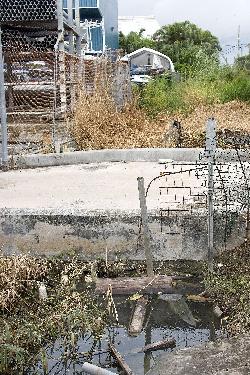
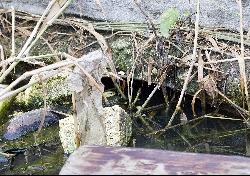
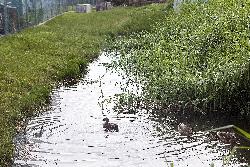
In 1837, Governor John Henry Lefroy persuaded the Bermuda Legislature to vote a sum of money for the drainage and improvement of the constantly flooding Pembroke March. From this came the Pembroke Canal. A century ago, it was really picturesque, so much so that post cards of it were on sale to the public. It was a gorgeous, serene and wildlife as well as recreational area of the Parish, where people could fish in water that ran through the canal into Mills Creek and from there to the sea. In July, 1943, The Yankee Store, in the City of Hamilton, romanticized the Pembroke Marsh Canal by shooting a lovely colored photograph of it and published it as a postcard under the title "The Brook, Bermuda, No. 114." In this postcard, one of which is today in the Bermuda Archives Postcard Collection, the canal's shimmering blue waters reflect the spire of the Cathedral and are bordered by flowering shrubs. Considering the the infamous Pembroke Dump next to it today, this 1943 photo of the canal is a gorgeous representation of a serene, pastoral Bermuda during a time of war. But industrial development from the 1950s, of the type most visitors do not see, polluted it badly. The canal changed as development grew and the Pembroke Dump was put in the area. Run-off from the roads which were now newly being heavily inundated with cars and trucks and contaminants leeching into the water from the dump turned the pristine canal into something reminiscent of a sewer line. The clear water turned to a slimy green and the white sands and abundant fish and wildlife in the area became a memory of youth grown old. An initiative was begun in March 1999 under then Minister of the Environment Arthur Hodgson, but has come to a standstill since then. But visitors can still see glimpses of the canal which stretches from Marsh Folly to Mills Creek. Sadly, the canal is no longer pristine. In hot weather especially, odors from the canal are not nice. Toxic leaching from the now-closed dump is still taking an environmental toll, despite efforts by the Bermuda Electric Light Company Ltd on land it owns next to the canal, particularly since major expansion of the electricity plant. But it was always believed the Bermuda Government's Ministry of the Environment has a long-term plan. So it became hugely disconcerting when, in September 2008 frustrated residents and business owners expressed anger and concern concern after parts of the Pembroke Canal became completely clogged, creating a dramatic increase in mosquitoes as well as flooding the area every time it rains. It has been an ongoing problem for years and should be cleaned up. When some local residents, now elderly, were growing up the bottom of the canal had white sand and they used to go fishing and swimming in there. The Pembroke Canal water sits stagnant and is not flowing as it should via Mill Creek into the ocean.
Stagnant water is a breeding ground for mosquitoes and other diseases and, according to the World Health Organisation, "pools of standing or slow-flowing water provide a breeding ground for many insects, including mosquitoes that can transmit diseases. These mosquitoes are known as vectors. Different species of mosquitoes transmit different diseases, and they will also breed in different types of water collections." Legionnaire's disease, a bacterial disease known to cause pneumonia, is a bug that has been found in ponds and is particularly attracted to bodies of warm, stagnant water such as in the Pembroke Canal. Many bacteria that live in stagnant water are anaerobic and produce different types of proteins on their surface (endo-toxins) which are a lot more dangerous for humans than aerobic bacterial proteins. There is huge cause for concern regarding the Pembroke Canal and the potential for a mosquito-breeding explosion because the incidence of diseases appears to be increasing. There are many reasons: people are developing resistance to anti-malarial drugs; mosquitoes are developing resistance to DDT, the major insecticide used; environmental changes are creating new breeding sites; and migration, climate change, and the creation of new habitats mean that fewer people build up natural immunity to these diseases. The water backs up every time it rains because the canal is not flowing at all and every time it backs up it floods the yards of local homeowners. The Works & Engineering Ministry is responsible for canal maintenance. They've cleaned it up around the Transport Control Department and Bernard Park and down by BAA Field but they have not been out to areas most affecting residents. Many people used to go on nature walks and hike through here on the trail to follow the canal, but there's been no-one in many months.
Local fishermen have been warned to stay away from these protected marine areas, known as the “hind grounds”. Areas were closed to all fishing activities at certain times. These areas provide sanctuary for hinds and groupers when they gather to spawn during the warm summer months, and fishing in these areas is prohibited. The two large protected areas, one to the southwest and one to the northeast of the island, both contain square-shaped extended closure areas, which are closed to fishing until November 29 each year. They have existed in various forms since the 1970s and, together with other fisheries regulations, are part of efforts to help to conserve local fish stocks, and protect them from over fishing.
Designated and proposed. These are wetland sites deemed to be of outstanding national environmental importance and recognized as such by a prestigious Swiss-based multinational organization. Bermuda, as a political dependency not a politically independent country, is not listed under its own name but as a UK British Overseas Territories island and each RAMSAR site in Bermuda has its own UK number.
Tynes Bay Waste Treatment Facility
Airport Facility
Bermuda has so far been spared the effects of an international coral bleaching event brought on by higher than usual sea temperatures. Healthy reefs in Bermuda may help maintain coral diversity in the Atlantic. A major international study analyzing how Caribbean reefs have changed over the past 40 years highlights Bermuda’s ban of fish pots, as well as the protection of parrotfish, as key mechanisms safeguarding reef health. Parrotfish grazing on the reef defend corals from seaweed that could otherwise smother corals in distress. As these fish have been removed from much of the Caribbean, algae tends to take over bleached coral and once thriving reefs are reduced to rubble and seaweed. Furthermore, the ability of corals to recover from any single bleaching events depends on their overall stress level. Limiting local pollution and maintaining a balanced ecosystem helps corals survive stress from climactic events.”
Bermuda's natural history and importance of proper waste management techniques to continue environmentally clean natural resources are now included as subjects taught in local schools. But they are not effective, with the huge litter problem Bermuda now has.
There is no national sewage system, no sewage farms. Each house and commercial building or hotel has its own sewage pit. Sewage seeps into the ground. See under "water pollution."
All controversial, these allow government to grant waivers to normal planning applications and over-ride environmental concerns and issues.
Many Special Development Orders have been made recently and in past years have included:
For 66 luxury holiday apartments at Coco Reef. Paget. January 2008.
Also see under "Beaches." There are no sewage or sewage treating stations in Bermuda. In almost all of Bermuda, sewage is not recycled and used for irrigation. Instead, it is dumped, untreated, into the sea by pipes, at the rate of over 1.7 million gallons a day. In other countries, but not Bermuda, effluent plants treat the water so it does not damage the land or water table. Bermuda does not have an anaerobic digester to break down the waste. It may be that the extremely high cost per kW hour for electricity in Bermuda is uneconomic, primarily because of the very high cost to consumers of the Bermuda Government's import taxes on all fuels. But dumping of sewage in local waters by cruise ships carries severe penalties imposed by the Bermuda Government. Instead, cruise ships must pipe their waste into special pumping out facilities provided on the docks. Every dwelling and building has its own ground cesspit or septic tank into which sewage is discharged, for dispersal through the rock and eventually into the sea.
Even in the city of Hamilton, sewage is not piped from individual houses as is common in USA, Canada, UK, etc. Instead, a pipe pumps the city's raw sewage to the Seabright Outfall located south of Hungry Bay, Paget. In 2008 it was discovered that sections of the pipe had been either exposed or damaged. Waste could be pumped directly into the ocean if the pipe springs a leak because no back-up plan is in place to handle the sewage in an emergency. According to a report compiled by Canadian consultant Associated Engineering in May 2008, the current system has had a number of maintenance issues. Problems with the inner section have included concrete protection erosion and complete exposure during extreme storm events. During a recent site visit, damage to the concrete embedment over the pipe in the near shore was observed. The Corporation of Hamilton continues to address damage to concrete embedment within this section of the outfall. The middle section of the outfall extends to a distance of 1,640 feet offshore and consists of a 14-inch nominal diameter HDPE pipe held in place with anchor chains. This section of the outfall traverses the inner reef and passes through an existing cave in the reef structure. During severe storm events, this section of the outfall has been exposed on several occasions. The existing outfall system has provided reliable service to the Corporation of Hamilton, but does require occasional maintenance. Problems with the inner section have included concrete protection erosion and complete exposure during extreme storm events. The middle HDPE section has also required maintenance and has cracked, requiring the use of repair clamps. The outer HDPE section has not required any known maintenance. The middle section of the outfall is considered the most vulnerable. Ocean and seabed conditions in the inner and middle sections make replacement of the pipe with a deeper buried pipe difficult. Fears have been expressed of a possible environmental catastrophe. The Corporation is now looking at drilling into the ground so that a pipe would be completely covered and protected. But that is a huge expense. In its report, Associated Engineering suggests a method known as Horizontal Directional Drilling as a possible alternative to the current system and identified a number of locations as possible "launching sites" - the current Seabright Avenue location, Ocean Avenue, Ariel Sands, Palm Grove and Devonshire Bay Park. The firm estimated that the cost of the project would be between $9.3 million and $12.6 million, depending on which site is selected.
Banner.jpg)
Authored,
researched, compiled and website-managed by Keith A. Forbes.
Multi-national © 2020. All Rights Reserved